
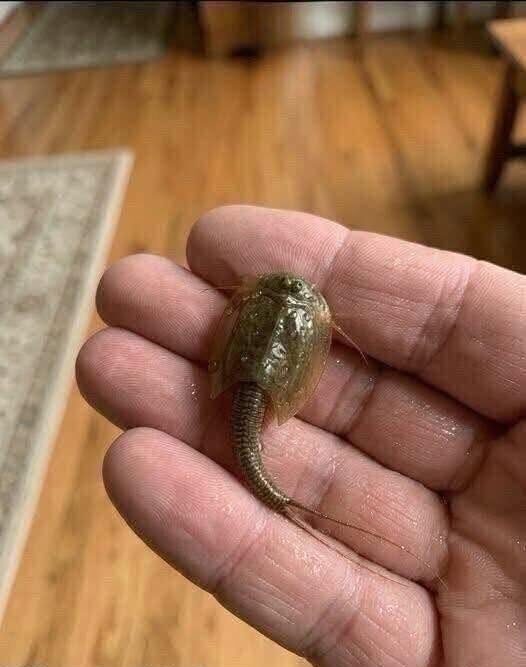
I Collected Water From a Storm-Filled Ditch—and Found a Tiny Creature I Couldn’t Identify
A Routine Check After Heavy Rain Became an Unexpected Moment of Curiosity
After a powerful rainstorm passed through the area, I stepped outside to inspect the drainage ditch along my property. The rain had left a shallow pool where muddy water, leaves, and scattered debris had gathered.
At first, the scene looked entirely ordinary. Water had collected in the ditch, carrying the loose material that a strong downpour leaves behind.
I stood watching it settle, expecting little more than the familiar aftermath of bad weather. Then a small movement beneath the surface caught my attention.
Something was swimming through the murky water. It moved quickly enough to stand apart from the drifting debris, and I found myself looking more closely at a place I might otherwise have passed without another thought.
The Movement Was Different From the Floating Debris
The ditch contained plenty of things that could shift in the water. Leaves and other loose material covered parts of the surface, while mud made it difficult to see clearly beneath them.
What caught my eye was the impression of directed movement. The small shape did not seem to be moving in quite the same way as the material around it.
From where I stood, I could make out very little detail. Its size and the cloudy water prevented an immediate understanding of what I was seeing.
Nevertheless, the movement held my attention. The more I watched, the more interested I became in examining the water at closer range.
I had gone outside to look at the condition of the ditch after the storm. Now I was wondering about a tiny living thing within it.
That change in focus happened without any clear idea of what the creature might be. I had noticed something unfamiliar, but unfamiliarity was the only conclusion I could reasonably reach.
A Small Sample Offered a Closer Look
I carefully collected some of the water in a glass jar. Taking a small sample allowed me to examine it without trying to distinguish every detail against the muddy background of the ditch.
The jar contained only a portion of what had been outside. It brought the object of my curiosity into a smaller space where I could look more closely.
I carried it into the kitchen and placed it beneath a bright light. The setting was very different from the shaded, debris-filled water beside the property.
Instead of watching a dark shape through the surface of the ditch, I could now observe the creature through clear glass. That change made its appearance easier to study, even though it did not provide an immediate explanation.
I looked at the tiny body and tried to understand its shape. What had first appeared as little more than movement now had visible features.
The experience was less like uncovering an answer than discovering how much I still did not know. A better view supplied details, but those details raised further questions.
A Rounded Body and Many Moving Legs
Under the kitchen light, the creature appeared to have a rounded body. Numerous small legs moved rapidly, creating an unfamiliar impression as it swam within the water.
Those movements had been difficult to distinguish outdoors. Seen at closer range, they became the most striking part of its appearance.
I watched the legs move and tried to connect the creature with something I already recognized. Nothing in the brief observation gave me enough confidence to name it.
The rounded body was a useful detail, but it was also a broad description. The same was true of the many small appendages: they were noticeable without being sufficient for an identification.
There was a temptation to treat the unusual appearance as evidence that the discovery itself was unusual. Yet I had no basis for knowing whether the creature was uncommon or simply unfamiliar to me.
That distinction became important as I continued looking. My surprise described my reaction, not the rarity of the animal in the jar.
Curiosity Came With Questions About What I Had Found
My first reaction combined interest with uncertainty. The creature looked strange enough that I wondered whether it was rare or something I should be concerned about.
Neither possibility had been established. I knew where I had collected it and could describe some of its visible features, but I did not know its identity.
The location alone could not answer the question. Finding it in a drainage ditch after heavy rainfall did not explain where it had been before I noticed it.
It would have been easy to connect the discovery directly to the storm. However, the sequence only showed that I observed the creature after the rain, not that I understood how it reached that patch of water.
The same uncertainty applied to any concern about it. An unfamiliar shape and rapid movement did not demonstrate that the creature posed a danger.
All I could say with confidence was that a small aquatic creature had caught my attention in water I initially regarded as ordinary runoff.
A Closer View Did Not Automatically Produce an Identification
There is a difference between seeing something more clearly and knowing what it is. The glass jar and kitchen light helped with the first task, but they did not complete the second.
I could describe a rounded body, many tiny legs, and quick movement. I could also describe the muddy ditch and the storm debris surrounding the place where I collected the sample.
Those observations provided the beginning of an account, rather than a definite answer. Without further identifying information, assigning the creature a name would have gone beyond what I had actually established.
Even the impression that its movements were purposeful needed to remain an observation. It described why I noticed it, without revealing anything certain about its behavior or intentions.
The most accurate version of the discovery therefore remained simple. Something living was present beneath the murky surface, and examining it more closely revealed features I did not recognize.
That was enough to make the moment interesting. It did not need an extraordinary explanation to justify the attention it had drawn.
An Ordinary Patch of Water Held an Unanswered Question
My inspection began with the effects of the rain: pooled water, mud, leaves, and debris along the edge of the property. None of those details initially suggested that the visit would become memorable.
What changed the experience was a small movement that I happened to notice. Once I paid attention, the ditch no longer looked like an undifferentiated patch of stormwater.
The jar allowed me to concentrate on a tiny part of that scene. Beneath the kitchen light, the creature’s rounded shape and rapidly moving legs became clear enough to describe, though not to identify.
The question of what I had found remained open. So did the questions about whether it was common, where it had come from, and what role it played in the water outside.
I had not established a rare discovery or uncovered a reason for alarm. I had encountered something unfamiliar in a place I had nearly dismissed as unremarkable.
That was the lasting surprise: a routine check after a storm had brought me face to face with a small piece of the world I did not yet understand.