
From Chamber Pots to Indoor Plumbing: The Remarkable History of the Toilet
An Everyday Fixture With a Long Past
The modern toilet is easy to take for granted. A handle or button sends waste out of sight, fresh water refills the bowl, and an extensive plumbing system carries on working beyond the bathroom walls.
That familiar arrangement developed over centuries. Its history includes ancient drainage channels, portable chamber pots, early flushing mechanisms and improvements that made indoor sanitation more practical.
No single person invented every part of the modern toilet. Different societies developed ways to collect and remove waste, while later inventors improved the mechanisms that connected a household fixture to a larger drainage system.
The language surrounding toilets evolved too. Words associated with cloth, dressing and washing gradually became names for the fixture or the room containing it.
Together, the technology and terminology reveal how people have approached an unavoidable need: finding a convenient, private and effective way to manage human waste.
Ancient Communities Developed Organized Drainage
Waste management became particularly important as people lived closer together. A settlement needed some way to handle the material produced by its residents, even when the available arrangements were simple.
Archaeological evidence shows that drainage and sanitation systems existed thousands of years before modern plumbing. Indus Valley settlements developed organized channels associated with household washing and waste removal.
Other ancient societies also experimented with water-assisted sanitation. Minoan sites on Crete provide evidence of early toilets and drainage arrangements, while Roman communities became known for sewers and communal latrines.
These examples should not be mistaken for universal access. The existence of an impressive system at one site does not mean every household or settlement enjoyed the same facilities.
Nor were ancient drains equivalent to modern wastewater treatment. Moving waste away from a building solved an immediate problem, but the material still had to go somewhere.
The early systems nevertheless demonstrate that the connection between water, drainage and sanitation was understood long before the familiar ceramic toilet appeared.
Chamber Pots Remained Useful for Centuries
For many households, a portable container was more practical than a permanently installed toilet. Chamber pots could be kept indoors and used without a trip to an outdoor facility.
They offered convenience, particularly at night, but required someone to empty and clean them. Their usefulness depended on a separate disposal arrangement beyond the room where they were kept.
Chamber pots, privies and cesspits continued in use for centuries, including throughout the medieval period and well into later eras. Their persistence shows that new inventions did not immediately replace established routines.
Cost, available space and access to water all influenced what a household could use. A flushing device offered little practical advantage if there was no dependable water supply or suitable destination for the waste.
Sanitation therefore developed unevenly. Portable vessels could remain ordinary household equipment even while wealthy properties experimented with more elaborate installations.
The transition to indoor plumbing required more than a better bowl. It depended on changes beyond the household, including the infrastructure needed to supply water and carry waste away.
Sir John Harington’s Water Closet
One important milestone came in 1596, when Sir John Harington published a description of a flushing water closet in The Metamorphosis of Ajax.
Harington, a godson of Queen Elizabeth I, described a device containing recognizable elements of a later flush toilet: water to wash the contents away and a valve controlling the opening beneath the pan.
The mechanism represented an inventive approach to household convenience, but it did not establish modern sanitation across Britain. Chamber pots and other arrangements continued to serve most people.
His achievement is best understood as an early documented flushing water closet rather than the invention of sanitation itself. Ancient water-assisted systems had existed long before him.
There was also a difference between removing waste from a room and managing it safely afterward. The flushing action addressed the first task without supplying the complete network associated with a modern bathroom.
Harington’s design remains significant because it connected a familiar human need with a mechanical solution that later inventors would continue refining.
Alexander Cumming Improved the Design
Nearly two centuries later, Scottish watchmaker Alexander Cumming obtained a British patent for a flushing water closet in 1775. His work helped move the design toward a more practical indoor fixture.
A particularly important feature was the curved waste pipe known as an S-trap. By retaining water in the bend, it created a barrier between the room and gases coming back through the drainage system.
That water seal addressed a problem that flushing alone could not solve. Carrying waste away was only part of making a toilet acceptable inside a home; limiting unpleasant gases mattered too.
Further patents followed in 1777 and 1778 as designers continued improving water closets. The sequence illustrates a pattern common in technological history: a useful invention becomes more workable through successive changes.
The modern toilet emerged from that accumulation of improvements. A mechanism had to flush effectively, refill reliably and work with the pipes connected to it.
Even then, a successful design was only one requirement. Manufacturing, installation and access to suitable services determined how widely it could be adopted.
Indoor Plumbing Was a System, Not Just an Invention
The spread of indoor toilets depended on the development of plumbing around them. A reliable fixture needed a water supply, a drainage connection and a workable means of handling what left the building.
This helps explain why the history cannot be reduced to one inventor or one date. Improvements inside the bathroom and changes to wider infrastructure had to support one another.
More convenient sanitation also changed expectations about domestic life. A function once associated with outdoor spaces or portable containers increasingly became part of a dedicated indoor room.
Yet the process was gradual. Older arrangements remained in use alongside newer ones, and the presence of advanced plumbing in one place did not mean it was available everywhere.
The toilet visible in a bathroom is therefore only the most accessible part of a much larger arrangement. Much of the work happens through pipes and services that users rarely see.
How the Word Toilet Changed Meaning
The word toilet did not originally name a plumbing fixture. It developed from the French toilette, a diminutive of toile, meaning cloth.
Its meanings became associated with the cloth covering a dressing table, the objects placed there and the process of dressing or grooming. Over time, the word also came to describe the space used for those activities.
From that connection with personal preparation and private rooms, its meaning gradually extended toward washing facilities and eventually the fixture itself.
This history helps explain why related words such as toiletries still refer to personal-care items. They preserve an older association that is less apparent in the modern everyday meaning of toilet.
The change was not a single deliberate renaming. It happened as speakers reused a familiar word for related objects, activities and spaces.
Lavatory, Bathroom and Water Closet
Lavatory has its roots in washing. It developed from Latin language associated with washing places and was used for a washbasin before acquiring broader meanings connected with washrooms and toilets.
Bathroom is more literal in origin: a room containing facilities for bathing. In American English, it also became a polite way to refer to a room containing a toilet, whether or not a bath was present.
Restroom similarly provides an indirect way to name a public facility. Its ordinary meaning depends on shared understanding rather than a literal expectation that people are entering a room simply to rest.
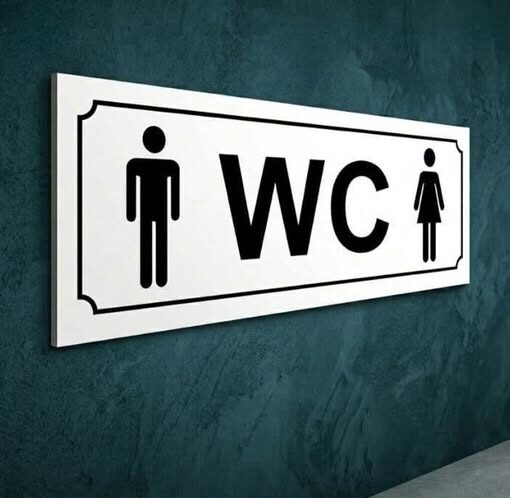
Water closet describes an enclosed space containing a water-flushed toilet. The abbreviation WC remains familiar on signs in many places.
These terms reflect different linguistic paths toward discussing the same everyday need. Their meanings also vary by country, setting and level of formality.
A History of Many Small Improvements
From early drainage channels to the water closet, the toilet’s development has involved repeated efforts to solve related problems. People needed to collect waste, remove it, control odors and make the process manageable within homes and communities.
Harington’s flushing design and Cumming’s patented improvements belong to that history, alongside the much older practices that preceded them and the infrastructure that made later adoption possible.
The words used for toilets tell a parallel story. They preserve traces of dressing tables, washing places and private rooms, even when their original meanings are no longer obvious.
Behind a familiar household fixture lies a long record of engineering, changing habits and language adapting to daily life.