
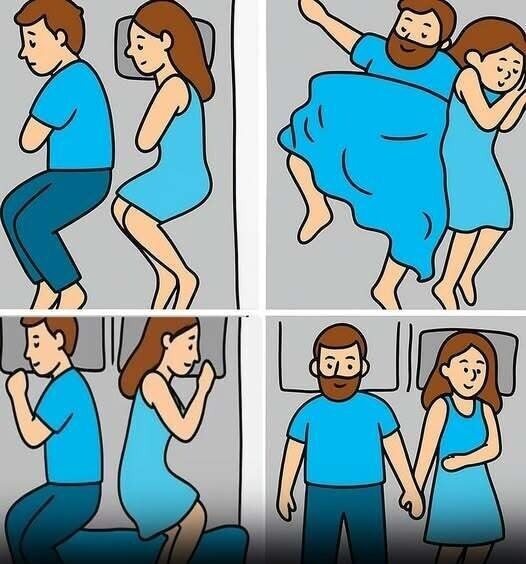
What Sleeping Positions May Reveal About Connection and Comfort in Relationships
Why Sleep Can Reflect Natural Behavior
Sleep takes up a large part of our lives, and when two people share a bed, those quiet hours can sometimes reflect patterns that are less filtered than daytime interactions. During rest, there is no effort to explain, impress, or adjust — only natural habits and comfort preferences.
Because of this, the way couples position themselves while sleeping is often discussed as a gentle reflection of comfort, trust, and personal space. While these patterns are not exact rules, they can offer interesting insights into how people relax and feel at ease around one another.
Head on Chest: A Sense of Comfort and Security
When one partner rests their head on the other’s chest, it is often associated with comfort and relaxation. The person lying back may appear steady and supportive, while the partner leaning in may simply be enjoying closeness and warmth.
This position is commonly seen during moments of calm connection, such as after spending quality time together or when winding down at the end of the day. It reflects a natural sense of ease and shared comfort.
Face-to-Face: Focused Connection
Sleeping face-to-face is often linked with a desire for closeness and awareness of each other’s presence. It creates a sense of connection, even during rest, as both partners remain oriented toward one another.
Small details, like being positioned close together, can enhance that feeling of connection. This position may appear occasionally or regularly, depending on comfort preferences and sleeping habits.
Spooning: Warmth and Familiarity
Spooning is one of the most widely recognized sleeping positions. It often reflects physical comfort and a sense of familiarity, as both partners rest in alignment.
The outer partner naturally creates a feeling of warmth, while the inner partner rests comfortably within that space. This position can be found in both new and long-term relationships, simply because it feels relaxed and natural for many people.
Back-to-Back: Balance Between Space and Connection
Sleeping back-to-back is sometimes misunderstood, but it often reflects a balanced approach to rest. When there is light contact, such as shoulders or backs touching, it can show that both individuals are comfortable maintaining personal space while still sharing a sense of closeness.
This position allows for freedom of movement while keeping a quiet connection present, which many people find ideal for a restful night’s sleep.
A Gentle Perspective on Sleep Habits
It is important to remember that sleeping positions are influenced by many factors, including comfort, temperature, and personal habits. While they can offer interesting perspectives, they are not definitive indicators of relationship dynamics.
Every couple develops their own natural rhythm when it comes to rest. What matters most is that both individuals feel comfortable, relaxed, and able to recharge for the day ahead.
The Takeaway
Sleep positions can provide a soft, observational look at how people share space and relax together. Whether close, facing each other, or slightly apart, these patterns often reflect comfort and familiarity rather than strict meaning.
At the end of the day, a good night’s rest and a sense of ease are what truly matter — and every couple finds their own way to achieve that balance.