
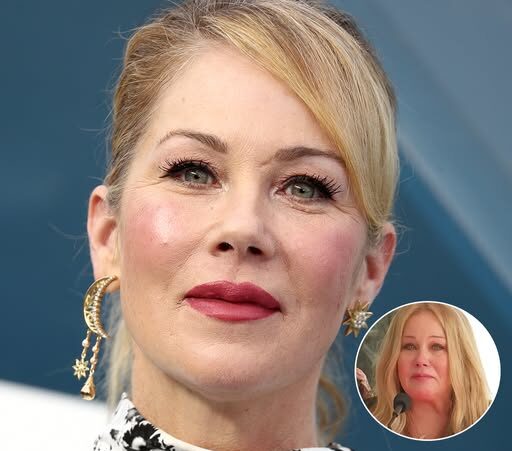
Christina Applegate Shares Candid Update on Life With Multiple Sclerosis
A Difficult Journey Five Years After Diagnosis
Christina Applegate has offered a deeply personal update about her ongoing battle with multiple sclerosis, revealing how significantly the condition has altered her daily life.
Five years after first announcing her diagnosis, the 54-year-old actress says the disease has taken a serious physical and emotional toll.
Applegate publicly shared her diagnosis in 2021, describing the experience as life-changing and unpredictable.
“It’s been a strange journey. But I have been so supported by people that I know who also have this condition,” she wrote at the time. “It’s been a tough road. But as we all know, the road keeps going. Unless some a**hole blocks it.”
Since then, she has remained open about her health, offering honest reflections on how multiple sclerosis has reshaped her routines, career, and outlook.
Living With Daily Limitations
In a recent interview, Applegate explained that multiple sclerosis now leaves her bedridden for much of the day.
She described conserving energy carefully and planning her movements intentionally.
One exception to her time spent resting is taking her 15-year-old daughter, Sadie, to school. Sadie is the daughter she shares with her husband, Martyn LeNoble.
“I want to take her; it’s my favorite thing to do. It’s the only time we have together by ourselves,” she said. “I tell myself, ‘Just get her there safely and get home so you can get back into bed.’ And that’s what I do.”
That short drive represents both a cherished bonding moment and a physical challenge.
Even routine tasks now require effort and planning, a reality she has openly acknowledged.
Understanding Multiple Sclerosis
Multiple sclerosis is an autoimmune disease in which the body’s immune system attacks the brain and spinal cord.
The condition can lead to symptoms including muscle stiffness, difficulty walking, trouble speaking, and vision problems such as blurring or loss of sight.
Nearly one million people in the United States live with multiple sclerosis. The disease affects women two to three times more often than men, according to the National Multiple Sclerosis Society.
There is currently no cure. Treatment typically focuses on managing flare-ups, reducing relapses, slowing progression, and easing symptoms.
For Applegate, the unpredictability of the disease has been one of its most challenging aspects.

From Early Symptoms to Diagnosis
Applegate began noticing symptoms while filming the first season of Dead to Me.
She experienced tingling in her toes and a sensation that her legs were giving out beneath her.
At first, the signs were confusing and easy to dismiss.
”It was very hard to figure it out because I remember one time it was like really late at night, we’d been shooting probably 14 or 15 hours. It seemed completely reasonable that anybody would be collapsing, you know?”
As the symptoms progressed, mobility became increasingly difficult.
A few months later, she arrived on set in a wheelchair.
The transition from uncertainty to diagnosis marked a turning point in her life.
Public Appearances and Adaptation
In 2022, Applegate made her first public appearance since her diagnosis when she received her star on the Hollywood Walk of Fame.
She attended the ceremony barefoot and used a cane for support.
“For some with MS, the feeling of shoes may hurt or make us feel off balance. So today I was me. Barefoot,” she wrote on X.
She later explained that she cannot “stand for too long,” highlighting the physical strain even brief appearances can cause.
Her decision to appear publicly, despite limitations, reflected both vulnerability and resilience.

The Emotional Impact of MS
Applegate has consistently spoken candidly about the emotional weight of living with multiple sclerosis.
She has rejected the idea of presenting a polished or overly optimistic version of her experience.
“People’s lives, sorry for lack of a better term, f**ing sck sometimes. So I’m being as honest and raw as I possibly can,” she said.
In 2023, she further described how everyday activities have become obstacles.
“With the disease of MS, it’s never a good day,” she said in 2023. “There are just certain things that people take for granted in their lives that I took for granted. Going down the stairs, carrying things — you can’t do that anymore. It f**ing scks.”
Her reflections underscore the frustration and grief that often accompany chronic illness.
Considering the Future of Her Career
Applegate has acknowledged that Dead to Me may be her final on-screen acting role.
Although stepping away from traditional acting roles, she has expressed interest in remaining in the entertainment industry through producing or voice work.
Throughout public appearances, she has maintained her trademark humor.
At the 2024 Emmys, after receiving a standing ovation, she joked, “Thank you so much, oh my God. You’re totally shaming me with disability by standing up; it’s fine. Body not by Oz*mpic.”
The moment blended humor with vulnerability, reflecting her approach to facing adversity.
Physical Challenges and Brain Lesions
Applegate has also detailed the physical realities of the disease during podcast appearances.
She revealed that she has 30 lesions on her brain.
At times, these lesions cause what she described as a “seizure-y” sensation in her head.
She did not minimize the severity of her experience.
“This is the worst thing that has ever happened to me,” she admitted. “I hate it so much. I’m so mad about it.”
In response to the emotional strain, she began seeing a therapist, describing the decision as “a big thing for me to do.”
Seeking support has become part of her strategy for coping with both physical and psychological challenges.
A History of Health Struggles
Multiple sclerosis is not the first major health battle Applegate has faced.
She is also a breast cancer survivor.
Her experiences with serious illness have shaped her perspective and strengthened her willingness to speak openly about difficult realities.
She has repeatedly emphasized that her life has been far from picture-perfect.
Turning Pain Into a Memoir
Applegate is set to release a memoir titled You With the Sad Eyes on March 3.
The book explores her childhood, early fame, relationships, health battles, and personal struggles.
Because she has spent significant time confined to bed, writing became both a creative outlet and a form of reflection.
She described the memoir as deeply personal and emotionally challenging to complete.
She referred to it as ”about a little girl with sad eyes who ended up becoming Christina Applegate”.
Childhood Trauma and Difficult Memories
In the memoir, Applegate addresses painful chapters from her early life.
She has spoken about surviving molestation and abuse during childhood.
She described instability in her upbringing, including exposure to substance dependency and domestic violence.
“I think I had kind of the worst situation from 3 to 7, but there was stuff like that going on in all our homes,” she said.
“Single moms, men coming in and out, dr*gs. It’s always fun to see your mom crying on the floor and you not being taken care of.”
Her mother, actress Nancy Priddy, had a boyfriend who was violent toward both her and young Christina.
As a teenager, Applegate later found herself drawn to men she described as troubled.
She referred to them as “broken birds that I wanted to fix.”
These experiences shaped her early adulthood and personal relationships.
Honesty Over Inspiration
Applegate has made clear that her memoir is not designed to be purely inspirational.
Instead, she hopes that its honesty may resonate with readers navigating their own challenges.
Her approach prioritizes truth over idealized narratives.
By sharing her health struggles, emotional frustrations, and painful memories, she presents a portrait of resilience rooted in realism.
Facing Each Day as It Comes
Living with multiple sclerosis means facing uncertainty daily.
For Applegate, that reality includes physical limitations, emotional fluctuations, and a redefined sense of normal.
She continues to prioritize time with her daughter and moments of connection, even when energy is limited.
Her candid reflections reveal both anger and strength, frustration and humor.
Five years after her diagnosis, she remains open about the toll of the disease while continuing to adapt to its demands.
Her journey illustrates the complexity of living with chronic illness—balancing resilience with honesty, and public life with deeply personal battles.