
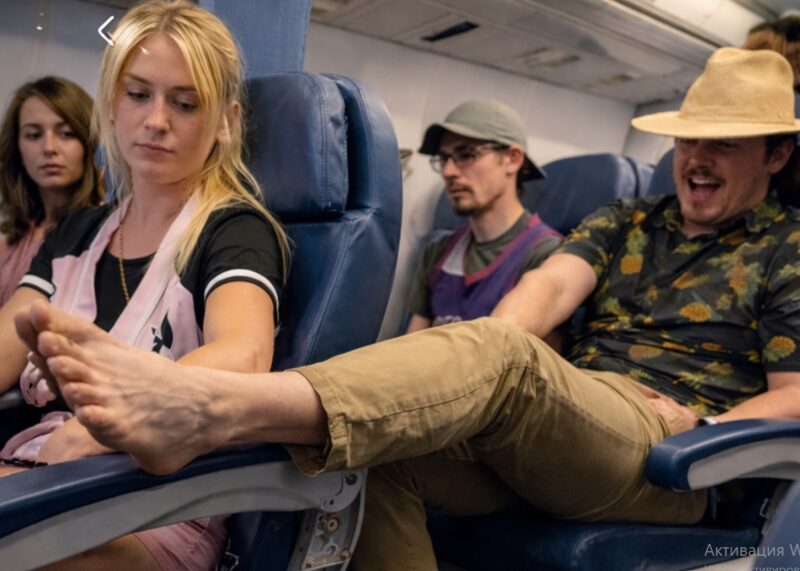
In-Flight Discomfort Turns Into a Lesson About Respecting Shared Space
A Long-Awaited Journey Begins
The flight was meant to be a quiet and much-needed break after months of waiting. It had been nearly a year since the visit home had last been possible, and the anticipation of finally seeing family again made the long trip feel worthwhile.
With several hours ahead, the plan was simple: settle into the seat, relax, and try to rest for as much of the journey as possible. The calm environment of a plane cabin often provides the perfect setting to disconnect for a while.
However, that expectation quickly gave way to an unexpected and uncomfortable situation that changed the tone of the entire flight.
An Unpleasant Discovery
Shortly after takeoff, a faint but unusual smell began to spread through the seating area. At first, it was easy to assume it came from somewhere else, perhaps from food service or something spilled nearby.
As the scent grew stronger, it became clear that the source was much closer. A glance downward revealed something surprising and deeply unpleasant.
A bare foot, belonging to a passenger seated behind, had been placed directly on the armrest. It was not only out of place but also the clear source of the smell that was becoming increasingly difficult to ignore.
Attempting a Polite Resolution
Maintaining composure seemed like the best first step. Addressing the situation calmly and respectfully is often the most effective way to resolve minor conflicts in shared spaces.
A polite request was made, asking the passenger to remove his foot from the armrest. The expectation was that he might not have realized the impact of his actions.
Instead of responding with understanding, the passenger appeared indifferent. He hesitated before replying and then dismissed the request without concern.
The situation became more uncomfortable as the behavior continued, and the foot remained in place.
Tension Builds Among Passengers
As the minutes passed, the discomfort spread beyond just one seat. Other passengers nearby began to notice what was happening, and their reactions made it clear that the issue was affecting more than one person.
Some exchanged glances, while others quietly expressed their dissatisfaction. The atmosphere shifted from calm to tense, with a shared sense of unease building in the surrounding rows.
Another request was made, this time more firmly, emphasizing that the armrest was shared space and that the behavior was disruptive.
Despite this, the response remained dismissive, and the situation showed no signs of improving through direct conversation alone.
Recognizing the Limits of Direct Confrontation
At this point, it became clear that continuing to argue would not lead to a positive outcome. Not everyone responds to polite communication in the same way, and some situations require a different approach.
Instead of escalating the conflict, a decision was made to step back and find a more constructive way to address the issue.
In a shared environment like an airplane, there are systems in place to ensure comfort and safety for all passengers. Turning to those systems can often be the most effective solution.
Seeking Assistance From Cabin Crew
The call button was pressed to request assistance from a flight attendant. This approach allowed the situation to be handled by someone responsible for maintaining order and ensuring that all passengers follow the rules.
When the attendant arrived, the issue was explained calmly and clearly. It was important to communicate not only the discomfort but also the repeated attempts to resolve the matter politely.
The surrounding passengers also began to speak up, confirming that the behavior had been ongoing and was affecting multiple people in the area.
This collective input helped provide a clearer picture of the situation and emphasized that it was not an isolated concern.
A Firm but Professional Response
The flight attendant addressed the passenger directly, explaining that placing a bare foot on another passenger’s seat or armrest was not acceptable behavior.
The tone remained professional but firm, reinforcing the importance of respecting shared spaces and the comfort of others during the flight.
Clear expectations were set, and it was made known that continued disregard for these rules could lead to further action, including involvement from higher authorities if necessary.
This intervention immediately changed the dynamic, as the passenger realized that the situation had become more serious.
A Noticeable Shift in Behavior
Following the crew’s involvement, the passenger removed his foot and adjusted his behavior. The tension in the surrounding area began to ease as the immediate source of discomfort was eliminated.
The cabin gradually returned to a more relaxed atmosphere, and the earlier unease was replaced with a sense of relief among those nearby.
Passengers who had been affected exchanged subtle expressions of acknowledgment, recognizing that the situation had been resolved without further escalation.
Restoring Calm to the Journey
With the issue addressed, it was finally possible to settle back into the seat and focus on the original intention of the flight—rest and relaxation.
The remaining hours of the journey passed more smoothly, free from the earlier disruption. The environment felt more respectful and considerate, allowing everyone to enjoy a more comfortable experience.
This shift highlighted how quickly a shared space can improve when mutual respect is restored.
A Broader Lesson in Shared Spaces
Situations like this serve as a reminder of the importance of basic courtesy, especially in environments where people are in close proximity for extended periods.
Air travel, in particular, requires a level of awareness and consideration for others, as personal space is limited and comfort depends on collective behavior.
Small actions, whether thoughtful or inconsiderate, can have a significant impact on the experience of those around us.
Respecting boundaries, maintaining hygiene, and responding appropriately to reasonable requests are essential elements of a positive shared experience.
The Value of Calm Resolution
While it can be frustrating when others ignore polite communication, responding with patience and seeking appropriate assistance often leads to better outcomes.
Escalating conflicts rarely improves the situation, but involving the right authority can help resolve issues more effectively and fairly.
This approach not only addresses the immediate problem but also reinforces the standards expected in shared environments.
Ending the Journey on a Better Note
By the time the plane approached its destination, the earlier discomfort had faded into a memory, replaced by the anticipation of reuniting with loved ones.
The experience, while unpleasant at first, ultimately became a reminder of the importance of standing up for personal comfort in a respectful and constructive way.
It also underscored the role that clear communication and proper channels play in maintaining harmony in shared spaces.
In the end, the journey continued as intended, proving that even challenging moments can be resolved with the right approach and a focus on mutual respect.