
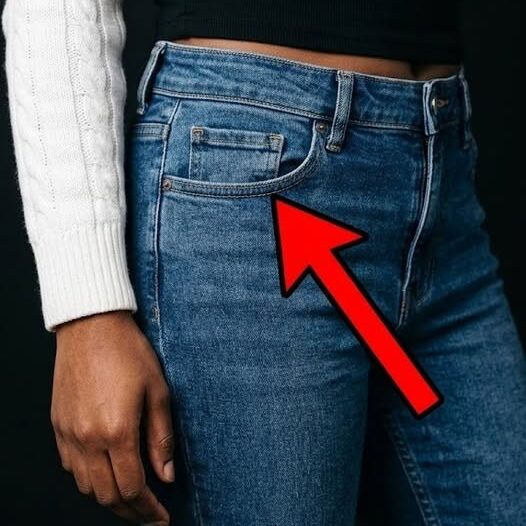
The Hidden Story Behind the Tiny Pocket in Your Jeans
An Unexpected Detail in Everyday Clothing
At first glance, it seems insignificant. A small, narrow pocket tucked inside a larger one, often overlooked and rarely used. Most people notice it but never stop to consider its purpose.
In modern life, where phones, wallets, and keys dominate daily carry, this tiny compartment appears outdated. It is too small for most essentials and feels more decorative than practical.
Yet this detail has survived for generations, quietly remaining part of one of the most recognizable clothing designs in the world.
Where It All Began
The origin of this small pocket goes back to a time when clothing served a very different role. Jeans were not created as fashion statements but as durable workwear designed for tough environments.
In the 1800s, laborers such as miners, cowboys, and other workers needed clothing that could withstand long hours and harsh conditions. Every feature had a purpose, and nothing was included without a reason.
Among the everyday items people carried during that era was a pocket watch. These watches were valuable, delicate, and essential for keeping time in demanding work settings.
The Purpose of the Watch Pocket
To protect these fragile timepieces, a small reinforced pocket was added to early jeans. This compartment offered a secure place where a watch could be stored without being scratched or damaged.
It also helped prevent the watch from slipping out during physical labor. For workers constantly moving, bending, and lifting, this small addition provided both safety and convenience.
At the time, this feature was not optional. It was a practical solution to a real problem faced by people who depended on their tools and belongings throughout the day.
Built for Function, Not Style
Every element of early jeans was designed with purpose in mind. Durability, strength, and usability were the primary concerns. The tiny pocket fit perfectly into this philosophy.
It was not meant to stand out or draw attention. Instead, it quietly served its role as part of a larger system of functionality that made jeans reliable for everyday work.
Over time, as jeans became more widely worn, this small feature remained unchanged, even as other aspects of clothing evolved.
Why the Pocket Stayed
As years passed, pocket watches gradually disappeared from daily use. Wristwatches became more common, and eventually, digital devices replaced traditional timekeeping altogether.
Logically, the small pocket might have been removed. Its original purpose was no longer relevant, and modern lifestyles did not require such a feature.
However, it remained. The reason lies not in necessity, but in tradition.
A Symbol of Heritage
The tiny pocket became more than just a functional detail. It transformed into a symbol of craftsmanship and history, representing the origins of denim as durable workwear.
Clothing brands chose to keep it as part of their identity. It connected modern designs to their historical roots and preserved a sense of authenticity.
For many, jeans are not just clothing but a reflection of culture, resilience, and timeless design. The small pocket plays a role in maintaining that connection.
Modern-Day Uses
Even without its original purpose, the pocket has found new uses in everyday life. People have adapted it to hold small items that fit its compact size.
Coins are one of the most common items stored there, as the pocket helps keep them separate from larger belongings.
Some use it for jewelry such as rings, especially when they need a temporary place to store them safely.
Others find it useful for holding earbuds, folded cash, or small accessories that might otherwise get lost in larger pockets.
Despite its size, it continues to offer a surprising level of convenience.
The Classic Five-Pocket Design
The tiny pocket is part of what is known as the five-pocket design, a layout that has remained largely unchanged for more than a century.
This design includes two front pockets, two back pockets, and the small watch pocket. Together, they create a balanced and functional structure that has stood the test of time.
While fashion trends come and go, this layout continues to define traditional denim.
Consistency in a Changing World
Clothing has evolved in countless ways, with new materials, styles, and innovations shaping modern fashion. Yet some elements remain constant.
The persistence of the tiny pocket highlights how certain designs endure not because they are necessary, but because they carry meaning.
It represents a time when clothing was built to solve practical challenges, and it serves as a reminder of how those solutions shaped what we wear today.
More Than Just a Detail
What appears to be a minor feature is actually a link to the past. It reflects the ingenuity of earlier generations and their ability to create solutions that were both simple and effective.
Each pair of jeans carries this small piece of history, quietly embedded in its design. It may no longer serve its original purpose, but it continues to tell a story.
In a world focused on constant innovation, it stands as proof that some ideas are strong enough to last.
A Lasting Legacy
The tiny pocket in jeans is not just a leftover detail from another era. It is a symbol of how design can evolve while still honoring its origins.
It began as a practical feature for protecting pocket watches and became a permanent part of one of the most iconic garments ever created.
Today, it serves as both a functional space for small items and a reminder of the craftsmanship behind everyday clothing.
Why It Still Matters
Understanding the purpose behind this small pocket changes how it is viewed. What once seemed unnecessary becomes meaningful when seen in its historical context.
It shows how even the smallest design choices can have lasting significance. Features that solve real problems often outlive their original use, becoming part of a larger story.
This perspective adds depth to something as simple as a pair of jeans.
A Detail That Tells a Story
The tiny pocket remains a quiet but powerful example of thoughtful design. It represents a time when every element of clothing had a clear purpose and was carefully considered.
While modern life has changed how people use their clothing, the presence of this feature keeps the past connected to the present.
It is a reminder that even the smallest details can carry history, meaning, and lasting value.