
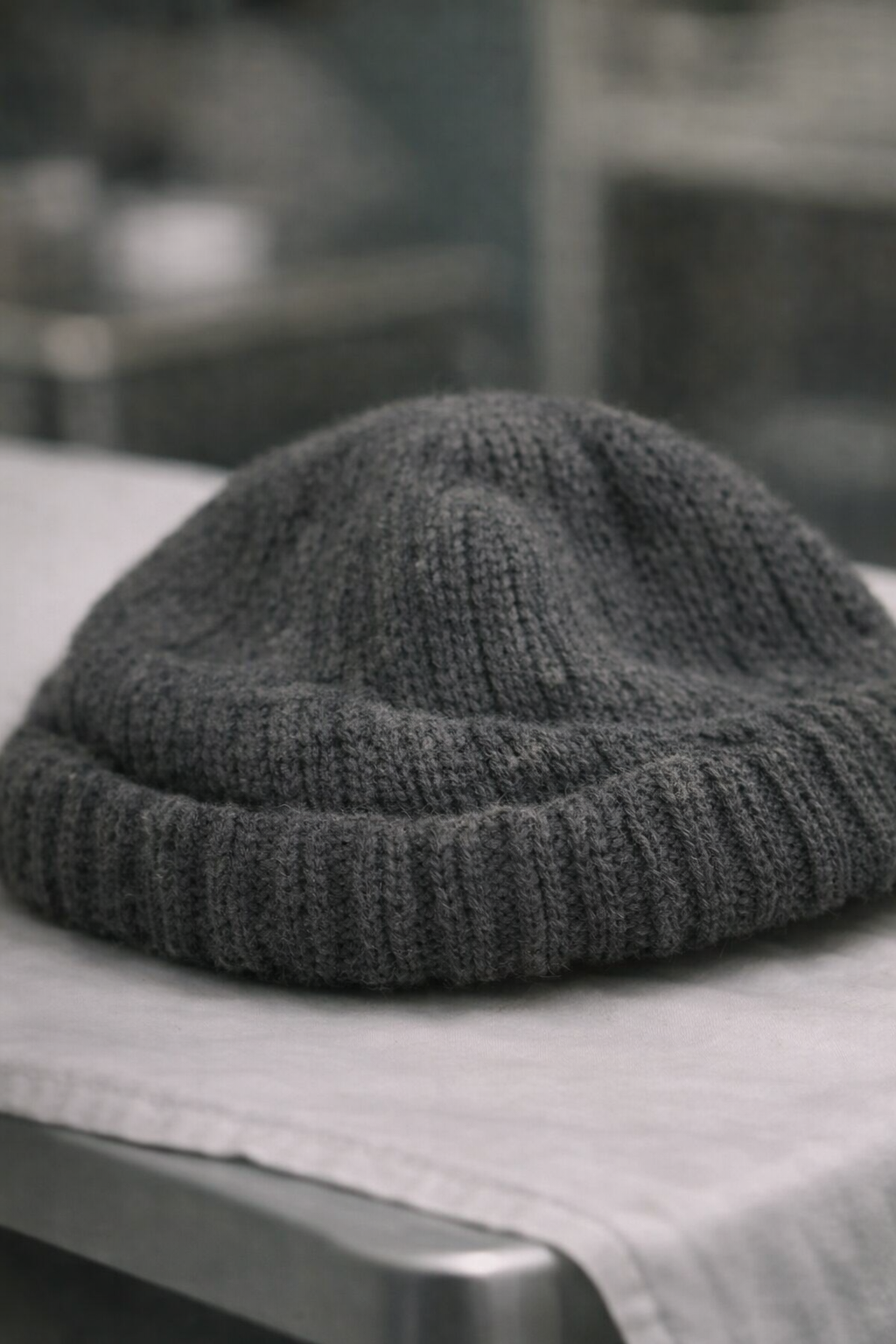
School Staff Intervened After an 8-Year-Old Refused to Remove a Winter Hat for Weeks
An eight-year-old student drew concern at school after wearing a winter hat every day for more than a month, even as temperatures rose and classrooms became difficult to keep cool.
What first seemed like an unusual personal habit gradually became a serious welfare concern for the adults responsible for his care during the school day.
The situation unfolded over several weeks, beginning with routine observations and ending with urgent medical attention and intervention from the appropriate child protection services.
A Detail That Stood Out Immediately
On an exceptionally hot day, the school nurse, Sofia, was carrying out a standard student health check when the boy entered the room.
While other children were dressed for warm weather, he arrived wearing heavy dark pants, a thick sweater, and a knitted winter hat pulled low over his forehead.
The contrast was impossible to miss. The hat appeared to be the same one he had worn during colder months, and he showed no sign of wanting to remove it despite the heat.
Sofia greeted him calmly and tried to keep the conversation light. She asked whether he was feeling too warm and suggested that he could at least take off the hat while inside the medical room.
The reaction was immediate. The boy stiffened, lifted his shoulders, and held the hat tightly with both hands.
In a quiet voice, he said, “I can’t take it off.”
Sofia chose not to pressure him in that moment. She completed the check without creating more distress, but the exchange stayed with her.
His body language suggested more than discomfort or shyness. He seemed frightened of even a slight shift in the hat, and he repeatedly adjusted it as if trying to keep it in exactly the right position.
Questions Began to Build
Later, Sofia spoke privately with the boy’s homeroom teacher to find out whether the behavior was new or whether others at school had noticed it as well.
The teacher confirmed that the hat had become a constant part of the child’s appearance since returning from spring break.
For more than a month, he had kept it on throughout the school day. He had also refused to remove it during physical education.
At one point, when asked to take it off in PE, he had become overwhelmed and panicked. Staff decided not to force the issue out of concern that direct pressure could make the situation worse.
That explanation did not ease Sofia’s concern. If anything, it suggested the issue had been ongoing and was affecting the child’s daily functioning at school.
At that stage, the hat no longer looked like a simple preference or a harmless routine. It appeared to be connected to fear, secrecy, or pain.
An Unsettling Phone Call
That evening, Sofia contacted the family using the number listed in the student’s medical file.
She introduced herself and explained that she wanted to discuss the boy’s condition, including the fact that he continued wearing a winter hat even in very warm weather.
The response from the adult on the line was immediate and dismissive. He interrupted her and insisted that the boy was fine.
Sofia attempted to keep the conversation focused on the child’s wellbeing. She asked whether there had been any scalp issue, injury, or medical reason for the hat.
Instead of offering clarification, the caller became more defensive. He said the matter was private and told her not to interfere.
When Sofia mentioned noticing a stain on the hat and asked whether the child could have been hurt, the tone became even harsher.
The call ended abruptly, without any reassurance, explanation, or willingness to cooperate.
Afterward, Sofia remained deeply uneasy. The conversation did not resolve anything. It strengthened her suspicion that an important problem was being concealed.
The Child’s Condition Worsened at School
Only a few days later, the situation escalated.
During class, the boy began feeling unwell. His teacher brought him to the medical room after noticing that he was holding his head, looked pale, and was struggling to remain steady.
By the time he arrived, he appeared physically distressed. His lips were trembling, and his hands were pressed tightly against his head.
Sofia crouched to speak with him at eye level and reassured him that she wanted to help. She explained that there was no one else in the room and that she would proceed gently.
At first, he remained silent. Then he quietly revealed the source of his fear.
He said, “Dad said not to take it off. If I take it off, it will be worse.”
That statement transformed a troubling situation into an urgent one. It suggested the child was not simply hiding something out of embarrassment. He was following an instruction he feared disobeying.
Sofia continued speaking calmly and carefully, emphasizing that he had done nothing wrong and that her goal was to relieve his pain.
After a long pause, he gave a slight nod.
A Medical Emergency Became Clear
Sofia put on gloves and began trying to remove the hat as gently as possible.
Almost immediately, it became clear that the situation was more serious than anyone had expected. The hat did not lift away normally.
The boy cried out softly and said that it hurt, explaining that it would not come off.
To avoid causing further pain, Sofia used antiseptic and worked slowly to loosen the fabric. The process took time, and every movement had to be done with extreme care.
Eventually, the material came free.
What was underneath confirmed that the child needed immediate medical and protective intervention.
The boy’s scalp showed multiple injuries in different stages, with some areas appearing recent and others already healing.
For Sofia and the teacher present, the discovery was deeply distressing. For the child, however, the scene suggested something even more troubling: he appeared accustomed to enduring pain in silence.
He quietly explained, “Dad said I had to endure it,” and added, “And my brother gave me the hat so no one would see…”
Immediate Action Followed
At that point, Sofia no longer had any doubt that the matter required urgent reporting and outside involvement.
She contacted the appropriate services the same day.
The boy was taken to the hospital that evening, where he received treatment for his condition.
After medical care was arranged, he was moved to a safe environment where he would no longer be exposed to the same immediate fear described at school.
The case left a lasting impact on the staff involved, especially Sofia, who had been the first to follow her concern beyond a single unusual detail.
Why the Warning Signs Mattered
The events showed how a pattern that may seem minor at first can carry serious meaning when viewed in context.
A child wearing the wrong clothes for the season is not, by itself, proof of harm. But repeated distress, defensive behavior, visible fear, physical pain, and a hostile response from adults can collectively point to a much deeper problem.
In this case, the hat was not simply an accessory. It had become a barrier hiding a condition that required urgent care.
The child’s insistence on keeping it in place, his visible anxiety whenever it shifted, and his fear of disobeying instructions all formed a pattern that school staff could not ignore.
Equally important was the fact that the warning signs developed over time rather than in one dramatic moment.
The concern began with careful observation. It continued through communication with school staff. It deepened during an unsuccessful attempt to speak with the family. It culminated when the child’s physical condition worsened enough to force immediate action.
That sequence reflects the reality of many child welfare cases, where danger is not always obvious at first glance but becomes clearer when adults remain attentive and consistent.
The Role of School Staff in Child Safety
Schools often serve as one of the few places where changes in a child’s physical condition or emotional state can be noticed over time.
Teachers, nurses, counselors, and other staff may observe patterns that others do not see, especially when a child is under stress or trying to hide pain.
In this case, both the teacher and the nurse recognized that the boy’s behavior did not fit an ordinary explanation.
The teacher had already witnessed his panic during PE. Sofia noticed his physical discomfort, unusual clothing, and fearful reaction during the health check.
Neither observation alone revealed the full truth. Together, they created a clearer picture.
The case also showed the importance of responding with patience rather than force. Sofia did not try to rip the hat away during the first encounter. She avoided escalating the child’s distress and instead kept watching, asking questions, and documenting concern.
That measured approach mattered. It allowed the child to reach a moment where he could finally give permission for help.
A Lasting Reminder
Sofia could not forget the case afterward, and the reason was simple: the warning sign that opened the door to intervention was something many people might have dismissed.
A winter hat in warm weather could have been explained away as stubbornness, insecurity, or eccentric behavior. Instead, it became the clue that led to treatment and protection for a child in distress.
The episode stands as a reminder that children do not always describe what is wrong directly. Sometimes the truth appears through avoidance, fear, physical discomfort, or an object they refuse to let go of.
It also underscores the value of taking small irregularities seriously when they are paired with signs of pain, panic, secrecy, or control.
By paying attention and acting when the situation worsened, school staff helped bring the child out of immediate danger and into care.
What began as concern over one unusual article of clothing ended with medical treatment, protective intervention, and the possibility of safety.
For those involved, the lesson remained clear: behind an ordinary detail, there can sometimes be a situation far more serious than anyone first imagined.