
Tyne Daly and Georg Stanford Brown’s Family Legacy Lives On Through Their Three Daughters
A Marriage That Defied Its Era
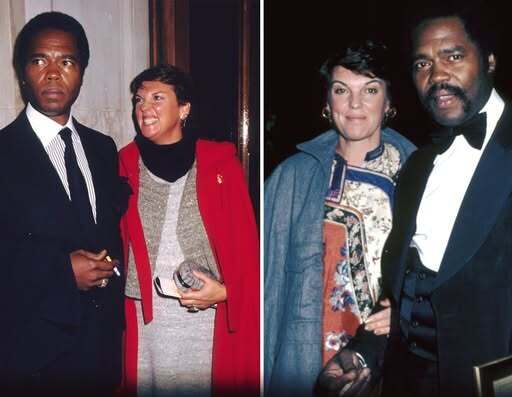
Tyne Daly and Georg Stanford Brown built a life together during a period when interracial marriage still faced legal and social barriers across much of the United States. Their relationship stood out not only because both became respected actors, but because their marriage unfolded in public during a time when many people still viewed such unions through a narrow and prejudiced lens.
What remains especially meaningful today is not only the place they hold in entertainment history, but the family they raised together. Their three daughters grew up connected to that legacy while also creating lives and identities of their own.
The story began in New York, where Tyne Daly and Georg Stanford Brown met while attending the American Musical and Dramatic Academy. Tyne later recalled noticing him in a crowded room and instantly feeling something powerful. She remembered thinking, “Oh my goodness, there’s the father of my children.”
Their connection moved quickly. After dating for only five months, they decided to marry. Tyne Daly later described the beginning of their relationship as love at first sight and spoke openly about what drew her to him.
She said Georg Stanford Brown was “one of the most talented people out there,” and added, “I’ve always been magnetized by talent, more than anything else.” Those words reflected both admiration and the intensity of the bond they formed early on.

Fame, Resistance, and Public Scrutiny
The couple married in 1966, when interracial marriage was still illegal in many parts of the country. In 31 states, such unions remained prohibited by law, making their marriage not just unusual in the public eye, but controversial in the eyes of the legal system as it existed at the time.
Tyne Daly later rejected the labels often imposed on their relationship. She said she never thought of her marriage to Georg Stanford Brown as “interracial.” Instead, she described it simply as being married to “another member of the human race,” adding: “I gave up categories a long time ago.”
As their marriage began, both were building significant careers. Tyne Daly became widely known for playing Mary Beth Lacey, the determined working-mother detective in Cagney & Lacey. Georg Stanford Brown gained recognition through roles in Bullitt and the television series The Rookies.
Even as their professional reputations grew, they were not insulated from prejudice. Their marriage was discussed and judged in ways that reflected the racial attitudes of the period. They faced that pressure while continuing their work and starting a family.
One of the most notable moments came when the two appeared together on The Rookies and shared an on-screen interracial kiss. Network censors wanted the scene removed. The couple refused to retreat, and the scene was taped and aired.
That decision became part of the broader story of how they navigated public life. Instead of allowing outside pressure to reshape their choices, they moved forward together and maintained control over the way they lived and worked.

Building a Family While Careers Expanded
While managing busy acting careers, Tyne Daly and Georg Stanford Brown also became parents. Their first daughter, Alisabeth Brown, was born on December 12, 1967. Their second daughter, Kathryne Brown, followed on February 10, 1971.
Years later, Tyne Daly spoke about how deeply she wanted a larger family. She said, “I always wanted lots of kids. Six. But I got distracted by my work. Then I was in the middle of Cagney & Lacey, had my 39th birthday, and thought, ‘My god, girl, if you’re going to do it, do it now.’ I very much wanted another child, so Georg finally agreed.”
Their youngest daughter, Alyxandra Beatris Brown, was born on October 1, 1985. Known by the nickname “Zanny,” she arrived near the end of the third season of Cagney & Lacey, creating new demands at a moment when Tyne Daly’s career remained highly active.
Tyne Daly returned to work soon after Alyxandra’s birth and even carried her daughter on set by strapping the baby to her back. For a time, that arrangement worked. But the emotional cost of balancing work and motherhood became harder to ignore as the years passed.
She later reflected on that period with painful honesty. “It was great. But as she got older, it got harder. And that fifth season I was so angry because I was coming in and making love to these fake babies (Mary Beth had twins in the series) – and leaving my own baby at home. I missed her terribly.”
Those comments revealed how intensely she felt the divide between professional obligations and family life. Even with contractual accommodations that allowed her to bring her youngest daughter to set, the pressure of constant work and travel remained.

The Strains That Changed the Marriage
As the family grew, so did the demands surrounding their careers. Tyne Daly later explained that the musical Gypsy became a major point of strain in the marriage. Because the production was based in New York, she was repeatedly traveling between the East and West Coasts.
That distance, combined with the ongoing demands of work and parenting, became part of the pressure that pushed the relationship toward a breaking point. About five years after the birth of their youngest daughter, the marriage came to an end.
Tyne Daly described her commitment to Gypsy as a “fracturing feature” in the breakup. The long stretches of travel and divided responsibilities made an already difficult balance even more complicated.
The end of the marriage carried extra emotional weight because both had long understood that many observers expected them to fail. They knew that some people viewed their union as an experiment that would not last, and they were aware of the symbolism attached to their relationship in the public eye.
Tyne Daly also acknowledged that their daughters likely encountered racial prejudice while growing up. That reality formed part of the family’s experience, even as the children were being raised in a creative household shaped by two well-known parents.
The early years of family life were not glamorous. Tyne Daly later recalled, “Roaches crept out of the cereal we’d been eating all week… There’s nothing glamorous about starving.” That memory offered a sharp contrast to public assumptions about celebrity life.
Alisabeth Brown’s Creative Path
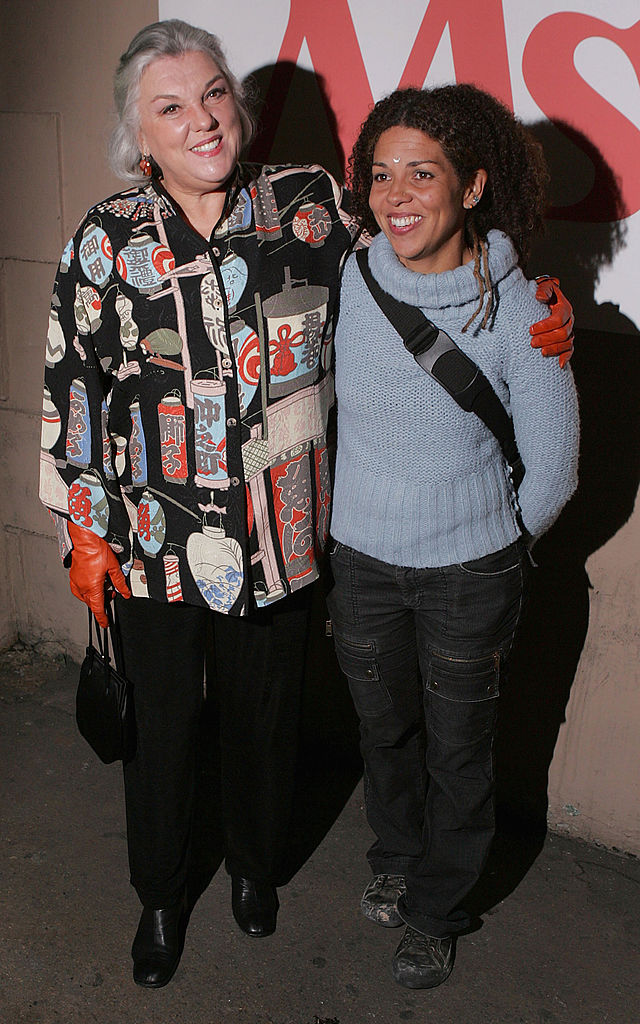
The couple’s oldest daughter, Alisabeth Brown, ultimately chose a quieter life away from fame. Her work took shape through visual art, first through ceramics and later through glass. Although she had some contact with film production, she did not pursue public celebrity in the way many might have expected.
In earlier years, she worked behind the scenes as a production assistant on Sister Act and as a production secretary on Vietnam War Story and Club Life. Later, she returned to filmmaking in a different capacity as a creative producer on the independent film Mink River.
Before those professional experiences, much of her youth was shaped by dance. Her film biography notes, “Modern dance formed her early years as an artist; she began studying at age 5 and continued a rigorous practice for over 16 years.”
Although dance played a central role in her early artistic development, she eventually stepped away from that path. She explained that she “did not feel at home within the narrowly defined criteria for ‘fitting into’ the predominantly white institutions.”
That experience helped shape the direction of her later work. Today, Alisabeth Brown is known as a visual artist whose practice centers on sculpture and glass, with an approach informed by experimentation and movement.
Her artistic philosophy reflects the influence of dance on the way she thinks about materials and ideas. Her bio states, “Her love of honing technique with the freedom that her foundation of dance afforded her, is similar to her relationship to materials and conceptual ideas in that she prioritizes experimentation and exploration with all of her projects.”
After spending time in both New York and Los Angeles, she now lives in Santa Fe, New Mexico, where she continues that work away from the demands of public attention.
View this post on Instagram
Kathryne Brown’s Life in Acting
The second daughter, Kathryne Brown, moved more directly into acting. Surrounded by the entertainment industry from an early age, she developed an interest in performance while still a child and eventually entered the field herself.
She appeared alongside her mother in a Cagney & Lacey television movie and later in several episodes of Judging Amy. She also had the unusual experience of being directed by her father, linking her work to both sides of the family’s professional life.
Kathryne Brown has spoken about how deeply the industry shaped her upbringing. “I practically grew up on the back lot, being around actors, watching my parents do it… I’ve wanted to act since I was 5,” she once said.
At the same time, she did not move into the profession without hesitation. She admitted, “It was hard for me to say I wanted to be an actor; I thought I would be judged because of my family.”
That concern reflected the complexity of growing up around famous parents while trying to establish an identity of her own. When she decided to move to New York and study acting seriously, her father initially urged caution.
She recalled his warning in direct terms: “When I decided one day that I was going to go to New York and get into an acting school, I remember you were like, ‘No. Stay in college.’ Later you changed. But you did give me a bit of a lecture: ‘You’re a woman, you’re Black. Black women don’t have a lot of possibilities in this industry. It’s going to be hard. Why not stay in college?’”
Her life has included far more than acting alone. She has described herself as “a single mom who lives in Hollywoodland. I’ve been a somewhat successful actor, a baker, a preschool teacher, a cancer survivor, and a lifelong contrarian.”
View this post on Instagram
Alyxandra Brown’s Life in Baking and Family
The youngest daughter, Alyxandra Beatris Brown, chose a route far from film and television. Born in Los Angeles on October 1, 1985, she now goes by “Xan” and has built a creative career as a baker.
Rather than following her parents and sister into acting, she poured her energy into food and craftsmanship. In Canada, she co-runs the bakery Five Petal Creations with her husband, Mark.
The bakery is built on recipes the couple describes as “heirlooms of love,” suggesting a business grounded in family, tradition, and personal care. That language mirrors the way Alyxandra Brown has framed her journey into the work.
Her experience in baking began years earlier in Los Angeles. In a 2020 bio, she explained, “While living in my hometown of Los Angeles, my sister introduced me to the owners of The Village Bakery and Café. Working with Barbara and her team gave me experience and skills I use to this day.”
Her life changed course after moving to Canada, where she met the man who would become her husband. She wrote, “Fast forward several years to living in Canada … I met the person who would change my life forever.”
She continued, “During a spontaneous three-day first date, we learned how much we had in common – he a cook working towards his Red Seal, me a baker and student, both lovers of travel, food, and movies, and both with the desire to one day own a little something of our own.”
Together, they turned that shared dream into a business and family life. Alongside running their bakery, they are raising three children: Roscoe, Evelyn, and Theia.
A Legacy Larger Than Fame
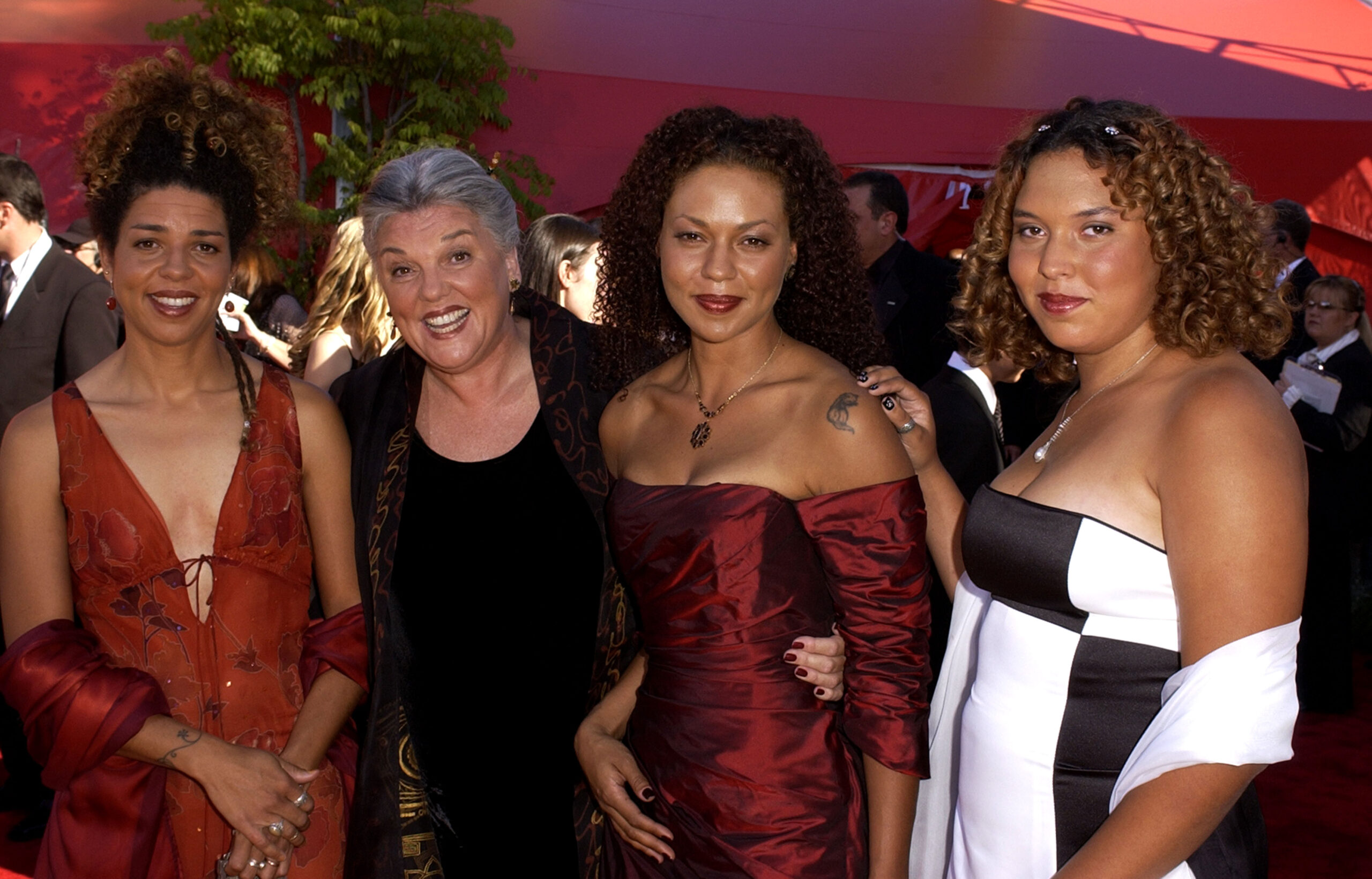
In a rare family reflection, Tyne Daly once shared a photo of all three daughters together and wrote, “All my women are mothers now! Wow.” The comment was brief, but it captured the larger arc of the family’s story.
For many people, the headline will always be that Tyne Daly and Georg Stanford Brown were a high-profile couple whose marriage challenged the assumptions of their time. That part of their history remains important and enduring.
But the fuller legacy is found in the women they raised. Alisabeth Brown, Kathryne Brown, and Alyxandra Beatris Brown each followed a distinct path shaped by creativity, persistence, and independence.
Their lives did not unfold as copies of their parents’ fame. Instead, each daughter carved out a separate identity, whether through visual art, acting, or baking, while carrying forward the resilience that defined the family’s history.
That is what gives the story its lasting power. Their parents may have made history in public view, but the daughters show how that legacy continued in quieter and deeply personal ways.
In the end, the most enduring part of Tyne Daly and Georg Stanford Brown’s story may be exactly that: not only the barriers they challenged, but the family that grew from that courage and went on to create something meaningful in its own right.