
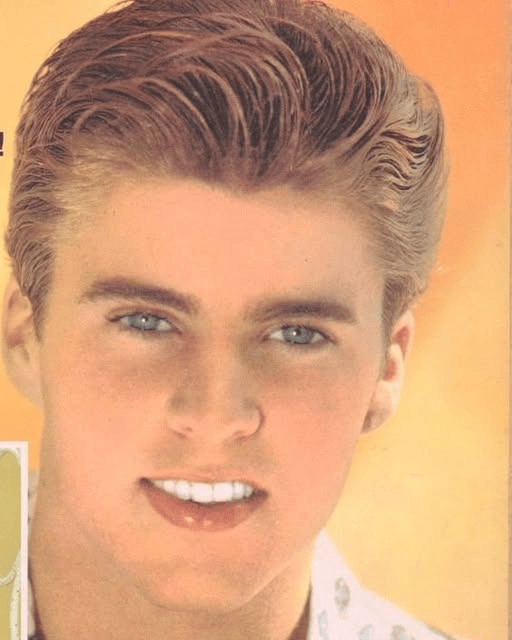
Ricky Nelson’s Final Tour and the Last-Minute Decision That Spared His Sons
From television child star to music sensation
Ricky Nelson spent much of his life in front of the public. Admired first as a familiar face on family television and later as a major recording artist, he became one of the most recognizable entertainers of his generation.
His career stretched across radio, television, and popular music, giving him a rare kind of fame that began in childhood and continued into adulthood. For many fans, his name remains tied not only to chart success, but also to the tragic ending of his life.
Yet one part of that story stands out in a very different way. A late change in travel plans kept his two young sons from boarding the same flight he would ultimately take alone.
A childhood shaped by family fame
Ricky Nelson was born Eric Hilliard Nelson in Teaneck, New Jersey, on May 8, 1940. He came into a household that was already closely connected to entertainment.
His parents, Ozzie Nelson and Harriet Hilliard Nelson, became widely known through “The Adventures of Ozzie and Harriet.” Their public image as a beloved family would later help shape Ricky’s early years in show business.
As a child, Ricky was described as shy and reserved. He also dealt with severe asthma, a condition that made sleep difficult and often required the use of a vaporizer with evergreen tincture at night.
John Guedel, Red Skelton’s producer, once called him “an odd little kid” and described him as likable, introspective, mysterious, and difficult to read. Even at a young age, he seemed to leave an impression on people around him.
When Red Skelton was drafted in 1944, Guedel created the radio version of The Adventures of Ozzie and Harriet for Ricky’s parents. The program premiered on Sunday, October 8, 1944, and received a positive response.
That success eventually grew into a long-running family institution. The Nelson family sitcom lasted sixteen years and set a record in sitcom history.
Ricky and his older brother David joined the cast while still young, appearing on the show at about 8 and 10 years old. Their lives at home and their lives on camera quickly became deeply connected.
School years and early tension at home
While working in entertainment, Ricky also attended Gardner Street Public School and later Hollywood High School. His education continued alongside a career that was already placing him in the public eye.
He was not known for loving school. That created tension with his father, who wanted him to go on to college.
By the time that question became serious, Ricky’s circumstances had changed in a way few teenagers could have imagined. He was already earning roughly $100,000 a year, a figure that made him financially secure long before most people even entered adulthood.
That level of success altered the expectations surrounding his future. College no longer seemed essential in the way his father had imagined, because his professional path had already taken shape.

The music breakthrough that changed everything
At 17, Ricky appeared in the episode “Ricky, the Drummer” on his family’s show. A song featured there became his first single, “I’m Walking.”
The release quickly climbed to number 4 on Billboard’s Best Sellers list. That achievement helped launch him into a new stage of fame and proved that his appeal extended well beyond television.
His rise in music came quickly after that. He used the visibility of his parents’ show to introduce songs to audiences before releasing them more widely.
The strategy worked. His popularity surged, and he became one of the standout young performers of the rock n’ roll era.
Among the songs associated with his success were “Garden Party,” “It’s Late,” “Fools Rush In,” “For You,” “Poor Little Fool,” and “Travelin’ Man.” With each new release, his place in popular music became more secure.
By the 1960s, he was regularly producing Top 40 hits. His career was no longer simply the story of a television son growing up on screen. He had become a major act in his own right.
Marriage and family life
Around 1961, Ricky began dating Kristin Harmon. Like him, she came from a Hollywood background, and the two families already knew one another well.
Their relationship developed in the public eye, but it was also rooted in familiarity and shared experience. Both had grown up around the entertainment world and understood its unusual pressures.
They married in April 1963. Together, they had four children: Sam Hilliard Nelson, twins Matthew Gray Nelson and Gunnar Eric Nelson, and daughter Tracy Kristine Nelson, who would later become an actress.
Even as his fame continued, family became an important part of the picture surrounding Ricky Nelson’s public life. He was no longer just a former child performer or a hitmaker. He was also a husband and father raising children while maintaining a demanding career.
Success on the road and a fear of flying
Ricky’s continued success in music meant constant travel. Tours and promotions became regular parts of his professional routine.
That created a personal challenge because flying was something he strongly disliked. Despite the demands of his work, he remained uncomfortable with air travel.
His fear of flying was serious enough that he reportedly attended psychotherapy sessions in hopes of becoming more comfortable on planes. He wanted to keep performing, keep touring, and keep reaching the audiences that had supported him for years.
That struggle adds another layer to the story of his final trip. Air travel was not merely a routine part of his schedule. It was something he endured because his career required it.
The trip to Dallas that changed everything
Near the end of his life, Ricky was scheduled to travel to Dallas for a New Year’s show. The plan originally included his sons Matthew and Gunnar.
That arrangement changed shortly before the trip. Gunnar later recalled the moment in his own words.
“We were supposed to be on the plane on that trip. Our dad called us right before we were supposed to come down to Alabama and meet him and fly with him to the New Year’s show in Dallas.”
For reasons that were never fully explained, Ricky decided his sons would not join him. The source text describes it as a bad feeling or premonition that led him to change the plan only days before departure.
There had also been reported engine trouble involving the plane a few days before the scheduled flight. Whatever shaped his decision, the result was that Matthew and Gunnar did not board the aircraft.
That last-minute choice would prove enormously significant. What might have become an even greater family loss was narrowly avoided.

The fatal flight
Ricky boarded a DC-3 plane in Alabama without his two sons. As the aircraft neared its destination, the cabin filled with smoke.
A fire broke out on board, leading to a devastating outcome. Ricky Nelson and the other passengers on the plane lost their lives.
The pilot was able to land the aircraft in Texas, but the emergency came too late to save those in the cabin. The tragedy ended the life of a performer whose career had spanned decades and multiple eras of American entertainment.
For the Nelson family, the loss was both public and deeply personal. For fans, it marked the shocking end of a life that had unfolded before audiences since childhood.
Questions that remained after the crash
The cause of the onboard fire remained unresolved for many years. Even thirty years later, the exact origin of the blaze was still described as a mystery.
As often happens after high-profile tragedies, many rumors emerged. Some of those stories focused on claims about drug use involving Ricky and his then-girlfriend Helen Blaine.
Those claims were strongly rejected within his family. Ricky’s brother David firmly denied that his brother used cocaine.
Greg McDonald, Ricky’s manager, later said that Ricky and Helen were asleep in the cabin when the fire began. That account pointed attention back toward conditions on the aircraft itself rather than toward speculation.
Tracy Nelson, Ricky’s daughter, later shared her own belief about what may have happened. She said she believed a mechanical problem was responsible for the tragedy.
She explained that the plane, sometimes called the “Flying Bus” because of its slow speed, had a history of problems with its gasoline heater. In her view, that issue could have caused an accidental fire.
That explanation did not bring a definitive resolution, but it reflected a belief held within the family that the disaster was connected to the aircraft rather than to rumor.
A loss remembered through family and music
Ricky Nelson’s death left behind grief, unanswered questions, and a legacy that stretched across television and music. He had been part of American popular culture since childhood and had successfully grown beyond that early image.
His life story also carried an extraordinary final detail: the decision that kept Matthew and Gunnar off the plane. In the midst of a terrible loss, that last-minute call prevented an even greater tragedy from striking the family.
The twins later built successful music careers of their own. In doing so, they carried part of their father’s artistic legacy into a new generation.
For them, that work was not simply professional. It also held personal meaning tied directly to remembrance.
“It’s an ongoing labor of love, an open letter to our dad, who was our best friend.”
That statement captures the emotional thread running through the story long after the accident itself. Ricky Nelson remains remembered not only as a teen idol, hitmaker, and television star, but also as a father whose final decision spared his sons from sharing his fate.
His career brought him fame early, kept him in front of audiences for years, and made him one of the most televised musicians of his time. His death brought sorrow and uncertainty, but the family story that followed also revealed a narrow escape that would shape how his children remembered him for the rest of their lives.