
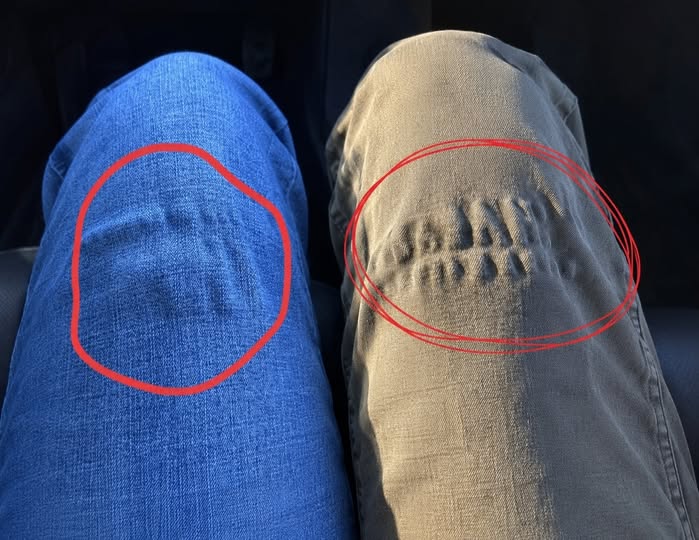
Why Your Jeans Suddenly Develop Strange Ripples — And How to Prevent It
The Hidden Damage Happening Inside Your Denim
Your favorite jeans may not wear out all at once. In many cases, the damage happens slowly and quietly over time.
At first, the denim looks normal. Then small ripples begin appearing near the thighs, knees, or seams. Eventually the fabric starts twisting, puckering, or shrinking unevenly in ways that seem impossible to fix.
Many people assume the jeans were poorly made or simply old. In reality, everyday washing habits are often the real cause.
Modern denim is no longer made from stiff cotton alone. Most jeans now include elastane or other stretch fibers designed to make the fabric softer, more flexible, and more comfortable to wear.
That stretch material helps jeans fit better, but it is also far more delicate than traditional denim fibers.
How Heat Slowly Breaks Down Stretch Denim
One of the biggest threats to stretch denim is heat.
Hot water and high dryer temperatures place stress on elastane fibers hidden inside the fabric. Over time, those fibers begin to weaken and lose their elasticity.
As the stretch material breaks down, the cotton surrounding it reacts differently during washing and drying cycles.
The cotton may shrink at one rate while the damaged elastane contracts unevenly beneath the surface. This imbalance causes the denim to pull in strange directions.
That is when ripples, waves, and twisted seams start appearing.
Once these distortions become deeply set into the fabric, they are often difficult to reverse completely.
Even ironing may not smooth them out because the issue is happening inside the material structure itself.
Why Dryers Cause So Much Trouble
Dryers are especially harsh on stretch denim.
High heat forces fibers to contract rapidly. Repeated exposure weakens the flexible materials woven into the jeans.
Many people throw denim into the dryer without thinking twice, especially after a long day or during busy routines.
But every overheated drying cycle slowly shortens the life of the fabric.
The damage often appears gradually rather than immediately.
At first, jeans may simply feel tighter after drying. Later, the surface texture changes and seams begin looking uneven.
Eventually the fabric develops permanent puckering that no amount of smoothing can fully remove.
Washing Habits That Speed Up Fabric Wear
The way jeans are washed also affects how long they keep their shape.
Overcrowding the washing machine creates friction between garments. Heavy items rubbing together place extra strain on denim fibers.
Aggressive wash cycles can twist the fabric repeatedly, especially when combined with heat.
Turning jeans right side out during washing also exposes the outer surface to more direct abrasion.
Over time, all of these factors contribute to fading, distortion, and weakening inside the material.
Even expensive jeans can begin showing wear patterns early if they are cleaned too roughly.
Why Stretch Denim Requires Extra Care
Traditional denim made entirely from cotton behaves differently from modern stretch blends.
Older denim styles were often stiff but highly durable. Stretch denim feels softer and more comfortable, but it demands gentler treatment.
The elastane woven into modern jeans cannot tolerate extreme heat for long periods.
Once those fibers lose their flexibility, the fabric no longer relaxes evenly after washing.
That is why some jeans begin looking warped despite appearing relatively new.
The issue is not always visible immediately after washing. Sometimes the damage builds slowly across many cycles before the surface starts changing noticeably.
Simple Changes That Help Jeans Last Longer
A few small adjustments can significantly reduce wear on denim.
Cold water is one of the safest choices for washing jeans because it places less stress on stretch fibers.
Gentle wash cycles also reduce twisting and friction inside the machine.
Turning jeans inside out before washing protects the outer surface from unnecessary abrasion.
Leaving more space inside the washer can also help fabrics move more naturally instead of being compressed tightly together.
These simple habits help preserve the structure of the denim over time.
The Safer Way to Dry Denim
Air drying remains one of the best ways to protect stretch jeans.
Allowing denim to dry naturally helps fibers relax gradually rather than shrinking rapidly under intense heat.
If using a dryer is necessary, lower heat settings are far gentler on the material.
Many fabric problems become worse when jeans stay inside a hot dryer for too long.
Removing them while they are still slightly damp can help prevent deep wrinkles and uneven shrinking.
Hanging the jeans afterward allows gravity to help the fabric settle back into shape more naturally.
Why Some Damage Cannot Be Fully Reversed
Once elastane fibers lose their elasticity, the fabric structure changes permanently.
This is why some ripples remain visible even after careful ironing or steaming.
The outer denim may appear intact, but the hidden stretch fibers underneath are no longer functioning correctly.
As a result, the cotton layers pull unevenly and create lasting distortions across the garment.
The earlier these issues are prevented, the easier it is to keep jeans looking smooth and properly fitted.
Keeping Denim Looking New for Longer
Many people wear jeans more often than almost any other item in their wardrobe.
Because denim is considered durable, it is easy to overlook how sensitive modern fabric blends can actually be.
Repeated exposure to heat, rough washing, and aggressive drying slowly weakens the materials designed to keep jeans flexible and comfortable.
With gentler care, however, denim can maintain its appearance far longer.
Cold water, reduced heat, gentle handling, and proper drying methods all help preserve the shape and texture of the fabric.
Small routine changes may not seem important at first, but they can dramatically slow the rippling and warping that eventually ruin many pairs of jeans.
Instead of shrinking unevenly or developing twisted seams, properly cared-for denim stays smoother, fits better, and keeps its structure through far more washes.