
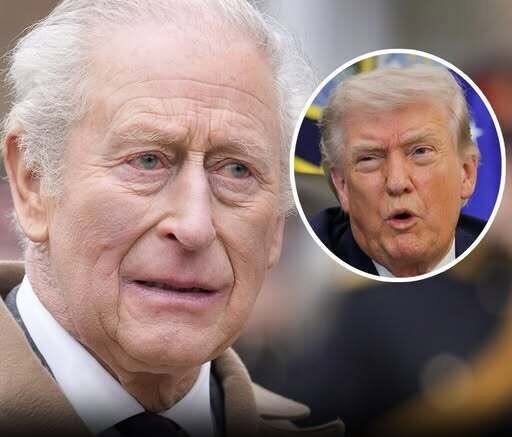
King Charles III Speech Sparks Debate Over Possible Message To Donald Trump
A Royal Tribute That Drew Global Attention
Buckingham Palace has long been associated with careful language, diplomatic restraint, and messages shaped by centuries of royal tradition. A recent address by King Charles III has now become the subject of intense public discussion after listeners began examining whether the monarch’s words carried a deeper political meaning.
The speech was delivered during a commemorative occasion connected to what would have been the 100th birthday of Queen Elizabeth II. The event was expected to focus on remembrance, duty, and the enduring legacy of Britain’s longest-reigning monarch.
At first, the King’s remarks followed that expected path. He spoke about his mother’s steady devotion to service, her discipline during moments of uncertainty, and her ability to remain a calm presence through decades of global change.
Yet the address soon moved beyond personal tribute. As King Charles reflected on the condition of the world today, one line drew particular attention and quickly became the center of political interpretation.
The Line That Triggered Speculation
King Charles suggested that the current era would likely have troubled his mother deeply. On the surface, the remark could be understood as a broad reflection on modern instability, social change, or the pressures facing institutions around the world.
For royal observers, however, the wording carried greater weight. A monarch rarely speaks in direct political terms, especially when the subject involves international affairs or foreign leaders.
Because of that tradition, even a carefully framed expression of concern can attract intense scrutiny. Words that might appear general in another setting can take on a sharper meaning when delivered by a reigning King.
The phrase was immediately interpreted by some commentators as more than a sentimental reflection. They viewed it as a possible warning about the direction of Western politics and the growing tensions surrounding leadership, alliances, and global stability.
Why Some Saw A Hidden Political Message
The debate quickly turned toward the United States and Donald Trump. The timing of the speech, combined with the King’s choice of language, led some analysts to argue that the message was aimed at broader political movements associated with populism and isolationism.
Queen Elizabeth II lived through some of the most consequential events of the modern era. Her reign overlapped with World War II, the Cold War, the fall of the Berlin Wall, and decades of shifting global alliances.
By saying that today’s climate would have troubled her deeply, King Charles appeared to place the present moment in comparison with those earlier periods of upheaval. That comparison is one reason the remark drew such strong reactions.
For those reading the speech as a coded message, the King was not simply speaking about change. He was suggesting that the political atmosphere now facing the West represents a serious challenge to the values of stability, cooperation, and institutional continuity associated with his mother’s reign.
The Monarchy’s Tradition Of Political Neutrality
The British monarch is expected to remain politically neutral. That expectation is central to the modern constitutional role of the Crown.
King Charles cannot openly endorse political candidates or criticize elected leaders in the way a party figure or commentator might. His position requires careful balance, especially when speaking about issues connected to foreign governments.
This makes royal language unusually important. When direct criticism is unavailable, tone, timing, and historical references can become powerful tools of communication.
The address showed how a monarch can influence public debate without naming a person or party. A single sentence, placed inside a tribute to Queen Elizabeth II, was enough to generate international conversation.
The Queen’s Legacy As A Symbol Of Stability
Much of the speech centered on Queen Elizabeth II as a figure of endurance. King Charles described her as someone who embodied patience, duty, and resilience across generations.
That framing gave the later remarks added significance. By presenting his mother as a symbol of steadiness, the King created a contrast between her public values and the uncertainty he sees in the present age.
The power of the message came from that contrast. The Queen’s memory was not used only as a personal tribute, but also as a standard against which the modern world could be measured.
In that sense, the address carried emotional and political force at the same time. It honored a mother and former monarch while also inviting listeners to consider whether today’s leaders are preserving the kind of stability she represented.
Donald Trump And The Royal Context
Donald Trump’s relationship with the British royal family has often attracted attention. He has publicly expressed admiration for Queen Elizabeth II, yet his political style and policy positions have frequently been viewed as very different from the causes King Charles has long supported.
King Charles has spent decades associated with environmental concerns and international cooperation. Trump’s rhetoric and political priorities have often been linked to a more confrontational and nationalist approach.
That contrast is one reason the King’s remarks were interpreted through an American political lens. Even without naming Trump, the speech arrived in a climate where his influence remains one of the most discussed issues in Western politics.
For many observers, the reference to a troubling present seemed impossible to separate from the larger debate over the future of the United States, the United Kingdom, and the alliances that have shaped the postwar world.
A Sensitive Moment Before A Diplomatic Visit
The timing of the speech added further attention. King Charles and Queen Camilla are expected to travel to the United States for high-profile diplomatic meetings with American leadership.
That planned visit is intended to reinforce the Special Relationship between Britain and the United States. Such visits are usually designed to emphasize friendship, continuity, and shared interests.
Because of that context, the King’s words were examined even more closely. A remark about the troubling nature of the present moment sounded especially notable before a major diplomatic engagement.
Some interpreted the timing as evidence of a more assertive approach from King Charles. Rather than remaining entirely passive, he appeared willing to use carefully chosen language to express concern about the direction of world affairs.
Different Interpretations Of The Same Speech
Not everyone accepted the idea that the King was referring to Donald Trump or any specific political movement. Critics of that interpretation argued that the speech could simply have been a personal reflection from a son remembering his mother.
They noted that the King may have been speaking broadly about climate change, artificial intelligence, social division, or the general pace of modern disruption. In that reading, the phrase was not a political warning but a human observation.
Royal speeches often allow room for multiple meanings. Their language is usually formal, restrained, and broad enough to avoid direct controversy.
That openness is also what makes them powerful. Different audiences can hear the same sentence and attach it to the issue they believe matters most.
The Power Of Carefully Chosen Words
The reaction to the speech showed how closely modern royal communication is watched. Every phrase from a head of state can be measured against current headlines, especially when the world is already focused on political uncertainty.
King Charles did not need to name Trump, the United States, or any political party for the address to become part of a larger debate. The meaning came from implication, context, and the emotional authority of Queen Elizabeth II’s memory.
The Palace has not offered a clarification or correction. That silence has allowed the discussion to continue without turning the King’s remarks into an official political statement.
In royal communication, silence can sometimes preserve the impact of a message. It allows the words to remain public while avoiding the direct confrontation that a formal explanation might create.
A New Chapter For The Special Relationship
The speech has placed renewed attention on the future of relations between Britain and the United States. The Special Relationship has survived many changes in leadership, public opinion, and global strategy.
Yet the current moment appears more complicated. Questions about alliances, political stability, and the role of traditional institutions remain central to the public conversation.
King Charles used the occasion of his mother’s remembrance to speak about continuity and concern. Whether his words were intended as a direct signal or a broader reflection, they became part of a much larger debate about leadership in the modern West.
As the King prepares for diplomatic engagement with American leaders, his remarks will likely continue to shape how observers read every public gesture. Handshakes, speeches, and ceremonial moments may now be viewed through the lens of that single sentence.
A Quiet Message With Lasting Impact
The address demonstrated the unusual influence of monarchy in a media age dominated by direct statements and loud political conflict. King Charles did not raise his voice, name an opponent, or issue a formal warning.
Instead, he relied on a carefully framed reflection about Queen Elizabeth II and the state of the world she left behind. That was enough to create global discussion.
The result is a speech that functions on more than one level. It is a tribute to a late monarch, a meditation on uncertainty, and possibly a subtle expression of concern about the direction of international politics.
Whether the remark was aimed at Donald Trump, modern populism, or the broader instability of the present era, its effect is clear. King Charles III showed that even within the limits of royal neutrality, a monarch can still shape the conversation.
In a time when politics is often defined by forceful speeches and direct confrontation, the King’s address reminded the public that restraint can carry its own power. A quiet sentence, placed at the right moment, can echo far beyond the walls of Buckingham Palace.