
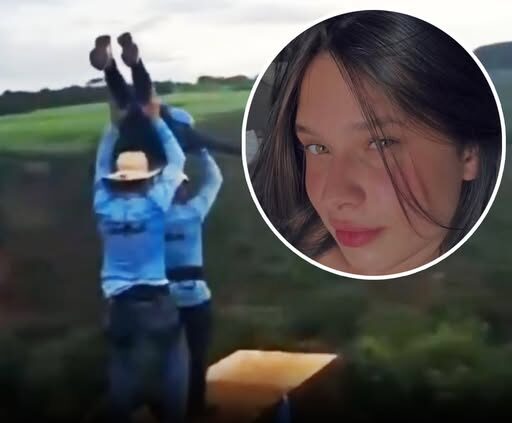
Young Woman Dies After 40-Meter Fall From Bridge During Failed Rope Jump
A Thrill-Seeking Visit Ends in Tragedy
A 21-year-old woman’s search for an adrenaline-filled experience ended in disaster after she fell approximately 40 meters from a bridge with no safety rope securing her.
Maria Eduarda Rodrigues de Freitas had gone to the place known as the “Skeleton Bridge” expecting excitement and adventure. Instead, the outing became a fatal incident that left witnesses horrified, her family grieving, and investigators trying to determine how such a basic safety failure could happen.
The activity was supposed to involve a controlled jump from the bridge, with a cord or rope system preventing the participant from falling freely. But in Maria’s case, the equipment that should have protected her was allegedly not attached when she went over the edge.
Witnesses described a chaotic scene after the fall. People who had come to watch or participate quickly realized something had gone terribly wrong. Screams broke out as it became clear that Maria had not been secured before the jump.
The Rope That Never Protected Her
The most disturbing detail of the case is the rope itself. The cord that should have stopped Maria’s fall was reportedly lying useless on the ground while she was sent into the void.
That single detail has become central to the investigation. In an activity where every step depends on careful checks, the failure to attach the safety equipment raises serious questions about supervision, training, responsibility, and the way the operation was being run.
Maria was allegedly guided to the edge and pushed before anyone confirmed that her life was actually secured. Only after she had fallen did the awful reality become clear: the system intended to save her had not been connected to her.
For witnesses, the seconds after the jump were filled with shock and confusion. What should have been a controlled thrill became an uncontrolled fall from a dangerous height.
The tragedy has drawn attention not only because of the fall itself, but because it appears to have been preventable. The equipment was present, but it was not used in the way that could have protected her.
Questions Over the Operation
The activity around the “Skeleton Bridge” is now under intense scrutiny. The operation has been described as allegedly unlicensed, poorly organized, and careless in the handling of safety procedures.
Maria’s death has raised concerns about whether the people involved had the proper authority, training, or structure to offer such a dangerous activity to the public. In extreme experiences involving height and ropes, even one missed step can become fatal.
Investigators are now focusing on how the group operated and who was responsible for each part of the jump process. The case appears to involve multiple people, but early statements have suggested confusion over who was actually in charge.
That lack of clear responsibility may become one of the most important elements in the investigation. When no one accepts a defined role, it becomes harder to identify who performed the final safety check, who authorized the jump, and who failed to stop it.
The alleged lack of licensing adds another layer of concern. Activities involving bridge jumps and rope systems require strict safety discipline because participants depend entirely on the staff and equipment around them.
Witnesses Watch in Horror
Those present at the bridge reportedly saw Maria approach the jump area as part of what should have been a thrilling experience. Moments later, the atmosphere changed completely.
The jump went forward, but the rope that should have held her was not attached. The fall from the bridge immediately turned the scene into panic.
Witnesses screamed as they realized Maria was not being held by any safety system. The height of approximately 40 meters made the incident devastating within seconds.
For people standing nearby, the contrast was unbearable. One moment, Maria was preparing for an adventure. The next, everyone around her understood that something catastrophic had happened.
The scene became even more chaotic after the fall. Instead of immediately facing authorities and explaining what had occurred, some staff members reportedly ran from the area.
Staff Reportedly Flee Into the Woods
After the incident, the behavior of some people connected to the operation became another focus of public anger and police attention.
Some staff members reportedly fled into nearby woods as the situation unfolded. Their attempt to disappear from the area intensified suspicion and made the response even more dramatic.
Helicopters were used in the search as authorities worked to locate those who had left the scene. What began as an investigation into a fatal jump quickly became a wider effort to find and question the people involved.
The decision to run away after such a serious incident has raised further questions about the mindset of those operating the activity. A fatal accident demands immediate accountability, cooperation, and assistance to investigators.
Instead, the reported flight into the woods suggested panic, fear, or an attempt to avoid responsibility. For Maria’s loved ones, that detail only deepened the pain surrounding her death.
A Chilling Response During Questioning
When police eventually located one of the organizers, investigators sought answers about who was responsible for Maria’s final safety check.
The response stunned many following the case. When pressed on the crucial question of who gave the final confirmation before Maria was sent over the edge, the organizer said, “I can’t remember.”
Those words have become one of the most haunting parts of the tragedy. In a situation where a young woman’s life depended on a clear safety procedure, the person questioned could not identify who had made the final decision.
The answer also reflected the broader concern that duties may not have been clearly assigned. The organizer claimed that everyone shared responsibilities, leaving no single person obviously in charge.
That type of arrangement can be especially dangerous in high-risk activities. When several people are vaguely responsible, critical tasks can be missed because each person assumes someone else has handled them.
Six People Face Questioning
The investigation now involves six people who face questioning over the circumstances that led to Maria’s death.
Authorities are working to determine who organized the activity, who handled the equipment, who guided Maria to the edge, who gave instructions, and who should have confirmed that the rope was secured.
Each of those roles matters. In a rope-based jump, the safety chain depends on multiple steps being performed correctly and checked before the participant leaves the platform.
If any one of those steps fails, the consequences can be irreversible. In Maria’s case, the most important protection system was allegedly not connected at the moment it was needed.
The investigation may also examine whether the operation had proper oversight, whether workers were adequately trained, and whether participants were led to believe they were in safer hands than they actually were.
A Family Left Grieving
At the center of the case is Maria Eduarda Rodrigues de Freitas, a young woman who went to the bridge expecting a moment of excitement.
Her death has left her family facing a devastating loss and painful questions. They are left to wonder how an activity promoted as a thrill could become deadly because of an apparent failure to complete the most basic safety step.
For her loved ones, the details of the case are especially difficult because the tragedy appears to have happened in front of others and in a setting where safety equipment was supposed to be part of the experience.
The image of the rope lying unused while Maria fell has become a painful symbol of negligence. It represents the difference between a frightening but controlled jump and a fatal fall.
Her family’s grief is now tied to a broader public demand for accountability. People want to know who allowed the jump to proceed and why no one stopped it before it was too late.
How Responsibility Became Unclear
One of the most troubling aspects of the incident is the claim that duties were shared among the staff.
Shared responsibility can work only when every role is clearly defined. In a dangerous activity, there must be a specific person responsible for equipment checks, another for participant readiness, and another for giving final authorization.
When those roles blur, safety can break down. A rope may be assumed to be attached when it is not. A final inspection may be skipped because no one knows who is supposed to perform it.
The statement that no one was clearly in charge has become a major concern in the aftermath of Maria’s death. It suggests that the operation may have lacked the structure needed to protect participants.
In a controlled jump, the final safety check is not a small detail. It is the last barrier between a participant and a fatal fall.
A Preventable Nightmare
Maria’s death has sparked outrage because the circumstances point toward a preventable failure rather than an unavoidable accident.
The bridge, the height, and the nature of the activity were all known risks. Those risks are precisely why safety ropes, procedures, and trained staff are required.
Participants in such activities place their trust in the people running them. They rely on staff to inspect the equipment, secure the rope, verify the connection, and stop the jump if anything is wrong.
Maria had no reason to expect that the system meant to protect her would not be attached. The moment she stepped onto the bridge, her safety depended on the competence and care of others.
The tragedy shows how quickly an extreme activity can become deadly when safety is treated casually. A missing connection, a failed check, or an unclear chain of command can destroy a life in seconds.
A Case That Demands Answers
The investigation into Maria’s death continues as authorities question those connected to the operation.
Police are working to reconstruct the moments before the fall, including how Maria was prepared for the jump, who handled the rope, and who allowed her to go over the edge without being secured.
The reported flight of staff members into the woods has also become part of the larger picture. Their behavior after the incident may help investigators understand what they knew, what they feared, and why they did not remain at the scene.
The case has captured attention because it combines shock, grief, and a deeply troubling safety failure. A young woman went to a bridge for excitement and never returned home.
For the public, the question is no longer only what happened. It is how so many people could be involved in a dangerous activity without anyone ensuring that the most important safety measure was in place.
The Human Cost of Carelessness
Maria Eduarda Rodrigues de Freitas was 21 years old when she died. Her life was cut short during an activity that should never have gone forward without a secured rope.
The people now facing questioning may be asked to explain not only their individual actions, but also the way the entire operation functioned. Investigators must determine whether Maria’s death resulted from confusion, neglect, lack of training, or a wider failure of responsibility.
Whatever the final findings show, the tragedy has already exposed the devastating consequences of careless safety practices. In activities built around danger, trust is everything.
Maria trusted that the people around her had checked the equipment. She trusted that the rope would be attached. She trusted that the jump was being controlled.
That trust was broken in the worst possible way.
A Warning Beyond One Bridge
The death at the “Skeleton Bridge” now stands as a warning about the risks of poorly managed extreme activities.
Thrill-seeking experiences depend on preparation, discipline, and accountability. Without those safeguards, the excitement that attracts participants can turn into tragedy almost instantly.
Maria’s case has left a country asking how an activity involving a 40-meter fall could proceed without someone confirming that the safety rope was attached.
The answer to that question will matter far beyond this one incident. It may determine whether those responsible face consequences and whether similar operations are forced to take safety more seriously.
For Maria’s family, no answer can undo what happened. But the search for accountability remains essential, because her death should not become just another shocking story.
It should become a reminder that every safety check exists for a reason, and that ignoring even one of them can cost a person their life.