
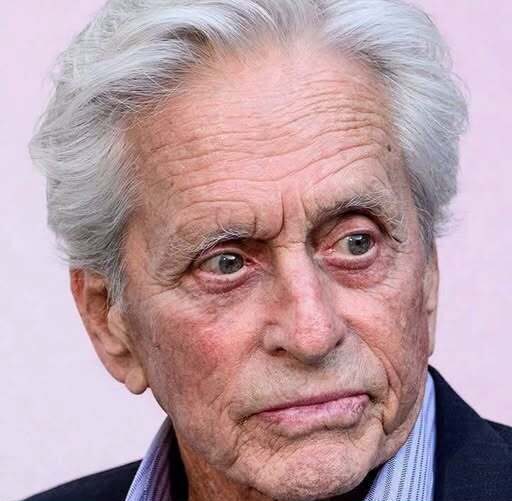
Michael Douglas Steps Back From Hollywood After Nearly Six Decades in Film
A Quiet Decision After a Long Career
Michael Douglas has reached a turning point after nearly sixty years in the entertainment industry, choosing to step away from the demanding rhythm of Hollywood rather than continue chasing one more role, one more production, or one more public milestone.
The decision has drawn attention because it does not appear to be built around spectacle. There is no suggestion of a grand farewell tour, no carefully staged final performance, and no visible attempt to turn his departure into a dramatic industry event.
Instead, Douglas appears to be making a quieter choice, one centered on health, family, and personal peace. After decades of working under the pressure of studio schedules and public expectations, he is choosing a different kind of life.
A Career Built on Reinvention
Douglas has long been associated with reinvention. His career stretched across generations of filmmaking, allowing him to move between producing, acting, and shaping stories that left a lasting mark on cinema.
One of the defining points in his career was his involvement with One Flew Over the Cuckoo’s Nest, a project that helped establish him as more than a performer. It connected him to the creative and producing side of the industry, showing an early instinct for material with emotional and cultural force.
Later, his portrayal of Gordon Gekko became one of the most recognizable performances of his career. The role captured a cold, controlled vision of ambition and power, creating a screen figure that remained closely tied to public memory.
Those milestones helped define Douglas as an artist who understood both the business and emotional machinery of Hollywood. He was not only appearing in stories; he was often helping drive them forward.
Choosing Life Over the Camera
The meaning of his decision lies not only in leaving work behind, but in what he appears to be choosing instead. Douglas is stepping away before decline becomes the public’s focus and before the demands of performance begin to outweigh the rewards.
For many performers, the camera becomes a lifelong obligation. The industry often rewards endurance, visibility, and the ability to remain present even when the personal cost becomes heavy.
Douglas’s decision challenges that pattern. Rather than allowing Hollywood to determine the timing of his exit, he is shaping that moment himself.
That makes the move less like a retreat and more like an act of control. After a lifetime spent inside scripts, productions, and studio expectations, he is now deciding the direction of his own story.
The Toll Behind the Legacy
The career Douglas built came with pressure that stretched across decades. The physical and emotional demands of high-profile work can accumulate quietly, especially for someone who spent much of his life moving from one demanding project to another.
His decision comes after personal trials that changed the way he viewed time and priorities. He has faced cancer, the effects of aging, and the exhaustion that can follow a long career lived in public view.
Those experiences did not erase his legacy, but they appear to have altered his sense of what matters most. The work that once defined his public life no longer holds the same position at the center of his world.
For Douglas, the issue is not simply whether he can continue. The deeper question is whether continuing would still serve the life he wants to live.
No Need for a Sentimental Goodbye
What stands out about Douglas’s choice is its lack of sentimentality. He does not seem interested in turning his exit into an extended goodbye or asking the industry to celebrate him one final time.
That restraint gives the decision a different kind of weight. It suggests a man who understands what he has already accomplished and does not need another public confirmation of his place in film history.
For an actor whose career included sharp portrayals of power, ambition, and control, this final professional turn feels unusually personal. The power now lies in refusing to perform simply because people expect him to continue.
In stepping back without a theatrical farewell, Douglas is allowing the body of work to stand on its own. He is not adding a final chapter for applause; he is closing the book on his own terms.
A Slower Rhythm at Home
The shift also reflects a desire for a slower and more deliberate pace. After years of overlapping shoots, production pressures, and public demands, Douglas appears to be placing greater value on calm and private life.
Part of that new rhythm includes watching his wife, Catherine Zeta-Jones, continue her own artistic path. Rather than remaining locked in the race of constant work, he can now experience the quieter side of family and partnership.
That change marks a significant contrast with the life of a leading man. For decades, his schedule was shaped by deadlines, sets, scripts, and the constant movement required by major productions.
Now the center of attention is no longer the studio. It is the home, the marriage, and the daily peace that can easily disappear during a lifetime of professional momentum.
The Meaning of Working With Cameron
Douglas’s recent work with his son, Cameron, carries symbolic importance in this transition. Sharing the screen allowed him to connect his long professional history with the next generation of his family.
That moment offered more than another acting credit. It created a bridge between past and future, linking the Douglas name to continuity rather than personal burden.
For a performer with such a recognized surname and career, the idea of legacy can become complicated. It can feel like something that must be protected, extended, or constantly renewed.
By working with Cameron, Douglas helped shift that legacy into a wider family story. The name no longer has to rest only on his shoulders, and his place in that story does not require endless continuation.
Leaving Before Decline Becomes the Story
One of the most striking parts of this decision is the timing. Douglas is stepping away before the public conversation can focus on decline, weakness, or the visible costs of age.
Hollywood has often struggled with aging stars. Audiences can be quick to compare current appearances with younger images, and the industry can turn human aging into a public spectacle.
Douglas appears unwilling to let that become the defining frame around his final years in the spotlight. Rather than allowing others to narrate his decline, he is choosing the moment to step back.
That choice carries a sense of dignity. It suggests that knowing when to stop can be as meaningful as knowing how to keep going.
A Different Kind of Final Performance
In many ways, Douglas’s exit may be one of the most honest statements of his career. It does not rely on dialogue, awards, promotional campaigns, or a carefully lit final scene.
It is a statement made through absence. By removing himself from the relentless machinery of production, he is showing that personal peace can matter more than professional visibility.
That message is especially powerful because Douglas spent so much of his career playing characters shaped by force, ambition, and control. Now the control is quieter, but perhaps more meaningful.
He is not trying to outlast the industry. He is choosing not to be consumed by it.
Legacy Without the Need to Chase It
Douglas’s legacy is already tied to major moments in modern film history. From the production success of One Flew Over the Cuckoo’s Nest to the lasting cultural image of Gordon Gekko, his career has already secured its place.
That may be why the decision to step away feels less like an ending forced by circumstance and more like a conclusion reached through clarity. He does not need another role to prove his value.
The weight of legacy can push public figures to remain active long after the work brings them peace. Douglas seems to be resisting that pressure.
Instead of protecting his image by staying visible, he is protecting his life by becoming less visible. That is a difficult choice in an industry built on attention.
A Lesson in Knowing When to Stop
Douglas’s decision offers a broader lesson about timing, dignity, and self-knowledge. Success often teaches people how to keep pushing, but it does not always teach them how to stop.
After nearly sixty years of reinvention, he appears to have reached the point where stopping is not failure. It is wisdom.
There is strength in recognizing when the demands of a career no longer match the needs of a life. There is also courage in leaving before others decide that the time has come.
For Douglas, the curtain is not falling because he has been defeated. It is falling because he has chosen the moment himself.
A Man Beyond the Roles
For much of his public life, Michael Douglas was viewed through the characters he played and the films he helped bring to audiences. Those roles gave him fame, influence, and a permanent place in Hollywood history.
Now, the focus is shifting away from performance and toward the person behind it. The man who spent decades embodying other lives is choosing to spend more time inhabiting his own.
That may be the quiet power of this final chapter. It is not about another screen transformation, but about refusing to let the screen define everything.
Michael Douglas is leaving the center of Hollywood not with noise, but with intention. After a lifetime of playing men shaped by ambition, conflict, and power, he is choosing peace, family, and the right to write his own ending.