
Bengal Tiger Aasha’s Recovery Shows Why Wild Animals Do Not Belong in Circus Cages
A Young Tiger Found in Serious Condition
Wild animals are not meant to spend their lives performing for crowds, traveling from place to place, or living inside cramped cages. The story of Bengal tiger Aasha is a painful reminder of what can happen when a powerful wild animal is forced into an unnatural life from the very beginning.
Aasha was rescued from a traveling circus in 2011, when she was only nine months old. By that point, her life had already been marked by confinement, fear, and neglect.
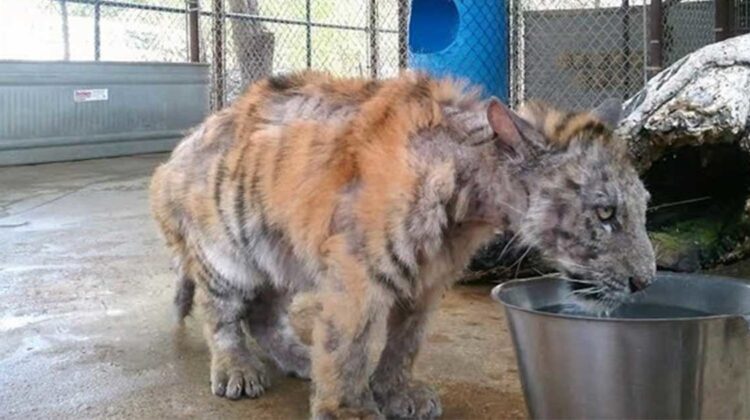
Although she was still very young, her body showed clear signs of suffering. She had spent her entire life in a cage with a much more aggressive tiger, and the conditions had taken a severe toll on her health.
Her fur was falling out, her skin was badly infected, and her growth had been affected so seriously that she was far smaller than she should have been. At nine months old, she weighed only as much as a tiger cub of about three months.
For a Bengal tiger, a species known for strength, size, and physical power, Aasha’s condition revealed just how much damage had been done during her early months in captivity.
Given a Chance at Recovery
After her rescue, Aasha was handed over to In-Sync Exotics, an organization that cares for wild felines that have suffered in captivity. Her arrival marked the beginning of a long and careful rehabilitation process.
She needed medical attention, daily care, patience, and a safe environment where her body could begin to heal. Her recovery was not immediate, and it required steady work from the people responsible for her treatment.
Vicky Keahey of In-Sync Exotics became closely involved in Aasha’s care. The young tiger needed medication twice a day, along with regular attention and treatment for her infected skin.
“Every day, twice a day, I would go in and give Aasha medications and spend time with her,” Vicky Keahey of In-Sync Exotics told The Dodo.
Those daily visits became an important part of Aasha’s recovery. They were not only about medicine, but also about helping a frightened young animal learn that the people around her were there to help rather than harm her.
At first, the treatment was difficult. Aasha needed special medical baths every day, and she did not enjoy them. The baths were necessary for her skin, but the young tiger resisted.
Vicky had to chase Aasha around her enclosure and guide her into the bath so the treatment could be completed. It was a challenging routine, but it was also one of the steps that helped save her.
Small Signs of Healing
After eight weeks of consistent treatment, Aasha began to show clear signs of improvement. Her fur started growing back, and her skin slowly began to recover from the painful infection.
The progress did not happen all at once, but each improvement showed that her body was responding. The tiger who had arrived weak, underweight, and visibly damaged was beginning to change.
Her relationship with the water changed as well. What had once been a stressful part of her medical care slowly became something she could enjoy.
As Aasha became healthier, she began to appreciate the baths that had once frightened and frustrated her. Even after her medical treatment ended and the baths were no longer required, Vicky continued running water for her.
This time, the baths were not only for healing. They became a way for Aasha to play, relax, and enjoy herself like a young tiger should.
That change was meaningful. Aasha had gone from being a sick and fearful cub forced into treatment to a growing tiger who could enjoy the same water she once tried to avoid.
Her recovery was not only physical. It also showed how much a safe environment and steady care can change the life of an animal that has suffered in captivity.
Growing Stronger Over Time
As the months passed, Aasha continued to grow healthier and stronger. Her body filled out, her coat improved, and her playful personality began to show more clearly.
There came a point when she was no longer small enough for Vicky to sit inside the enclosure with her safely. Aasha had grown too large for that kind of close contact.
That change was a positive sign. It meant she was finally developing into a healthier tiger after months of care and recovery.
Although Vicky could no longer sit with her inside the enclosure, their bond continued. They still played together through the cage, allowing Aasha to remain engaged and cared for while maintaining safe boundaries.
Aasha’s transformation showed the difference between neglect and proper care. The tiger who once looked much younger than her age was now stronger, healthier, and more active.
After eight months, her caretakers believed she had recovered enough for the next important step. It was time to see how she would respond to another tiger.
Meeting Smuggler
Aasha’s caretakers decided to introduce her to Smuggler, a male tiger who was also in need of companionship. The introduction was handled carefully and gradually.
At first, their cages were placed next to each other. This allowed them to see, smell, and approach one another while still remaining separated.
The arrangement gave staff the chance to observe their behavior safely. It also gave Aasha the ability to become familiar with Smuggler without being placed under immediate pressure.
Smuggler reacted quickly and positively. He appeared to take an immediate interest in Aasha, and the staff could see that the two tigers were responding well to each other.
There was a significant size difference between them. Smuggler was three times larger than Aasha, so the staff needed to be careful before allowing them to be together directly.
Even with that difference, their early interactions were promising. The two seemed comfortable near each other, and Aasha appeared happy with the attention and company.
After observing them side by side, the staff allowed supervised visits. These encounters gave the tigers a chance to interact more closely while still being monitored.
An Inseparable Pair
Aasha responded joyfully to the visits with Smuggler. After everything she had endured early in life, companionship became another important part of her new world.
The supervised meetings went well, and eventually the caretakers determined that Aasha and Smuggler were ready to live together permanently.
The decision marked a new chapter in Aasha’s recovery. She was no longer simply a rescued tiger receiving treatment. She had grown into a healthier animal with a companion and a more stable life.
Five years after Aasha and Smuggler became a pair, they remained inseparable. Their bond became a powerful contrast to Aasha’s earliest months, when she had been trapped in a cage with a vicious tiger and left in poor condition.
Now, instead of fear and suffering, her life included play, companionship, and care. She had changed from a sick cub into a healthy and playful adult tiger.
One of her greatest joys remained swimming. The same water that had once been used as part of difficult medical treatment became something she loved.
Aasha’s love of water became part of her personality, a sign of the playful life she was finally able to experience after her recovery.
Why Aasha Cannot Return to the Wild
Although Aasha became healthy, she will never be released into the wild. Her early life in captivity meant she did not develop all the skills a tiger would need to survive on her own.
Wild survival requires instincts, experience, and learned behaviors that captive animals may never fully gain. Because Aasha grew up in a circus environment, she was not given the natural development that a wild tiger would have had.
For that reason, the safest future for her is not release, but lifelong care in an environment where her needs can be met.
Her story does not erase what happened to her in the circus. It does, however, show what can happen when an abused animal is removed from harmful conditions and given proper treatment.
Aasha’s life changed because she was given medical care, patience, safety, and companionship. Her recovery required time, but it allowed her to become the healthy adult tiger she should always have had the chance to be.
A Reminder About Captive Wild Animals
Aasha’s story is remarkable because it ended with healing, but it began with suffering that should never have happened. A young tiger spent her earliest months confined, underfed, infected, and unable to grow properly.
Her condition at rescue showed the consequences of placing wild animals in environments that cannot meet their needs. A tiger is not a prop, a performer, or an attraction. It is a powerful wild animal with physical, emotional, and behavioral needs that cannot be reduced to entertainment.
When wild animals are kept in circus conditions, their lives can become defined by restriction and stress. Aasha’s childhood showed the damage that can be done before an animal even reaches adulthood.
Her recovery also shows the importance of intervention. Without care, her infection, stunted growth, and poor condition could have continued to worsen.
Instead, she was given a second chance. Through daily treatment and steady attention, she regained her health and discovered comfort, play, and companionship.
Aasha will never live the life of a wild tiger, but she no longer lives the life she had in the circus. She is safe, cared for, and free from the conditions that once caused her pain.
Her journey remains a strong example of why wild animals do not belong in circus cages. For Aasha, rescue meant survival, recovery, and the chance to live without fear of the abuse that shaped her earliest months.