
Strange Red Fungus in Garden Reveals Nature’s Unusual Survival Strategy
A Peaceful Morning Interrupted by a Powerful Odor
The morning began with the quiet calm of an ordinary day in the garden.
Soft sunlight had started to rise above the rooftops, spreading a warm golden glow across the yard. Dew covered the grass, and the air carried the familiar scent of damp soil and blooming flowers.
It was the kind of peaceful hour that often comes before the demands of the day begin. With a coffee mug in hand, the homeowner walked toward the flowerbeds to begin a usual morning routine.
Then everything changed.
A strong smell moved through the yard, sharp and unpleasant. It was not the smell of soil, plants, or morning air. It was closer to rotting meat.
The odor was so intense that it seemed to cling to the nose and throat. The first reaction was alarm, followed quickly by concern that something may have died somewhere in the garden.
The search began carefully. Each corner of the yard was checked, including the shrubs, plants, and flowerbeds. With every step, the smell grew stronger.
Then the source came into view.
A Disturbing Discovery Near the Flowerbed
Near the edge of one flowerbed, partly hidden beneath the plants, was a red shape that looked deeply unusual.
At first glance, it appeared almost like flesh. The color was bright crimson, and the surface looked wet in the morning light.
Several long, finger-like arms stretched upward from the center. They curled and twisted in different directions, creating the impression of something strange pushing up from the earth.
For a brief moment, the object looked as if it could be alive.
The sight transformed the peaceful garden into something unsettling. What had been a calm morning suddenly felt tense and unfamiliar.
The closer the homeowner moved, the more disturbing the object became. A dark, sticky substance covered parts of it, shining in the sunlight like fresh oil.
The smell also intensified. The odor of decay became nearly unbearable near the growth, making it difficult to stay close for long.
The red arms had narrowed tips smeared with black slime. Their shape resembled claws, and the contrast between the vivid red structure and the dark coating made the discovery look even more alarming.
Several possible explanations came to mind. Perhaps an animal had dragged something into the garden. Perhaps raccoons had disturbed a carcass overnight. Perhaps something had been buried and uncovered.
None of those possibilities felt comforting.
Searching for an Answer
Unable to understand what the object was, the homeowner took out a phone and photographed it from several angles.
The images made the discovery appear even stranger. The camera captured the glossy surface, the twisted red arms, and the dark slime in sharp detail.
A quick online search was made using a simple description: “Red slimy thing that smells like rotting meat.”
The answer appeared within seconds.
The strange growth was identified as Devil’s Fingers Mushroom, also known as Anthurus archeri.
The images matched the object in the garden almost exactly. The red arms, the dark slime, and the shocking appearance were all part of the same organism.
The discovery was not a dead animal. It was not a creature. It was not a piece of flesh.
It was a mushroom.
Though it looked like something from a nightmare, the object was a natural fungus with a remarkable method of survival.
The Fungus Known as Devil’s Fingers
Devil’s Fingers is originally native to Australia and Tasmania. Over time, it has appeared in other places as well.
Although it remains uncommon in many areas, people sometimes find it in gardens, forests, parks, and mulched soil far from its original habitat.
Its appearance is one of the main reasons it is so memorable. The fungus does not resemble a typical mushroom with a simple cap and stem.
Instead, it produces red arms that unfold from the ground. These arms can look like fingers, tentacles, or claws rising from the soil.
The fungus becomes even more striking because of the black slime that coats parts of its surface. That slime is one of the key parts of its survival strategy.
At first, the slime can make the fungus appear frightening. It can look like dried blood or decay, especially when seen unexpectedly in a garden.
However, the slime is not random. It has a purpose.
Why It Smells Like Rotting Meat
The odor produced by Devil’s Fingers is one of its most unusual features.
The smell can resemble rotting flesh, which is why many people initially assume that a dead animal is nearby when they encounter it.
In this case, the smell was strong enough to change the entire mood of the morning. It reached the homeowner before the fungus was even seen.
But the odor is not a defect or a sign of danger. It is part of the fungus’s reproductive strategy.
Devil’s Fingers produces the smell to attract flies. The dark slime on the fungus contains spores, and when flies land on the surface, those spores cling to them.
The flies then carry the spores away as they move through the environment. In this way, the fungus spreads by using insects drawn to the scent of decay.
The fungus effectively imitates a corpse. The insects respond to the deception, and the fungus benefits from their movement.
What first seemed disgusting became, on closer inspection, a highly effective natural process.
From Fear to Fascination
As more was learned about the fungus, the initial fear began to fade.
The object that had first seemed alarming slowly became fascinating. Every unsettling detail had a function.
The bright red color helped draw attention. The strong odor attracted insects. The open, finger-like shape helped expose the spore-covered slime.
Nothing about the fungus’s appearance was accidental. What seemed grotesque to a person was useful to the organism.
This realization changed the way the discovery was viewed.
At first, the fungus had been seen as a possible threat. After identification, it became an example of adaptation, survival, and biological design.
Nature does not always appear gentle or beautiful in the familiar sense. It does not only create flowers, birdsong, butterflies, and soft colors.
Sometimes nature creates things that are strange, unpleasant, or frightening at first glance. Yet even those forms can reveal careful and effective survival strategies.
How the Red Fingers Emerge
Before the red arms of Devil’s Fingers appear, the fungus begins in a much less dramatic form.
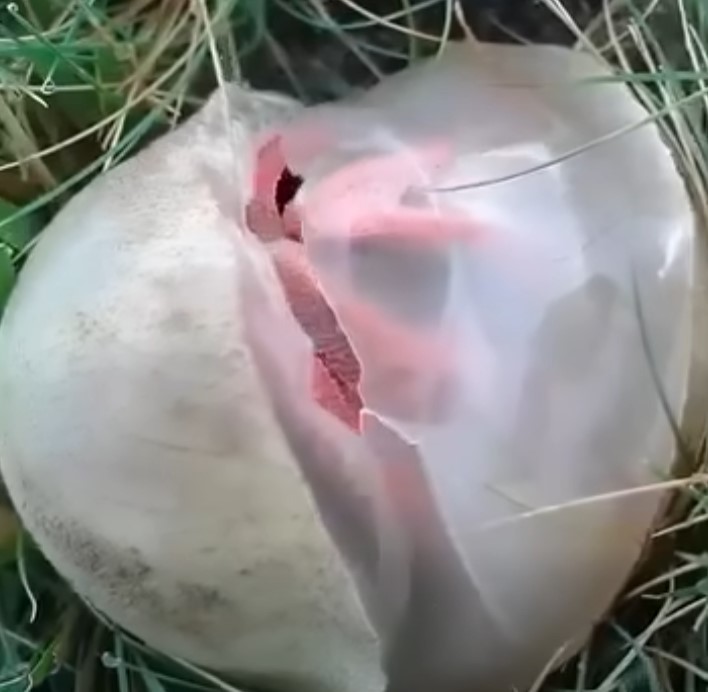
It starts as a pale, egg-like structure hidden in the soil. This stage can remain unnoticed because it does not yet display the bright red arms or produce the same shocking visual effect.
When conditions are right, the outer layer splits open. The red arms then emerge from inside.
They unfold slowly and strangely, creating the impression of something buried underground awakening.
This transformation is one of the reasons the fungus can feel so startling when discovered. It appears suddenly and looks unlike the ordinary growths most people expect to find in a garden.
In the garden, the fungus stood near rich soil, mulch, and decaying organic matter. Those conditions made sense for fungal growth.
What had seemed like a bizarre intrusion was actually part of the hidden life already taking place beneath the surface.
A Closer Look at the Garden Visitor
Over the next few days, the homeowner continued returning to the same part of the garden.
There was still some discomfort about the smell and appearance. Part of the reaction was a desire for the fungus to disappear.
At the same time, another part of the experience was curiosity. The fungus had become too unusual to ignore.
Each visit revealed something new. The crimson arms curved in different directions, creating a shape that looked almost sculpted.
The sunlight reflected on the wet surface, making the fungus seem as though it might move even while it remained perfectly still.
Tiny insects hovered nearby, drawn to the smell exactly as the fungus intended.
The garden, once familiar and predictable, suddenly felt more mysterious. Every patch of soil seemed capable of hiding something surprising.
The discovery suggested that remarkable things may exist close by, unnoticed until they rise into view.
A Rare and Meaningful Find
Photos of the fungus were later shared with a local mycology group.
The responses came quickly. Several knowledgeable members confirmed that the discovery was Devil’s Fingers.
The reaction was not dismissive. Instead, the find appeared to interest people who were familiar with fungi.
The reason was that sightings were still relatively uncommon in the area.
What began as a frightening moment in a private garden became something more meaningful. The discovery had value beyond the initial shock.
It became a small contribution to the wider observation of unusual fungi appearing in local environments.
The experience also changed the way the homeowner thought about the garden itself.
The yard was no longer only a place of flowers, grass, and routine morning walks. It was also part of a larger natural system filled with hidden processes.
Understanding Replaces Alarm
The discovery of Devil’s Fingers showed how quickly fear can grow when something is not understood.
When the red structure was first seen in the grass, the mind immediately searched for alarming explanations.
The smell suggested death. The color suggested flesh. The dark slime suggested something harmful or unnatural.
But the truth was more interesting than the fear.
The fungus was not dangerous in the way it first appeared. It was an organism using the tools available to it to reproduce and survive.
Its unsettling appearance was not meaningless. It was a solution shaped by nature.
That shift from fear to understanding became the most important part of the experience.
Once the fungus was identified, the same features that had seemed disturbing began to appear remarkable.
A Reminder of Nature’s Hidden Wonders
Eventually, the fungus disappeared from the garden.
The smell faded, and the flowerbed returned to its ordinary appearance.
Still, the memory remained clear.
The lasting impression was not only the shock of seeing red fingers rising from the soil. It was the wonder that followed once the mystery was solved.
The garden had offered an unexpected lesson. Not everything strange is dangerous. Not everything unsettling is harmful.
Sometimes the most frightening-looking things are simply unfamiliar forms of life carrying out their natural roles.
Devil’s Fingers may not match the usual idea of beauty, but it reflects the power of adaptation. Its shape, smell, and slime all serve a purpose.
The experience also showed the value of curiosity. Without taking time to look closer, photograph the object, and identify it, the discovery might have remained only a frightening memory.
Instead, it became a reminder that the natural world is full of surprises, even in an ordinary backyard.
Some wonders arrive quietly. Others announce themselves with a smell strong enough to stop a person in their tracks.
In this case, a horrifying red fungus transformed a peaceful morning into an unforgettable encounter with one of nature’s strangest survival strategies.