
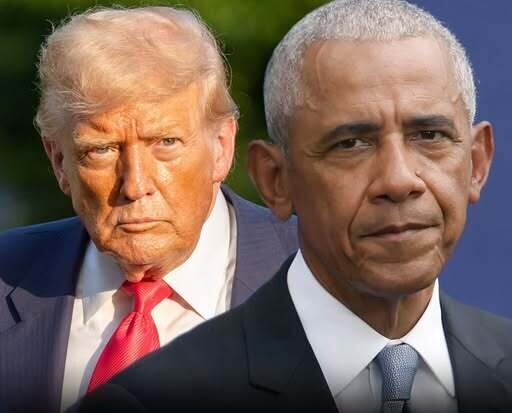
Barack Obama Pushes Back Against Donald Trump’s Long-Running Attacks
Obama Responds With Measured Criticism
Barack Obama has responded to Donald Trump’s repeated attacks with a calm but pointed message, turning years of criticism into a broader argument about leadership, focus, and presidential responsibility.
After being blamed by Trump for a wide range of issues, including matters as unusual as a reflecting pool, Obama used a podcast appearance to address what he described as Trump’s continuing fixation on him.
Rather than answering with anger or a lengthy personal defense, Obama framed Trump’s behavior as a sign of something deeper. His response was sharp, but it was delivered with restraint.
The former president described Trump’s attention toward him as an “obsession,” suggesting that the constant focus says more about Trump than it does about Obama.
A Cold Rebuke Instead Of A Rant
Obama’s comments did not come across as a political outburst. They were presented more like an analysis of Trump’s behavior and priorities.
He avoided the style of direct personal attack that has often defined Trump’s public remarks. Instead, Obama chose humor, contrast, and quiet criticism.
At one point, he joked that he has “a room” in Trump’s head, before correcting the image to “a suite.” The remark turned Trump’s repeated attacks into a punchline about insecurity and fixation.
The comment carried a clear message. Obama was suggesting that Trump’s continued attention to him reflects an inability to move on from the past.
Years Of Attacks Become Part Of A Larger Point
Trump has often used Obama as a political target, blaming him for problems and bringing him into public arguments long after Obama left office.
Obama’s response shifted the focus away from individual insults and toward the question of why Trump continues to return to him so often.
By describing the behavior as an “obsession,” Obama implied that Trump’s attacks are not simply political disagreement. He suggested they reveal a deeper preoccupation.
That framing allowed Obama to present himself as the calmer figure in the exchange. He did not try to match Trump’s tone. He instead treated Trump’s behavior as something that could be examined and judged.
The Contrast With George W. Bush
Obama also compared Trump’s conduct with his own experience after entering the White House. He said that when he became president, worrying about George W. Bush was “the last thing” on his mind.
That comparison was one of the clearest parts of his criticism. Obama argued that once a president takes office, the job should demand full attention.
His point was not only personal. It was about what a president should be focused on while holding power.
Obama suggested that governing requires attention to the country’s needs, not constant arguments with the person who previously held the office.
A Question Of Presidential Focus
The heart of Obama’s message was that a president who remains consumed by a predecessor may not be properly focused on the public.
He drew a line between governing and grievance. In Obama’s view, the responsibilities of the presidency leave little room for personal fixation.
By saying that Bush was not on his mind when he was president, Obama presented himself as someone who moved forward once he took office.
That contrast made Trump’s behavior look, in Obama’s telling, like a distraction from the work of leadership.
Humor With A Serious Edge
Obama’s joke about occupying “a room” and then “a suite” in Trump’s head was humorous, but it also served a serious purpose.
It allowed Obama to address Trump’s attacks without appearing defensive. Instead of denying each accusation or responding to every insult, he reduced the pattern to a simple image.
The image was easy to understand. Obama was portraying Trump as someone who cannot stop thinking about him.
That made the criticism more memorable while keeping the tone controlled. The joke carried the weight of a political argument without sounding like a heated complaint.
Turning Insults Into Evidence
Obama’s response also showed how repeated attacks can be turned against the person making them.
Trump’s long-running criticism of Obama has often been framed as part of his political message. Obama’s response reframed it as evidence of Trump’s own insecurity.
Instead of treating the attacks as damage to his own record, Obama suggested they reveal Trump’s fears and frustrations.
That shift changed the meaning of the criticism. The focus was no longer on what Trump had said about Obama, but on why Trump continued saying it.
Obama’s Calm Delivery Strengthens The Message
The strength of Obama’s remarks came partly from the way they were delivered. He did not appear to be trying to escalate the conflict.
His criticism was firm, but it remained measured. That gave the response a sharper edge, because it sounded less like retaliation and more like judgment.
By refusing to mirror Trump’s style, Obama created a contrast in both tone and substance.
The calmer approach made his remarks feel more deliberate. It suggested that Obama was not reacting emotionally, but offering a conclusion formed after years of watching the same pattern repeat.
The Reflecting Pool Example Adds To The Point
The mention of Obama being blamed for matters as unusual as a reflecting pool helped underline the broader issue.
It showed how far Trump’s criticism of Obama has stretched. In Obama’s telling, the blame has gone beyond normal political disagreement and into something stranger.
That is why the word “obsession” carried weight. Obama was not describing one isolated remark. He was describing a long pattern.
The reflecting pool reference helped make that pattern seem excessive, even absurd.
A Broader Message About Leadership
Obama’s remarks were not limited to defending himself. They were also a statement about what leadership should look like.
He argued, directly and indirectly, that a president should not be defined by resentment toward a predecessor.
The presidency, in Obama’s view, requires attention to present responsibilities. A leader who remains stuck on past rivalries risks losing sight of the people he is meant to serve.
That idea formed the central contrast between Obama’s description of his own time in office and his criticism of Trump.
Why The Response Landed
Obama’s response drew attention because it combined humor, restraint, and a clear accusation.
He did not need a long list of examples to make his point. The idea that he has “a suite” in Trump’s head captured the argument in a single phrase.
At the same time, his comparison to George W. Bush gave the criticism a governing standard. Obama was not only saying Trump talks about him too much. He was saying that such behavior is out of step with the role of president.
That made the response more than a personal comeback. It became a comment on discipline, priorities, and the demands of public office.
Trump’s Fixation Becomes The Story
For years, Trump’s attacks placed Obama at the center of blame. Obama’s latest response turned that dynamic around.
By calling the behavior an “obsession,” Obama made Trump’s focus on him the issue. He suggested that Trump’s repeated references reveal a lack of control over his own political narrative.
The former president’s message was that the person doing the attacking may be exposing himself more than his target.
That is what gave the response its cutting quality. Obama did not simply deny Trump’s criticism. He portrayed it as a symptom of Trump’s own unsettled state.
A Quiet But Sharp Political Moment
Obama’s remarks showed that a restrained response can still be forceful.
He did not raise his tone or rely on personal insult. He used a joke, a comparison, and a broader argument about presidential responsibility.
The result was a rebuke that felt controlled but unmistakable. Obama presented Trump’s repeated attacks as evidence of distraction rather than strength.
In doing so, he turned years of criticism into a question about Trump’s focus, priorities, and fitness for the responsibilities he still claims to want.
Obama Frames The Issue As A Matter Of Public Service
The final force of Obama’s response rested on the idea that the presidency is not about personal grudges.
By saying that worrying about George W. Bush was “the last thing” on his mind, Obama described governing as a forward-looking duty.
He suggested that the public should expect a president to concentrate on current problems, not old rivalries.
That made his criticism both personal and institutional. It answered Trump’s fixation while also warning against leadership built around grievance.
A Response Built On Restraint
Obama’s reply stood out because it did not try to match the intensity of Trump’s attacks. It lowered the temperature while still delivering a direct hit.
His choice of words presented Trump as distracted and consumed by a predecessor who has long since left office.
The calm tone made the message harder to dismiss as ordinary political sparring.
For Obama, the issue was not simply that Trump criticized him. It was that Trump appeared unable to stop.
The Larger Meaning Of The Exchange
The exchange highlighted two very different political styles. Trump’s repeated attacks have kept Obama in his public arguments, while Obama’s response treated that pattern as the story itself.
By refusing to engage every accusation directly, Obama avoided being pulled into the same cycle.
Instead, he turned the attention back to Trump and asked what such a long-running fixation reveals.
That was the core of the rebuke. In Obama’s view, a leader focused on the past is a leader not fully focused on the American people.