
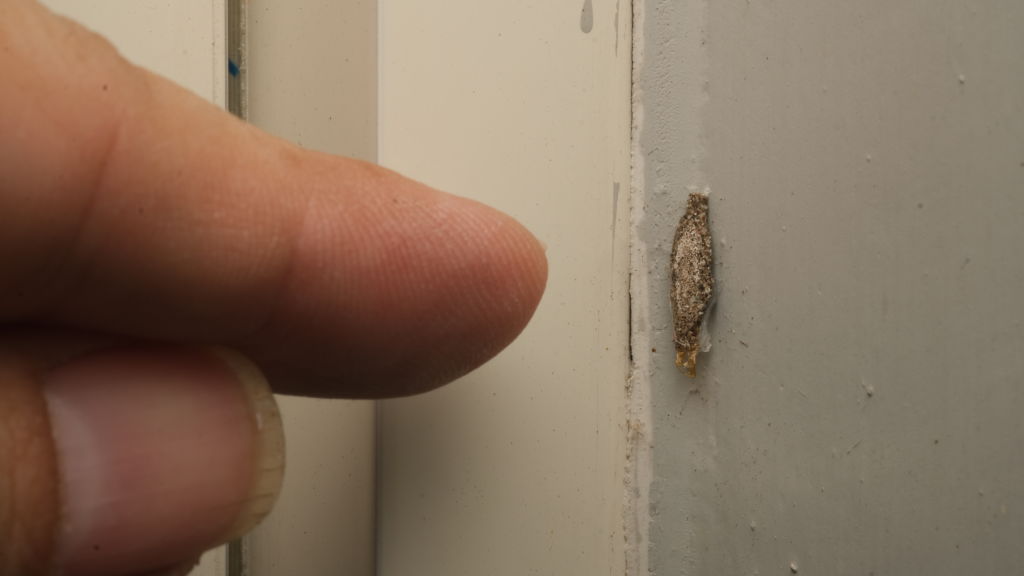
Kamitetep in the Home: What These Wall-Clinging Pests Are and Why They Should Not Be Ignored
A Small Indoor Pest That Often Goes Unnoticed
Many small creatures live close to humans without creating serious problems. Some spiders reduce mosquito numbers, while geckos often move quietly across ceilings at night, feeding on insects that enter the home.
Not every indoor visitor is harmless, however. Some pests remain hidden for long periods, feeding and multiplying in quiet corners until the damage becomes much easier to see.
One pest that is often underestimated in tropical and subtropical areas is kamitetep, scientifically known as Phereoeca uterella. It is commonly overlooked because it can look like a tiny piece of dust, lint, or debris stuck to a wall.
Despite its harmless appearance, kamitetep is a moth larva that feeds on fabric fibers, dust, hair, and other organic material. Because it blends into its surroundings so well, it can remain inside a home for months before anyone notices the extent of the activity.
Warm and humid conditions can make the problem worse. When heat and moisture increase, kamitetep activity may rise quickly, turning closets, ceilings, corners, and storage areas into active feeding zones.
What Kamitetep Means
Kamitetep is a Javanese term used for insects that are commonly known in English as plaster bagworms, household casebearers, or case-bearing moth larvae. These names all refer to very similar insects that are most recognizable during their larval stage.
They belong to the Tineidae family, the same insect family that includes clothes moths. This connection is important because it explains why fabrics and household debris can become food sources for them.
Unlike typical clothes moths, which often hide inside drawers, boxes, or dark wardrobe spaces, kamitetep may be seen directly on walls and ceilings. Even when visible, they are frequently mistaken for marks, dust, or bits of dirt.
Their survival method is simple but effective. They hide inside a small portable case, blend into household surfaces, feed on organic matter, and remain protected while they move from place to place.
Why the Names Can Be Confusing
There is often confusion between the terms plaster bagworm and household casebearer. Some identify plaster bagworms as Phereoeca uterella, while others use household casebearer for Phereoeca allutella.
In everyday household situations, the difference usually does not change the response. Both pests behave in very similar ways, create comparable concerns, and require the same general control methods.
For homeowners, the most important point is not the exact label. The key issue is recognizing that these small case-carrying larvae are not simply dirt or harmless wall marks.
When they are present in larger numbers, they can indicate dust buildup, high humidity, stored organic material, or neglected areas where larvae have found enough food and shelter to continue developing.
The Case That Protects the Larva
The most recognizable feature of kamitetep is the small case it carries. This case is often flat, gray, and shaped like a tiny cigar or narrow tube.
At first glance, it may look like a smear of dirt or a small piece of lint attached to a wall. In reality, it is a protective shelter built by the larva.
The case is made using silk produced by the insect’s body. The larva mixes that silk with dust, lint, hair, fabric fibers, dead insects, and pieces of spiderwebs.
This combination creates a tough portable covering that helps the larva survive in plain sight. The case allows it to move, feed, hide, and later transform safely.
The case also provides camouflage. Because it includes the same debris commonly found in homes, it can blend into walls, ceilings, closets, and corners without attracting attention.
It also offers protection. The larva remains inside the case while feeding and may be shielded from predators and some sprays.
Later, the same case becomes a pupation chamber. The larva seals itself inside and begins the transformation into an adult moth.
The Life Cycle of Kamitetep
Kamitetep development can move faster in warm, humid spaces. This is one reason infestations may become more noticeable during rainy seasons, summer months, or periods of poor indoor ventilation.
The life cycle begins with eggs. These may be laid in cracks, behind baseboards, inside closets, and in other protected spaces.
A single female can lay up to 200 eggs. These eggs may hatch in about 5 to 10 days, beginning the next stage of activity inside the home.
The larval stage is the most destructive part of the life cycle. This stage can last from 2 to 9 months, giving the larvae a long period to feed and expand their cases.
During this time, they may consume dust, lint, fabric fibers, hair, spiderwebs, and other organic debris. Because they can survive with limited food, they may remain present even in areas that seem only lightly affected.
The pupal stage usually lasts 2 to 3 weeks. During this period, the larva seals both ends of its case and transforms inside it.
The adult moth stage is much shorter. Adult moths may live for 1 to 2 weeks, are usually small and gray-brown, and are weak flyers.
Adult moths are often attracted to light. They do not feed during this stage, because their main purpose is mating and laying eggs.
The long larval stage explains why the problem can build quietly. By the time several cases are seen on walls or ceilings, the insects may have already been active for months.
What Kamitetep Feed On
Kamitetep are detritivores, which means they feed on organic debris. Their food range is broad, and that is what makes them a concern inside homes.
Dust and lint are among their most common food sources. These materials often collect in corners, behind furniture, along baseboards, and inside storage spaces.
They may also feed on spiderwebs and insect remains. Homes with many spiderwebs can provide additional feeding opportunities because webs often trap dead insects and collect dust.
Natural fibers are also attractive to them. Wool, silk, fur, feathers, and similar materials may become vulnerable if they are stored in humid or dusty spaces.
Paper, books, and cardboard can also be part of their feeding environment. Long-term cardboard storage indoors may contribute to conditions that support their presence.
They may also use upholstery padding, human hair, pet hair, and skin flakes known as dander as food sources. These materials are common in ordinary homes, especially in areas that are not cleaned often.
Pure cotton is relatively low in protein and is not their preferred food. However, cotton items can still attract them if they collect lint, dust, hair, or other debris on the surface.
Why They May Seem to Appear Suddenly
Many people notice kamitetep only after several cases appear at once. This can make the problem seem sudden, even though the larvae may have been developing quietly for a long time.
Higher humidity is one major factor. Moist air can support faster activity and create better conditions for larvae to survive and multiply.
Poor ventilation may also contribute. Rooms that remain closed, damp, or rarely used can become favorable places for these insects.
Cardboard boxes stored for long periods can add to the issue. Cardboard can collect dust and organic debris, especially when left undisturbed in closets, storage rooms, or corners.
Dust buildup is another important factor. Kamitetep often thrive where cleaning is irregular, especially under furniture, behind frames, near ceilings, and inside rarely opened storage areas.
An increase in spiders may also indirectly support them. More spiders can mean more webs, and more webs can mean more trapped insect remains and debris for larvae to consume.
For these reasons, kamitetep may exist at low levels for months. Once humidity, dust, and food sources become more favorable, their numbers can increase noticeably.
Where to Look for Kamitetep
Walls and ceilings are common places to spot kamitetep, but they are not the only areas to inspect. The cases can be flat and dull-colored, which makes them easy to miss.
Wardrobes and drawers should be checked carefully, especially if they contain stored fabrics, blankets, or clothing that has not been moved for a long time.
Behind picture frames is another possible hiding place. These areas can collect dust and remain undisturbed, giving larvae a protected environment.
Furniture edges and undersides should also be inspected. Dust, hair, and lint often collect in these areas, creating potential feeding zones.
Folded blankets and stored textiles can provide shelter and food. Items kept in closets for long periods should be shaken out, washed, or stored in sealed containers when possible.
Electrical switch plates and ceiling corners may also hide cases. Because the insects are small, even narrow gaps and protected spaces can become suitable hiding locations.
Common Misunderstandings About Kamitetep
One common mistake is assuming the cases are simply dirt. Many active larvae look like harmless debris, which allows them to remain unnoticed for months.
Another misunderstanding is that they only eat clothing. While fabrics can be affected, kamitetep also feed on dust, lint, hair, webs, insect remains, paper, cardboard, and other organic matter.
Some people believe a single spray will solve the problem. However, the case can protect the larva, which is why cleaning and removal are essential parts of control.
Seeing one case does not always mean there is a major infestation. Still, ignoring the signs can allow the population to grow, especially if the home has high humidity and plenty of dust or stored debris.
How to Remove Kamitetep Effectively
The first and most important step is physical removal. Visible cases should be scraped or pulled from walls, ceilings, closets, furniture edges, and other affected areas.
After removal, the cases should be sealed in a bag and discarded immediately. This helps prevent active larvae from remaining inside the home.
Deep cleaning is the next key step. Vacuum carpets, baseboards, closets, corners, furniture edges, and other places where dust and lint collect.
Stored fabrics should be washed when possible. Blankets, clothing, curtains, and other textiles can hold lint, hair, and organic debris that may attract larvae.
Indoor cardboard storage should be reduced when possible. Long-term cardboard storage can create sheltered areas where dust and debris gather.
Humidity control is also important. Keeping indoor humidity below 50% can make the environment less favorable for kamitetep development.
Improving airflow and ventilation can help, especially in closets, storage rooms, bathrooms, and other humid areas. A dehumidifier may also be useful where moisture levels remain high.
Entry points should be sealed to reduce future insect movement into the home. Gaps, cracks, loose window frames, and crevices can be caulked or repaired.
Chemical control may help in some cases, especially when infestations are severe. Residual insecticides can be used where appropriate, and professional pest control may be needed if the problem continues.
Long-Term Prevention
Preventing kamitetep requires reducing the conditions that allow them to thrive. Regular cleaning is one of the most reliable long-term strategies.
Overlooked spaces should be cleaned monthly. Corners, baseboards, behind furniture, ceiling edges, and closet floors should not be ignored.
Dust accumulation should be reduced throughout the home. Since dust and lint are major food sources, removing them can interrupt the insect’s ability to survive indoors.
Textiles should be stored in sealed containers whenever possible. This is especially important for wool, silk, fur, feathers, blankets, and clothing that will not be used for long periods.
Spiderwebs should be removed regularly. Webs can collect insect remains and dust, both of which may support kamitetep larvae.
Cardboard should not be stored indoors for long periods when avoidable. If boxes must be kept, they should be inspected and kept clean and dry.
Why Early Action Matters
Kamitetep do not bite, sting, or spread disease. Their danger is not immediate harm to people, but gradual damage to belongings and slow indoor multiplication.
Because they are easy to overlook, they can remain active while homeowners assume the small gray cases are nothing more than dust. By the time the cases are widespread, the larvae may already have found steady food sources.
The best response is to treat wall-hugging gray specks as an early warning sign. Removing cases, cleaning thoroughly, lowering humidity, and protecting stored materials can stop a small issue from becoming a larger household problem.
Kamitetep may be tiny, but their ability to hide, feed, and develop inside a portable case makes them highly persistent. A clean, dry, well-ventilated home gives them far fewer places to survive.