
The Honey Locust Tree and Its Remarkable Place in Everyday History
The honey locust is often admired as a graceful shade tree, especially in parks, gardens, and open landscapes where its wide branches create a light, filtered cover. Many people recognize its attractive form and its ability to bring beauty to outdoor spaces, but fewer know that this tree has a long history of practical value.
Native to North America, especially the fertile Mississippi Valley, the honey locust has supported people in many different ways. Long before modern stores made food, building materials, and household products easy to obtain, families and communities depended on what grew around them.
In that earlier way of life, a tree was not simply decoration. It could provide nourishment, shelter, tools, fencing, fuel, and household solutions. The honey locust became one of those useful natural resources because so many parts of it could serve a purpose.
A Tree With Deep Roots in North American Life
The honey locust earned its place in daily life because it offered more than beauty. It was common in areas where people learned to use local plants carefully and practically, making the most of what nature provided.
For generations, the tree stood in fields, along homesteads, and across fertile valleys where its features were noticed and put to use. Its pods, seeds, wood, and natural compounds all gave it value in different parts of ordinary life.
Today, many people know the honey locust mainly as a landscape tree. It is often planted because it grows into an attractive shape and allows sunlight to pass through its open canopy. This makes it useful in places where shade is wanted without completely darkening the ground beneath it.
However, its past shows that the honey locust was once seen through a much more practical lens. It was a tree that could feed, build, protect, clean, and support both people and animals.
The Sweet Pods That Inspired Its Name
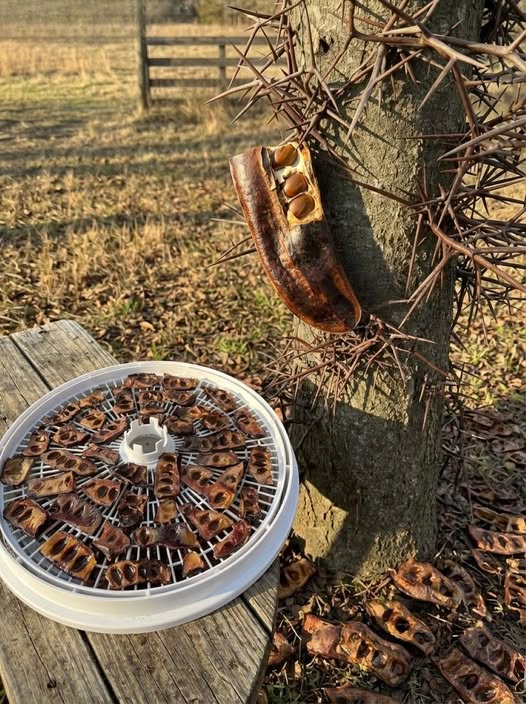
One of the most recognizable features of the honey locust is its long, curved seed pod. These pods can be striking in appearance, but their value goes beyond the way they look.
Inside the pods is a naturally sweet pulp. That sweetness is what helped give the honey locust its name. For people who lived close to the land, this pulp was a simple and accessible source of flavor.
Indigenous peoples and early settlers made use of the pods in different ways. The sweet pulp could be enjoyed as a treat, offering a natural sweetness at a time when refined sugar and store-bought sweets were not always available.
The pulp was also used in homemade preparations. It could be turned into syrups or included in lightly fermented beverages, giving people another way to use the tree’s natural sweetness.
These uses reflect a time when food came from careful observation and practical knowledge. People learned which plants were helpful, which parts could be used, and how each resource might fit into daily survival.
Seeds With Practical Value
The honey locust’s usefulness did not stop with the sweet pulp inside its pods. The seeds also had value and were sometimes prepared for food-related uses.
In some cases, the seeds were roasted to make a warm drink. This kind of preparation showed how people could transform a simple tree product into something comforting and useful.
The seeds were also sometimes ground into meal for cooking. In a world where every dependable food source mattered, even small contributions from local plants could become important.
These traditional uses highlight the resourcefulness of earlier communities. The honey locust was not valued because of one single feature. It was valued because several parts of the tree could be used in meaningful ways.
Its pods offered sweetness, its seeds could be prepared for nourishment, and its presence in the landscape made it accessible to people who understood how to use it responsibly.
Strong Wood Built for Everyday Needs
Food was only one part of the honey locust’s history. The tree also became respected for its wood, which is known for strength and durability.
The wood was especially useful because it naturally resists decay. That made it valuable for items that had to last outdoors or remain in contact with soil.
Fence posts were among the practical uses for honey locust wood. A fence post must endure moisture, changing weather, and long exposure to the ground. The honey locust’s resistance to decay made it a dependable choice for this purpose.
The wood was also used for tool handles. A good handle needed to be strong, firm, and able to withstand repeated use. Honey locust wood offered those qualities and helped people create tools that could hold up under daily work.
Wagon parts were another important use. Wagons were essential for transportation, farming, and hauling goods, so their parts needed to be sturdy. The honey locust’s tough wood made it useful for items that carried weight and faced constant wear.
These uses show why the tree was so highly practical. It was not merely a source of shade or seasonal pods. It provided material that could become part of the working life of a household or farm.
A Natural Cleanser Before Commercial Soap
The honey locust also offered help in household tasks. Parts of the tree contain natural compounds that can create a gentle lather when mixed with water.
Before commercial soaps became common, people sometimes used the bark and pods as a simple plant-based cleanser. This did not turn the tree into a modern soap product, but it gave families another basic tool for everyday cleaning.
In earlier communities, this kind of usefulness mattered. Household supplies were not always easy to buy, and many families depended on local materials for basic needs.
The ability to use parts of the honey locust for cleansing added another layer to the tree’s value. It could provide sweetness, seeds, durable wood, and even a practical washing aid.
This versatility explains why the honey locust deserves attention. It served many roles at once, helping people meet different needs with one familiar tree.
A Tree That Supports the Landscape Around It
The honey locust remains important beyond its historical uses. It continues to play a valuable role in natural settings and modern landscapes.
Its open canopy is one of its most helpful features. Unlike trees that create dense shade, the honey locust allows sunlight to reach the ground below.
Because light can pass through its branches, grasses and smaller plants are able to grow beneath it. This makes the tree useful in places where both shade and ground growth are desired.
The canopy creates a softer kind of shade. It cools the area without fully blocking the sun, which can help maintain a more balanced landscape.
This quality is one reason the honey locust is still planted in neighborhoods, parks, and gardens. It provides visual appeal while allowing the space around it to remain open and lively.
Food and Shelter for Wildlife
The honey locust also supports wildlife. Its seed pods provide food for deer and other animals, making the tree part of a larger natural food system.
Animals that feed on the pods help connect the tree to the surrounding environment. The honey locust is not isolated from the life around it. It contributes to the daily rhythms of the animals that share its habitat.
The tree’s small flowers are also valuable. They attract bees and other pollinators, helping support insects that play an important role in the natural world.
Pollinators depend on flowering plants, and trees such as the honey locust can become part of that support system. Even small flowers can matter when they provide food for bees and other beneficial insects.
In this way, the honey locust’s importance continues today. It is not only a reminder of human history but also an active part of healthy outdoor spaces.
Thorns, Modern Varieties, and Landscape Use
Wild honey locust trees often grow large protective thorns. These thorns are one of the tree’s most dramatic natural features and can make wild specimens difficult to approach or manage.
Because of this, modern landscape varieties have often been developed without thorns. These thornless forms make the tree safer and more convenient for areas where people walk, gather, or maintain gardens.
Thornless honey locust trees are especially useful in neighborhoods, parks, and public spaces. They keep many of the tree’s attractive qualities while reducing the concerns that come with large thorns.
This has helped the honey locust remain popular as a planted shade tree. Its beauty, filtered shade, and adaptability make it appealing in designed landscapes.
Even so, the difference between wild trees and modern landscape varieties is important. A tree growing naturally may have features that a planted ornamental variety does not.
Using Wild Plants With Care
Although the honey locust has a long history of practical use, caution remains important. Any wild plant should be properly identified before any part of it is used for food or other purposes.
Reliable guidance matters because mistakes in plant identification can lead to serious problems. The fact that a plant has traditional uses does not mean it should be used casually or without knowledge.
The honey locust’s pods, seeds, bark, and wood all have historical value, but responsible use depends on understanding the tree correctly. Careful identification is part of respecting both the plant and the traditions connected to it.
This cautious approach also keeps the story balanced. The honey locust is fascinating and useful, but it should be approached with the same care given to any wild natural resource.
A Familiar Tree With Extraordinary Value
The honey locust stands as a powerful example of how much value can be hidden in something familiar. To many people, it may look like another shade tree, but its history reveals a much richer story.
Its sweet pods gave people a natural treat and a base for homemade preparations. Its seeds could be roasted or ground for practical use. Its strong wood helped build fences, tools, wagon parts, and other durable items.
Even its bark and pods had a place in household cleaning, offering a simple plant-based cleanser before commercial soaps became common. Few trees show such a wide range of practical uses across daily life.
At the same time, the honey locust continues to support the environment. It feeds wildlife, attracts pollinators, and allows sunlight to reach plants growing beneath its branches.
That combination of beauty, strength, nourishment, and ecological value makes the honey locust more than an attractive tree. It is a living reminder of how closely people once depended on the natural world.
Its story encourages a closer look at the plants that surround everyday life. Sometimes the most ordinary-looking tree carries a history of survival, usefulness, and quiet importance that spans generations.