

The Innocent Childhood Photo That Hid the Future of Jeffrey Dahmer
A Childhood Image With a Horrifying Truth Behind It
Photographs of children often feel comforting because they capture a time associated with innocence, hope, and possibility. A smiling child in an old family picture can seem far removed from darkness, violence, or tragedy.
That contrast becomes deeply unsettling when the child in the photograph later becomes known for crimes that shocked an entire nation. The face may look ordinary, even sweet, but the story behind it carries a disturbing weight.
One such child was born on a warm day in May 1960 in Milwaukee, Wisconsin. His parents, a 23-year-old chemistry student and a 24-year-old teletype machine instructor, welcomed their first son with the same hopes many young parents have for a new baby.
That boy was Jeffrey Lionel Dahmer, who would later become one of the most infamous serial killers in American history.
Early Years That Once Seemed Normal
In his earliest years, Dahmer was described as lively, cheerful, and energetic. Those who remembered him as a small child did not see the terrifying future that would later unfold.
He appeared to be a boy with promise, surrounded by a family that expected him to grow into a normal life. But before he turned four, an event seemed to mark a shift in his behavior.
Shortly before his fourth birthday, Dahmer underwent double hernia surgery. Afterward, his family noticed that the once-bubbly child became quieter, more withdrawn, and increasingly uneasy.
The change did not immediately explain anything that would happen years later, but it became one of the details often connected to his early development. A child who had seemed full of life became more reserved and distant.
Family Tension and Feelings of Abandonment
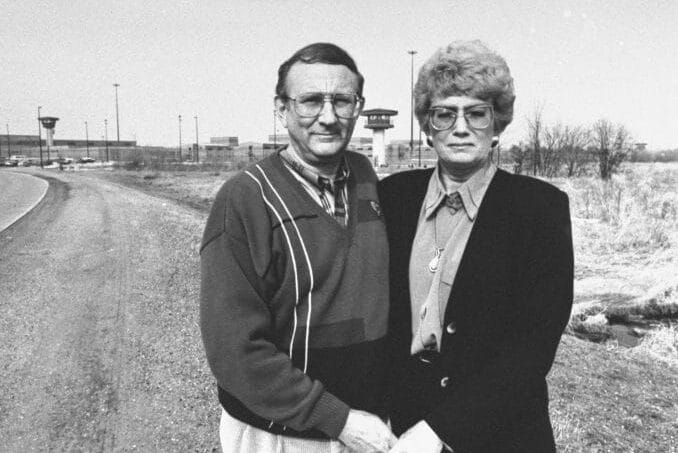
By the time Dahmer entered school at age six, he was reportedly already struggling with feelings of abandonment. He also began to resent his younger brother, whose arrival seemed to deepen his sense of being overlooked.
Teachers described him as timid and reserved. Around him, they sensed the emotional effects of a home life marked by instability and neglect.
His father was often occupied with his studies, while his mother battled depression and hypochondria. The home was tense, and arguments between his parents were frequent.
His mother attempted suicide at least once and often required constant attention. She spent much of her time bedridden, adding another layer of stress to the household.
Dahmer later said he never felt certain that his family would stay together. The lack of stability left a lasting impression on him during the years when a child normally looks to home for safety and reassurance.
A Boy Who Still Had Friends
Despite those difficulties, Dahmer was not completely isolated as a young child. He had friends in the neighborhood and, to some who knew him then, he did not appear frightening.
One childhood acquaintance, Ted Lee, remembered him in simple terms: “He was a fun kid to be around as a child,”
That memory makes the later story even more disturbing. The young boy who once seemed enjoyable to be around would eventually become associated with crimes that horrified the country.
At the time, however, no one around him could fully understand what was forming beneath the surface.
The Beginning of a Dark Fascination
As Dahmer grew older, a disturbing fascination began to appear. Some believe it began when he was about four years old and saw his father dig up animal bones beneath the family home.
The sound of the bones reportedly fascinated him. He later referred to the bones as his “fiddlesticks,” a childhood phrase that would take on a much darker meaning in hindsight.
His interest did not fade. Instead, it grew into an obsession with bones, skeletons, and the insides of animals.
Dahmer began searching for bones on his own and dissecting animals to study their skeletons. What might have first seemed like curiosity soon developed into something much more troubling.

A Move to Ohio and a Growing Obsession
When the family moved to Bath Township, Ohio, Dahmer’s fascination intensified. The wooded property gave him more space to collect and hide what interested him.
He began gathering large insects and small animal skeletons. He kept some of them in a hut near the woods, with certain specimens preserved in jars of formaldehyde.
His father believed the interest was scientific curiosity. Thinking he was encouraging a possible academic pursuit, he taught Dahmer how to clean and preserve bones.
Dahmer eagerly learned those methods. What his father saw as science became part of a pattern that later appeared far more sinister.
Roadkill, Animal Remains, and Disturbing Displays
The obsession continued to escalate. Dahmer started collecting roadkill, dissecting animals, and burying remains near his hut.
At times, he placed skulls on makeshift crosses. These acts reflected a growing fixation that went far beyond ordinary childhood curiosity.
By age 15, Dahmer had decapitated a dog, nailed its body to a tree, and placed its skull on a stick. The act revealed a level of cruelty and detachment that was deeply alarming.
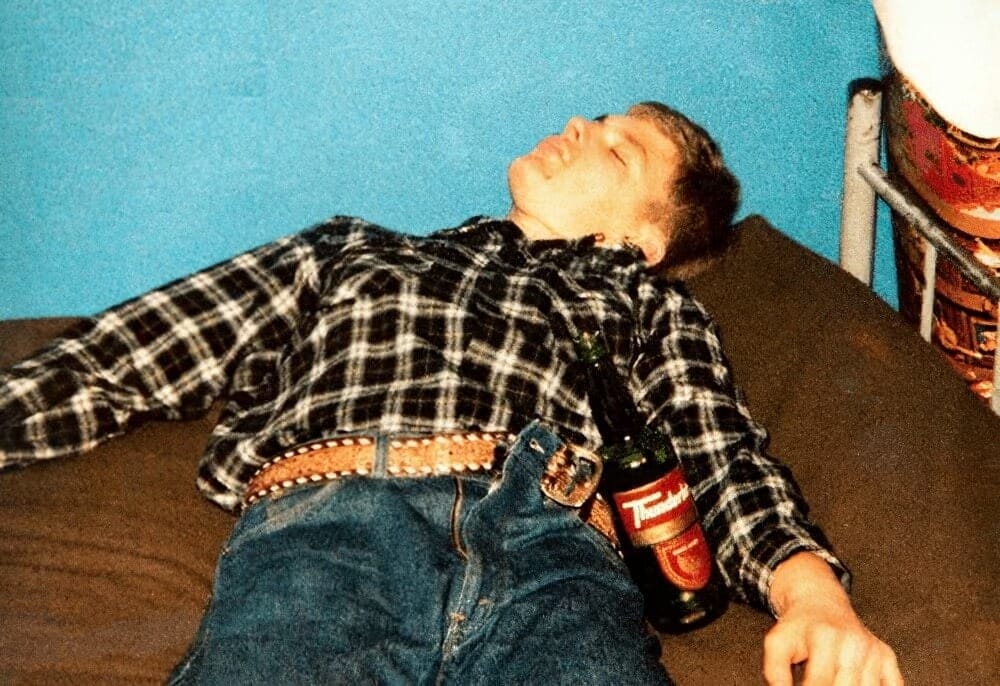
During the same period, he began drinking heavily. By 14, he was already hiding liquor in his jacket and referring to it as “my medicine.”
High School Behavior That Drew Attention
In high school, Dahmer became known for strange pranks and disruptive behavior. He sometimes bleated, faked seizures, and performed odd movements to attract attention.
One of his most disturbing habits involved imitating a man with cerebral palsy. Dahmer claimed his mother had once hired the man as an interior decorator.
Some people dismissed the behavior as bizarre. Others recognized it as cruel, even if some of his teenage classmates laughed at it.
The laughter seemed to encourage him. His performances became part of how he gained attention among peers, even when the behavior was tasteless or unsettling.
He would stumble past open classroom doors while lessons were underway, look through windows from outside the building, or make strange noises just beyond a teacher’s hearing.
Former friend and classmate John Backderf later remembered the behavior clearly. “He would bleat like a sheep,” he said.
Backderf added, “Sometimes he did it loud. He knew it cracked us up.”
A Family Collapse Before the First Killing
While Dahmer’s behavior at school became stranger, his family life continued to fall apart. His parents’ marriage collapsed and ended in a bitter divorce.
By the time Dahmer graduated in May 1978, his mother had moved out with his younger brother. That left the 18-year-old alone in the family home.
The timing proved chilling. Just weeks after graduation, Dahmer committed his first murder.
On June 18, 1978, he picked up a hitchhiker and killed him. That crime marked the beginning of a series of murders that would continue for 13 years.
The Crimes That Shocked America
Over the next 13 years, Dahmer killed 16 more young men. His crimes became known not only for the number of victims, but also for their deeply disturbing nature.
Many of his victims were drugged with sedatives before being strangled. Some were dismembered after death.
In some cases, Dahmer consumed parts of his victims’ bodies. His crimes also included necrophilia, cannibalism, and attempts to create compliant “zombies” by drilling into victims’ skulls and injecting acid into their brains.
The details of the case horrified the public and placed Dahmer among the most notorious killers in American criminal history.
How Jeffrey Dahmer Was Finally Caught
Dahmer’s crimes ended on July 22, 1991. One of his intended victims managed to escape and led police back to Dahmer’s apartment.
Inside, authorities discovered evidence that revealed the scale of what had happened. They found photographs of dismembered bodies, severed heads in the refrigerator, and a collection of human remains.
The discovery stunned investigators and the public. The boy once remembered by some as cheerful and playful had become Jeffrey Dahmer, the Milwaukee Cannibal.
His case would later be revisited in books, documentaries, and television productions, including Netflix’s Monster. But beyond the public fascination remained the reality of the victims and families left with lasting grief.
Dahmer’s Death in Prison
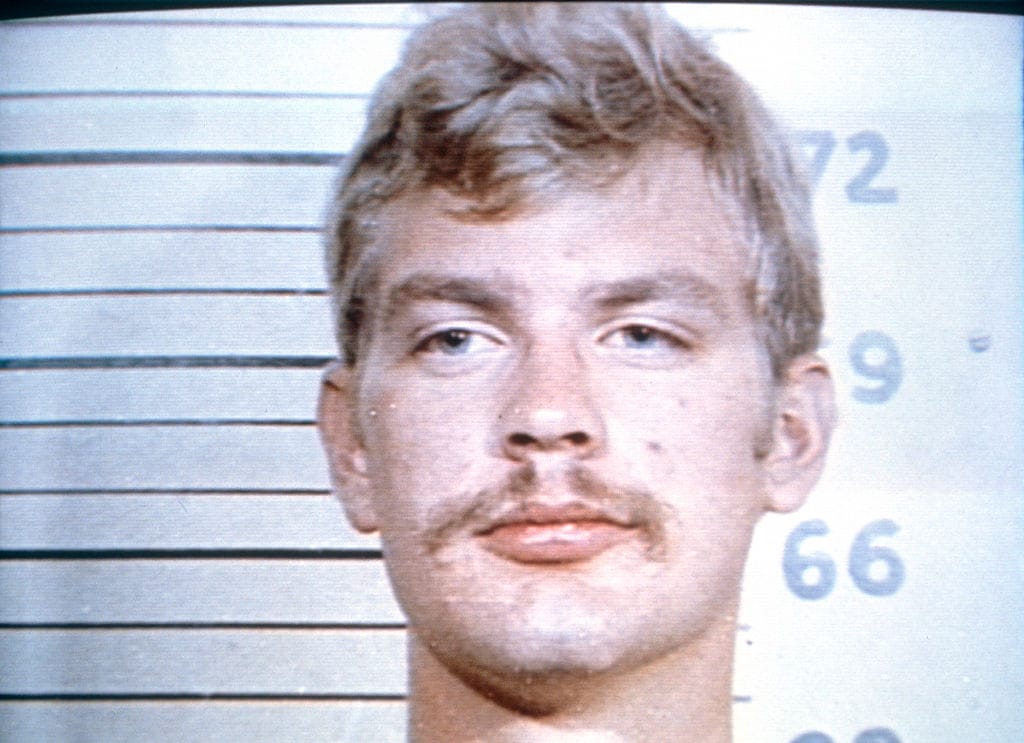
Jeffrey Dahmer’s life ended violently on November 28, 1994. He was beaten to death by fellow inmate Christopher Scarver at age 34.
Scarver later claimed that God told him to kill Dahmer. The killing brought another wave of public attention to a case already surrounded by horror and grief.
When Dahmer’s mother, Joyce, learned of his death, she reacted angrily to the public and media response. “Now is everybody happy? Now that he’s bludgeoned to death, is that good enough for everyone?”
For the families of Dahmer’s victims, the news brought mixed emotions. Some felt relief that he was gone, while others said his death did not ease their pain.
Catherine Lacy, the mother of victim Oliver Lacy, expressed the anguish many families still carried. “The hurt is worse now, because he’s not suffering like we are.”
The district attorney who prosecuted Dahmer urged the public not to glorify Scarver. He reminded people that Dahmer’s death was still an act of murder, regardless of the crimes Dahmer had committed.
A Chilling Contrast Between Childhood and Infamy
The story of Jeffrey Dahmer remains disturbing because of the extreme contrast between early childhood images and the crimes that later defined his name.
Photos of a child rarely reveal what life will become. They show a moment in time, not the future hidden ahead.
Dahmer’s early years included signs of emotional distance, family instability, cruelty toward animals, heavy drinking, and disturbing behavior. Yet even those details do not make the transformation any less unsettling.
To look at an innocent child and know he later became one of America’s most terrifying killers is deeply uncomfortable. It forces people to confront the frightening gap between appearance and reality.
For the victims’ families, however, the story is not simply about the shock of who Dahmer became. It is about the lives taken, the grief left behind, and the pain that did not end when Dahmer was arrested or when he died.