
Children Rescued From Ruins as Separate Tragedies Unfold Across the World
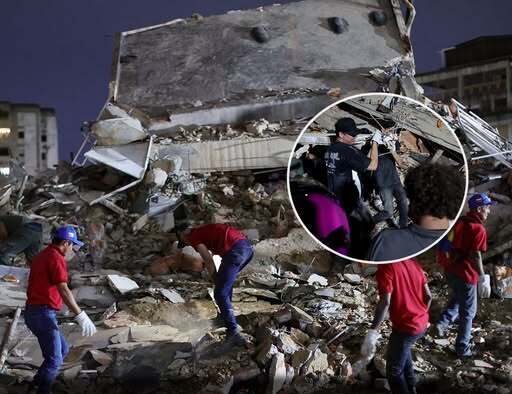
Two boys were pulled alive from mountains of broken concrete after spending more than 70 hours trapped beneath the ruins of collapsed homes and streets in Venezuela.
The rescue brought a rare moment of relief during a day marked by grief, violence, political tension and deadly heat across several parts of the world.
In the same disaster zone, Argentine footballer Lucas Trejo faced an unbearable loss after the bodies of his wife and two children were recovered from the remains of the home where they had once lived.
Rescue Workers Search Through Shattered Streets in Venezuela
Across Venezuela, rescue teams continued digging through destroyed neighborhoods, searching through piles of pulverised concrete, broken walls and collapsed structures.
For many families, the waiting became almost impossible to endure. Every movement in the rubble carried the possibility of a miracle or the confirmation of another loss.
The discovery of two 11-year-old boys alive after more than 70 hours beneath the debris became one of the most emotional moments of the rescue effort.
Workers pulled the boys from the wreckage as exhausted crews, relatives and bystanders reacted with tears, applause and visible relief.
Their survival offered a brief pause from the devastation surrounding them. In a place where homes had been crushed and streets reduced to dust, the rescue showed that life could still be found in the smallest spaces beneath the ruins.
Yet the joy of that moment stood beside deep sorrow. While some families received news they had desperately hoped for, others were forced to confront the worst possible outcome.
Footballer Lucas Trejo Suffers Devastating Family Loss
Among those grieving was Argentine footballer Lucas Trejo, whose family home became part of the wider destruction.
Trejo had searched through the ruins where his family had lived, but the rescue effort ended in heartbreak.
The bodies of his wife and two children were recovered from what had been their home.
The loss added a deeply personal face to the wider tragedy. Behind each collapsed building was a family, a routine, a room, a meal, a life interrupted without warning.
For Trejo, the ruins were not simply damaged property. They were the place where his family had slept, lived and belonged before disaster turned that familiar space into wreckage.
His grief reflected the anguish of many people facing similar devastation. Some waited for word about parents, children, spouses and neighbors. Others stood beside broken concrete knowing that the lives they had known could not be restored.
Miracles and Mourning Exist Side by Side
The rescue of the two boys and the recovery of Trejo’s family showed the painful contrast that often follows a major catastrophe.
One family may hear that a child has survived after days underground, while another learns that loved ones have been found dead beneath the same kind of debris.
That contrast shaped the emotional weight of the rescue work. Crews continued moving through the rubble with urgency, aware that time mattered and that hope could change from one minute to the next.
Every survivor brought strength to the rescuers and to the families still waiting. Every death deepened the silence hanging over neighborhoods already changed beyond recognition.
In those damaged streets, grief and relief were not separate stories. They existed together, often only a few steps apart.
Thailand Family Mourns 17-Year-Old Girl Found in Suitcase
Far from the destroyed neighborhoods of Venezuela, another family faced a different kind of tragedy in Thailand.
A 17-year-old girl was found murdered in a suitcase near railway tracks, turning a place of movement and passage into the scene of a devastating crime.
The discovery left her family mourning a life cut short before adulthood had fully begun.
The case has drawn attention because of the brutality of the circumstances and the age of the victim. A young person whose future should have been ahead of her instead became the center of a murder investigation.
The man accused of killing her now faces the possibility of death himself.
The case stands apart from the natural destruction in Venezuela, but it carries its own form of shock. One tragedy came from collapse and ruins. The other came from violence against a teenager whose family is now left with grief and unanswered pain.
Warplanes Pause as the United States and Iran Step Back
While families in Venezuela and Thailand dealt with immediate loss, another fragile development unfolded above the world’s major shipping routes.
The United States and Iran agreed, at least for now, to step back from the brink.
The pause allowed tankers to pass safely, easing fears that tension could escalate into wider danger.
The agreement did not erase the seriousness of the situation. It only created a temporary space in which warplanes paused and ships moved through without the immediate threat of further confrontation.
For a world already carrying multiple crises, even a temporary reduction in tension carried weight.
The moment served as a reminder that disaster is not always measured only in buildings destroyed or lives lost after a visible collapse. Sometimes the danger is found in what might happen next if restraint fails.
Europe’s Heatwave Leaves a Silent Death Toll
In Europe, catastrophe arrived in a quieter form.
A severe heatwave has already claimed more than 1,300 lives, making the extreme temperatures one of the deadliest developments among the day’s global crises.
Unlike collapsed buildings or crime scenes, heat often leaves fewer visible marks at first. Streets may remain standing, buildings may appear unchanged, and daily life may continue on the surface.
But the human cost can rise quickly.
The deaths across Europe show that extreme heat can become a mass emergency even when it does not arrive with smoke, explosions or falling concrete.
For families affected by the heatwave, the loss is no less real because the disaster is quieter. A silent crisis can still empty homes, overwhelm communities and leave thousands mourning.
Different Disasters, One Heavy Day
The events unfolding across Venezuela, Thailand, the waters affected by United States and Iran tensions, and Europe’s heatwave are different in cause and setting.
Yet together, they form a stark picture of how fragile ordinary life can be.
In Venezuela, children survived beneath concrete while another family was found dead in the ruins of their home. In Thailand, a teenage girl’s life ended violently in a suitcase by the tracks.
Above the routes used by tankers, military tension briefly eased. Across Europe, heat continued to take lives without the sound or spectacle often associated with disaster.
Each story carries its own pain, but together they reflect a world facing grief in many forms at once.
Some people are pulled from wreckage alive after days of fear. Others are recovered too late. Some families wait beside collapsed homes. Others wait for justice. Some regions watch warplanes pause. Others count the dead from temperatures that keep rising.
Human Cost Behind the Headlines
Headlines often compress tragedy into numbers, places and short descriptions. But behind each line is a human story that cannot be reduced to a statistic.
The two boys rescued in Venezuela were not only survivors of a collapsed structure. They were children who endured more than 70 hours beneath concrete before being brought back into daylight.
Lucas Trejo’s wife and children were not only victims found in the ruins. They were his family, lost in the place that had once been their home.
The 17-year-old girl in Thailand was not only the subject of a criminal case. She was a daughter whose life ended before it should have.
The more than 1,300 people who died during Europe’s heatwave were not just part of a death toll. Each had a name, a family and a life that mattered.
A Day Marked by Survival, Loss and Warning
The day’s events carried moments of hope, but none of them erased the scale of the suffering.
The rescue of the two Venezuelan boys showed the power of persistence and the possibility of survival even after days beneath rubble.
The recovery of Trejo’s family showed the finality that many others feared as rescue workers continued searching.
The killing of the teenage girl in Thailand showed how violence can create a grief as devastating as any natural disaster.
The pause between the United States and Iran showed that restraint can matter when conflict appears dangerously close.
The heatwave in Europe showed that the deadliest threats are not always the loudest.
Together, these stories form more than a collection of separate headlines. They are a reminder of the cost of crisis, the value of every rescue, and the weight carried by families left behind after the world moves on.