
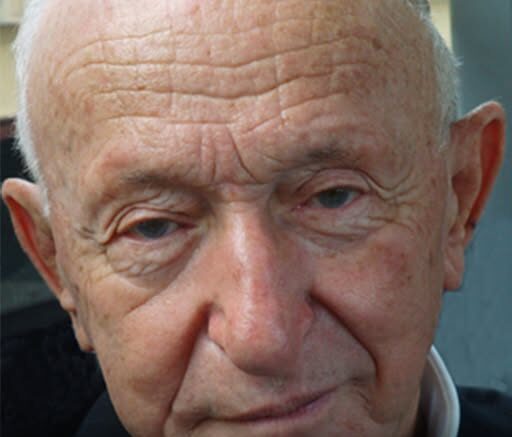
Holocaust Survivor Yehuda Aharon Widawski Dies at 107 After a Lifetime of Remembrance
A Remarkable Voice Falls Silent
Yehuda Aharon Widawski, one of Israel’s oldest Holocaust survivors, has died at the age of 107.
Widawski survived imprisonment at Auschwitz, endured forced labor under Nazi rule, and lost many members of his family during the Holocaust.
In the decades after the war, he dedicated himself to preserving Jewish history and restoring the graves of people whose communities had been devastated.
His long life became a testament to survival, remembrance, and the determination to protect the identities of those the Nazis attempted to erase.
By sharing his experiences and preserving historic Jewish burial sites, Widawski ensured that future generations would have tangible connections to communities that once flourished throughout Poland.
His Childhood in Poland
Widawski was born in 1919 in Turek, Poland. He grew up in a religious Jewish household before moving with his family to Łódź during his teenage years.
The family operated a textile business in the city and established a life there before Nazi Germany invaded Poland.
The occupation destroyed the security of Jewish families throughout the region. When the Jewish population of Łódź was forced into a ghetto, Widawski and members of his family were confined there.
Daily life became defined by deprivation, persecution, fear, and uncertainty. Families who had lived and worked in the city were stripped of their freedom and forced into increasingly desperate conditions.
Widawski remained in the Łódź Ghetto until its final period in 1944.
The Final Transport From the Łódź Ghetto
On August 29, 1944, the final transport departed from the Łódź Ghetto for Auschwitz-Birkenau.
Widawski’s parents, Abraham and Dobrish-Leah, were murdered at Auschwitz. His older brother Gabriel was also killed there.
Two other siblings died in separate Nazi camps. His brother Chaim Moshe was murdered at Buchenwald, while his sister Yocheved was killed at Stutthof.
Only Widawski and his brother Yehoshua survived the selection process at Auschwitz.
The survival of the two brothers came with the knowledge that most of their immediate family had been taken from them.
Those losses remained part of Widawski’s life long after the war ended. His later preservation work would become one way of protecting the memory of his family and countless other Jewish victims.
Forced Labor Near Breslau
Widawski and Yehoshua were eventually transferred to the Friedland forced labor camp near Breslau.
Prisoners there were forced to assemble aircraft wings for the German war effort. Their survival depended partly on remaining useful to those controlling the camp.
When officials asked prisoners to state their occupations, many described themselves as engineers or experienced factory workers. They hoped those answers would improve their chances of staying alive.
Widawski chose to answer honestly, even though he feared the decision could result in his death.
“I was convinced that honesty would cost me my life,”
The reaction was completely unexpected. The German manager condemned the other prisoners for lying and identified Widawski as the only person who had given an honest answer.
“You are all liars. There is only one honest man here. Give him a double portion of hot food.”
In an environment where food could determine whether a prisoner survived, the additional portion carried enormous importance.
Helping Other Prisoners Avoid Punishment
Widawski gradually became an informal leader among the forced laborers.
When German officials increased the production quota, the prisoners faced punishment if they could not assemble the required number of aircraft wings.
Widawski created a method that helped protect the group. Prisoners concealed completed wings and later used them whenever daily production fell below the imposed target.
The system allowed them to compensate for shortages and reduced the likelihood that workers would be punished for missing the quota.
It demonstrated his ability to think carefully under dangerous conditions while considering the survival of those around him.
Every decision in the camp carried serious risk. Discovery of the concealed parts could have brought severe consequences, but failing to meet the increased demands also placed prisoners in danger.
The Physical Cost of Survival
Forced labor subjected Widawski and the other prisoners to exhausting daily conditions.
They were required to walk nine kilometers in each direction, covering 18 kilometers every day in addition to completing their work.
“Every day we walked nine kilometers each way,”
Despite the physical suffering, Widawski said the prisoners continued holding onto hope.
“It was terrible, but we lived with the hope that we would get through it.”
That hope carried him through the final period of the war. Soviet forces liberated the camp on May 9, 1945.
Widawski emerged alive after surviving the Łódź Ghetto, Auschwitz, forced labor, deprivation, and the murder of much of his family.
Rebuilding a Family After the War
Following liberation, Widawski returned to Łódź and began reconstructing a life in the place where so much had been lost.
He married Dobrish Wassercug, and their son Avraham was born in Poland.
In 1950, the family immigrated to Israel and established a home in Tel Aviv. Their daughter Leah was born after the move.
Creating a family offered a powerful answer to the destruction Widawski had witnessed. He eventually lived long enough to see five generations of descendants.
Although he built a new life in Israel, he never forgot the relatives, communities, and Jewish heritage left behind in Poland.
The memory of those places remained with him for nearly three decades before he finally returned.
A Search for His Grandmother’s Grave
Widawski traveled back to Poland in 1978 for the first time since the war.
His initial purpose was personal: he wanted to find his grandmother’s grave.
What he discovered extended far beyond one family burial place. Jewish cemeteries had been neglected, damaged, and forgotten after the communities that once cared for them were nearly destroyed.
The condition of those sites demonstrated another consequence of the Holocaust. The victims had not only been murdered, but many of the physical records of their families and communities were also disappearing.
Widawski decided that the remaining graves had to be located, identified, and preserved.
What began with the search for one relative became the defining mission of the rest of his life.
Restoring More Than 3,000 Graves
At the Jewish cemetery in Łódź, Widawski used historical documents to identify graves that had been lost to neglect and time.
He helped restore more than 3,000 burial sites there.
His work required repeated visits to Poland and careful examination of records connected to families who no longer had surviving communities nearby.
He also traveled to other locations throughout the country, locating Jewish graves and helping preserve cemeteries and historic places of remembrance.
Each restored grave returned a name and identity to someone at risk of disappearing from public memory.
The work also created a connection between later generations and the Jewish life that existed in Poland before the Holocaust.
Widawski understood that preserving a cemetery meant more than repairing stones. It meant safeguarding evidence that those people had lived, formed families, built communities, and belonged to those places.
Recognition at Yad Vashem
Widawski’s decades of remembrance work eventually received national recognition in Israel.
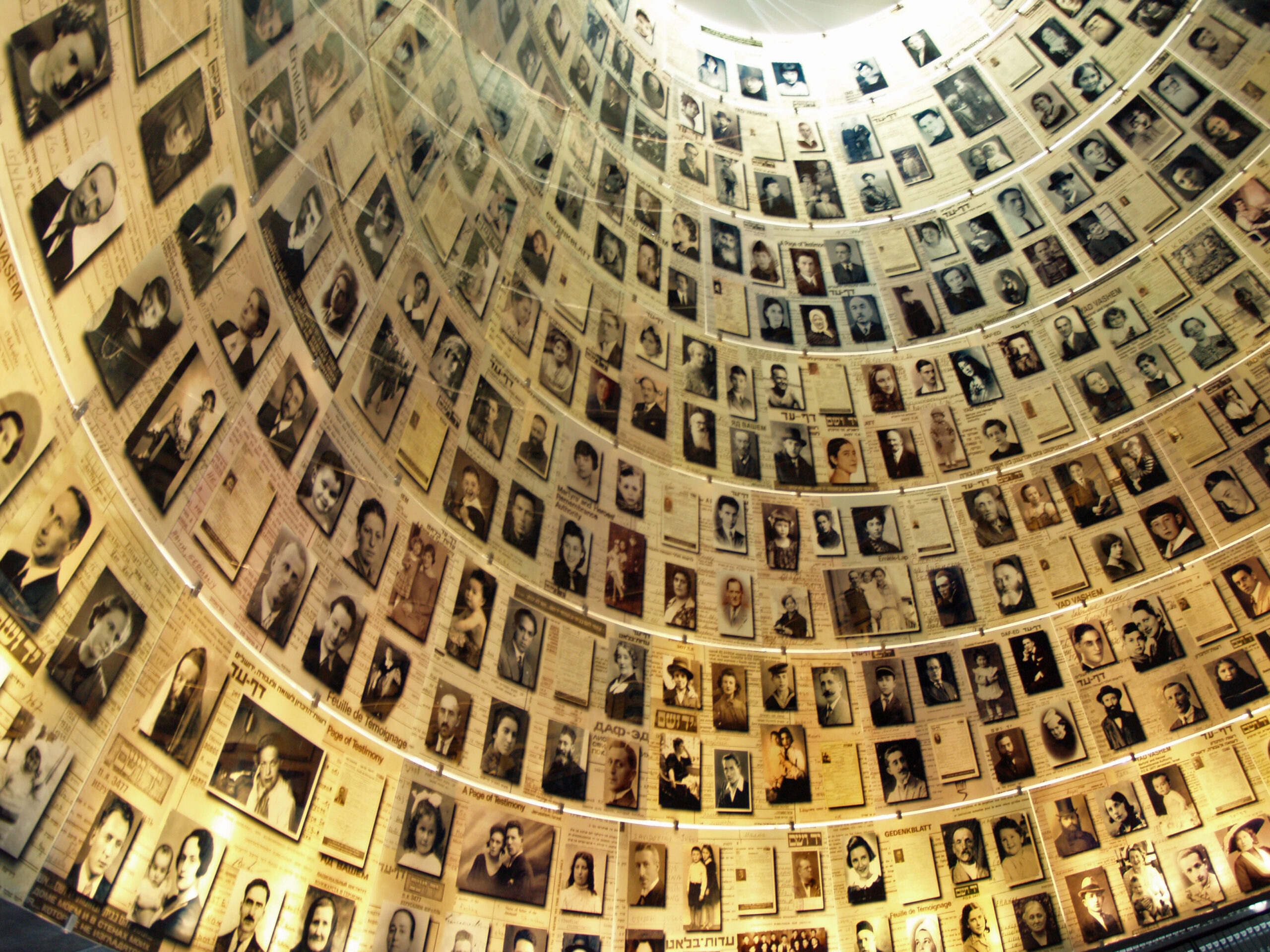
In 2012, he was selected to light a torch during Israel’s official Holocaust Remembrance Day ceremony at Yad Vashem.
The honor recognized both his survival and his commitment to protecting the memory of other victims.
He had carried his own experiences for decades while also working to restore the identities of thousands of people whose burial sites had been damaged or forgotten.
His presence at the ceremony connected personal testimony, family loss, national remembrance, and the continuing responsibility to preserve Holocaust history.
His Answer to the Nazis
When Widawski was asked what he considered his revenge against the Nazis, he did not describe personal retaliation.
He pointed instead to survival, freedom, strength, and the creation of a future after an attempted destruction.
“My revenge on the Nazis is that they lost, and we have the State of Israel. We are free and strong, and no one will ever be able to destroy us again.”
His answer summarized the larger meaning he found in the life he built after liberation.
He survived, created a family, witnessed multiple generations of descendants, and ensured that the dead would continue to be remembered by name.
For Widawski, continuing Jewish life and preserving its history represented a lasting response to those who had attempted to eliminate both.
With great sadness, we received information about the passing of Auschwitz Survivor Yehuda Widawski.
He was born on 26 July 1919 in Turek, near Łódź, in central Poland. In 1933, the family moved to Łódź, where he became active in the Hashmonaim youth movement and later helped run a textile business that employed dozens of Jewish seamstresses producing army shirts and underwear.
After the German occupation of Łódź in September 1939, the Widawskis were forced into the ghetto, where they continued textile work and ran one of the ghetto’s first soup kitchens from their home.
In August 1944, during the ghetto’s final liquidation, Yehuda, his parents Abraham and Leah, and several siblings were deported to Auschwitz; his parents and eldest brother Gabriel were murdered on arrival in a gas chamber. Eight days later Yehuda and his younger brother Jehoszua (Szyja) were transferred to a forced‑labor camp in Friedland, where they produced airplane wings until the camp’s liberation by the Red Army in May 1945.
Returning to Łódź after the war, Yehuda found their apartment occupied by others and learned that most of the family had perished; only he and his brother survived. He rebuilt a textile factory, married Lea, and had a son, Abraham. In 1950 he immigrated to Israel, where he founded and managed various commercial enterprises.
In 1978 he returned to Poland to search for his grandmother’s grave in the Łódź Jewish cemetery; appalled by its condition, he began a long‑term project of archival research, field documentation, and restoration of Jewish burial sites across Poland. Over the following decades he helped identify and mark more than 3,000 graves and participated in the renovation of thousands more, becoming a central figure in Polish‑Israeli efforts to preserve Jewish memorial sites.
Yehuda Aharon Widawski passed away on 13 September 2026 at the age of 107.
—
Photo: Yad Vashem— Auschwitz Memorial (@AuschwitzMuseum) September 14, 2026
Returning With His Family
In 2018, Widawski returned to Poland accompanied by 31 members of his family.
Together, they revisited important locations connected to his extraordinary life.
The journey placed the descendants of a Holocaust survivor in the places where his family and community had faced persecution and destruction.
It also demonstrated the scale of the life that followed his survival. Widawski did not return alone but surrounded by the family that grew in the decades after the war.
In 2019, he marked his 100th birthday with relatives, rabbis, and friends.
He ultimately lived long enough to witness a fifth generation of descendants, an achievement that gave additional meaning to his description of survival as victory.
President Isaac Herzog Remembers Widawski
Following Widawski’s death, Israeli President Isaac Herzog paid tribute to his life and preservation work.
Herzog recalled meeting Widawski when the survivor was 104 years old.
“When he was 104, I had the privilege of hosting Yehuda at the President’s Residence together with his wonderful family. I was moved to hear his life story and about his decision to return to Poland years after immigrating to Israel in order to search for his grandmother’s grave.”
The president described how that personal search grew into a mission lasting several decades.
“That search became his life’s work,”
Herzog highlighted Widawski’s efforts to locate Jewish burial sites and restore thousands of graves.
“For decades, Yehuda worked to locate and restore Jewish cemeteries and graves in Poland and helped identify more than 3,000 graves.”
He also repeated Widawski’s explanation of what victory over the Nazis meant to him.
“Yehuda once said that his revenge on the Nazis was that they lost, and that we have the State of Israel,”
Herzog concluded by describing Widawski’s life as evidence of survival, remembrance, and renewal.
“Indeed, his life was a remarkable testament to the victory of life, remembrance and national rebirth. May Yehuda’s memory be blessed.”
A Legacy Preserved in Names and Generations
Yehuda Aharon Widawski died at 107 after living through more than a century of personal and historical change.
His life began in a religious Jewish family in Poland, passed through the Łódź Ghetto, Auschwitz, and forced labor, and continued through liberation and the rebuilding of a family.
He carried the memory of relatives murdered at Auschwitz, Buchenwald, and Stutthof while dedicating himself to preserving the graves of other Jewish victims.
The more than 3,000 burial sites he helped identify and restore remain a visible part of his legacy.
His children, grandchildren, and later generations represent another part of that legacy. He survived long enough to see the family expand through five generations.
Widawski’s voice has fallen silent, but the history he shared and the places he protected remain.
Through his work, thousands of names and burial sites were returned to memory. The communities the Nazis attempted to destroy will not simply disappear from history while their stories continue to be preserved.