
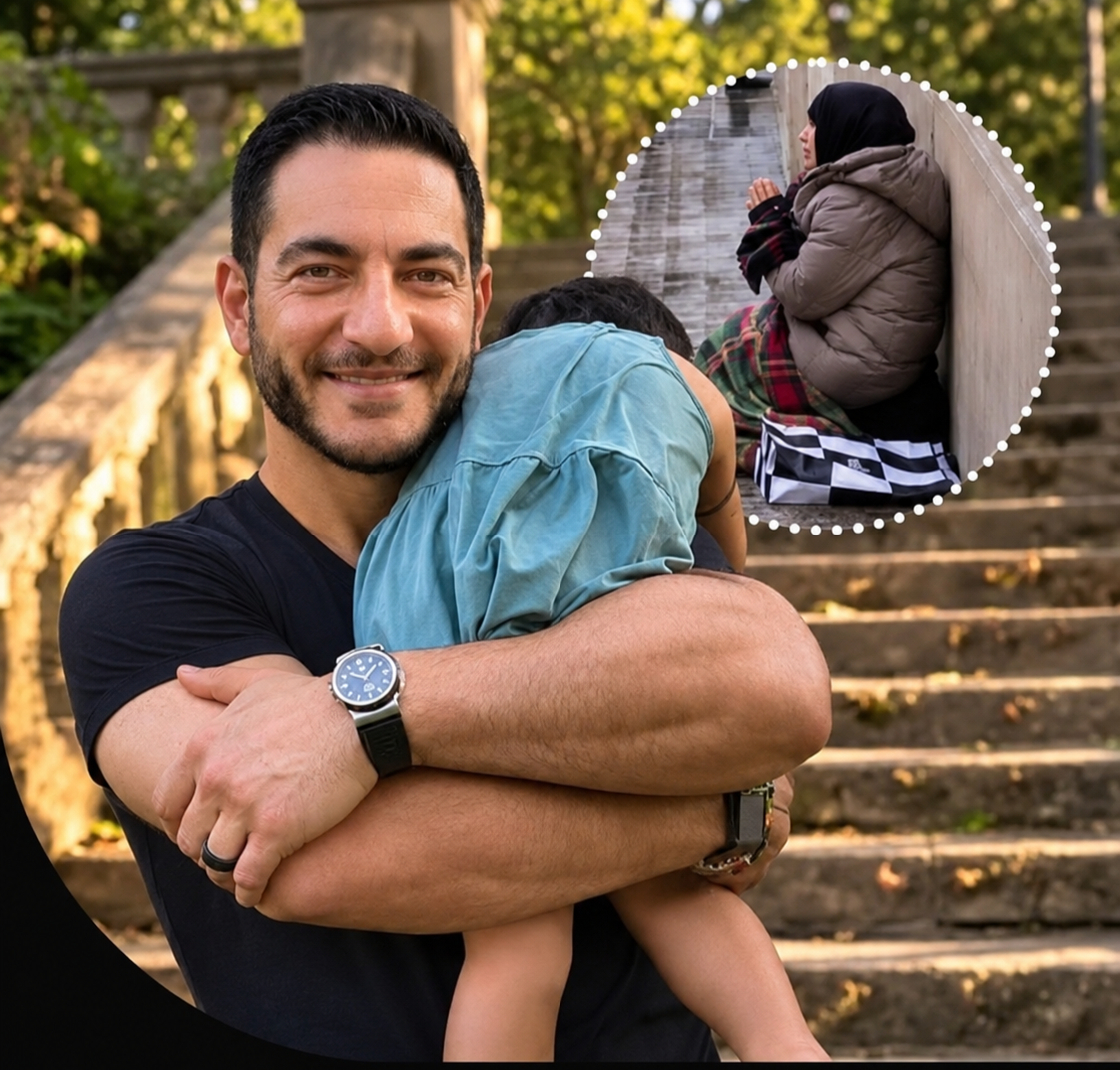
Abdul El-Sayed Makes U.S. History With Michigan Senate Victory — The Remarkable Story Behind His Rise
From a Medical Career and a Life-Changing Encounter With a Homeless Patient to Becoming America’s First Muslim Senator-Elect, His Journey Took Several Unexpected Turns
When Abdul El-Sayed stepped before supporters following Michigan’s November 3, 2026, Senate election, he was celebrating more than an ordinary political victory.
The Democratic candidate had defeated Republican former congressman Mike Rogers in one of the nation’s most closely watched Senate contests, making history as the first Muslim elected to the United States Senate.
At 42, El-Sayed was preparing to enter a chamber that had never previously included a Muslim member.
But his path to Washington had not followed the traditional route of a career politician.
Before campaigning for federal office, he had studied medicine, pursued public health research, and helped lead efforts to rebuild health services in Detroit.
His personal story also included encounters that shaped his understanding of poverty, medical care, and the responsibilities of government.
One of the most influential involved an older woman experiencing homelessness whom he encountered during his medical training.
Another involved former President Bill Clinton, who recognized his public-speaking ability years before El-Sayed entered electoral politics.
Those experiences became part of the story behind a political career that reached a historic milestone in November 2026.
Michigan Voters Deliver a Historic Senate Election Result
El-Sayed’s victory came in a closely watched contest for the seat being vacated by retiring Democratic Senator Gary Peters.
His Republican opponent, Mike Rogers, was a former member of Congress who had also competed in Michigan’s 2024 Senate election.
The race attracted national attention because Michigan has been a competitive state in recent presidential and congressional elections.
El-Sayed campaigned on progressive economic and healthcare proposals, including support for a single-payer healthcare system and measures intended to reduce the influence of corporate money in politics.
Rogers emphasized issues including national security, immigration, and inflation, while criticizing aspects of El-Sayed’s political agenda.
The campaign also featured disputes over El-Sayed’s views on Israel and questions about his political positions.
Despite those disagreements, voters selected El-Sayed to represent Michigan in the Senate.
News organizations including the Associated Press and CBS News projected his victory early on November 4.
The result established a historic first for Muslim representation in the upper chamber of Congress.
His Journey Began Far From the Senate Floor
Long before his election victory, El-Sayed was pursuing a career in medicine and public health.
He attended the University of Michigan, where he studied biology and political science, graduating in 2007.
His academic path later took him to the University of Oxford, where he completed a doctorate in public health in 2011.
He also earned a medical degree from Columbia University in 2014.
These experiences gave him a background in both the scientific study of health and the broader social factors that influence medical outcomes.
Although he originally considered becoming a surgeon, his professional interests increasingly shifted toward public health.
That transition reflected a growing interest in the relationship between medical treatment and the conditions in which people live.
For El-Sayed, questions about housing, income, access to services, and community health eventually became central to his professional work.
A Homeless Patient Helped Change How He Viewed Medicine
One of the most personal stories associated with El-Sayed’s career involves an encounter during his medical training.
According to the account he has shared, he treated an older woman experiencing homelessness.
Medical professionals addressed her immediate health concerns and arranged additional care, but the experience did not end when she left the hospital.
El-Sayed later encountered the woman sleeping on a subway bench.
The moment raised a difficult question about the limits of clinical medicine.
Doctors could provide treatment and attempt to stabilize a patient’s condition, but what happened when that patient returned to an environment that made recovery difficult?
The encounter helped shape his interest in problems that could not be solved through individual medical appointments alone.
Housing instability, poverty, and barriers to essential services can affect health outcomes long after someone leaves a hospital.
El-Sayed’s account of the experience illustrates why he began looking beyond the treatment of individual patients toward policies affecting entire communities.
Bill Clinton Encouraged Him to Consider Public Service
Another important moment in El-Sayed’s early life came during his university years.
According to the biographical account, former President Bill Clinton heard him speak at a University of Michigan graduation event in 2007.
Clinton reportedly encouraged the young graduate to consider public service.
At the time, El-Sayed was still building an academic and professional future that would take him into medicine and public health.
The encounter did not immediately launch a political career, but it became one of the experiences later associated with his interest in government.
Years afterward, El-Sayed would move from studying health policy to helping administer public services and eventually campaigning for elected office.
His journey demonstrates how political careers can emerge from professional experiences outside traditional government institutions.
At 30, He Took on a Major Public Health Role in Detroit
In 2015, El-Sayed became Detroit’s health director at approximately 30 years old.
He entered the role during a period when the city was rebuilding public services following its historic municipal bankruptcy.
Detroit faced significant challenges involving public health infrastructure, environmental conditions, and access to essential services.
El-Sayed’s responsibilities included efforts to restore and strengthen the city’s public health functions.
His work addressed concerns involving children’s health, environmental risks, and the availability of community health resources.
These responsibilities required an approach different from treating patients individually.
Public health officials must consider how housing, neighborhoods, environmental exposure, education, and access to preventive care affect entire populations.
El-Sayed’s time in Detroit gave him direct experience with the administrative and financial challenges involved in delivering government services.
It also became an important part of the professional background he later brought to electoral politics.
His Wife’s Medical Experience Added a Personal Dimension
El-Sayed’s views on healthcare and workplace protections have also been shaped by experiences within his own family.
His wife, psychiatrist Dr. Sarah Jukaku, reportedly faced serious complications following childbirth while completing her medical residency.
According to the family’s account, she experienced difficulty obtaining the medical leave needed during her recovery.
After contacting her union, she received assistance securing time away from work.
The experience illustrated the importance of workplace protections and access to medical leave, even for people employed within the healthcare system.
For families dealing with illness or complications after childbirth, financial pressures and employment requirements can make recovery more difficult.
El-Sayed has connected such concerns with his broader interest in healthcare access and worker protections.
His political proposals reflect the view that medical care and economic security are closely connected.
However, the policy debate remains contested, particularly over how expanded healthcare programs should be funded and administered.
His Family Has Been Part of the Journey
Beyond his professional and political responsibilities, El-Sayed is also a husband and father.
He and Sarah Jukaku have known each other since their university years and married in 2006, according to the supplied biographical account.
The couple are raising two daughters, Emmalee and Serene.
Family experiences have featured in El-Sayed’s public discussion of healthcare, economic pressures, and workplace policies.
His wife’s experience during medical residency provided a personal example of the challenges some workers face when they need time to recover from serious medical complications.
Those experiences also offer context for why El-Sayed has emphasized healthcare policy throughout his political career.
Although his election victory has attracted national attention, the family has also experienced the ordinary responsibilities of balancing professional careers, parenting, and financial decisions.
That background has been part of how El-Sayed presents his priorities to voters.
His Healthcare Proposals Became a Central Campaign Issue
During the 2026 campaign, El-Sayed emphasized support for Medicare for All and broader changes to the American healthcare system.
Supporters of single-payer healthcare argue that a publicly financed system could expand coverage, simplify some administrative processes, and reduce financial barriers to treatment.
Critics raise concerns about government spending, taxation, implementation, and the effects of major structural changes on patients and healthcare providers.
Those competing arguments were part of the wider policy debate surrounding the Michigan Senate election.
El-Sayed also focused on the cost of living and the influence of wealthy donors and corporate interests in politics.
His proposals appealed to voters concerned about household expenses and the affordability of essential services.
Rogers and other Republican critics challenged his agenda, arguing that his approach represented an expansion of government that could create additional economic costs.
The election result established which candidate Michigan voters selected, but it did not resolve the underlying policy disagreements.
Those debates are likely to continue as El-Sayed prepares to take office.
A Playful Message to JD Vance During His Victory Celebration
Amid the significance of his election victory, El-Sayed also found room for humor.
During his celebration, he reportedly made a playful reference to Vice President JD Vance’s Ohio roots.
“Wolverine 1, Buckeye 0,” El-Sayed said, according to the supplied account.
The remark drew on the longstanding college sports rivalry between the University of Michigan Wolverines and the Ohio State Buckeyes.
For Michigan audiences familiar with that rivalry, the joke added a local touch to a nationally significant political moment.
It also reflected how political celebrations can incorporate regional identities and cultural references alongside more serious messages.
Although the remark referenced Vance, the election itself was a contest between El-Sayed and Rogers for Michigan’s open Senate seat.
What His Victory Means for Representation in Congress
El-Sayed’s election marks a significant moment in the history of religious representation in the United States Senate.
Muslim Americans have previously served in the House of Representatives, but no Muslim had been elected to the Senate before his 2026 victory.
His election therefore expands the range of religious backgrounds represented in the chamber.
The result also adds another chapter to the history of Michigan, a state with diverse communities and longstanding immigrant populations.
El-Sayed is the son of Egyptian immigrants and has spoken publicly about his family background and identity.
His campaign took place amid intense national debates about immigration, religion, foreign policy, and the role of identity in American politics.
Supporters viewed his election as an important breakthrough in representation, while political opponents continued to challenge his policy positions.
The historic nature of the result is distinct from the ongoing debate over his legislative agenda.
As a senator, he will be evaluated not only for the significance of his election but also for his votes, proposals, and work on behalf of Michigan residents.
What Happens When Abdul El-Sayed Enters the Senate?
El-Sayed is expected to begin his Senate term in January 2027, succeeding retiring Senator Gary Peters.
His arrival will bring a former physician and public health administrator into a chamber responsible for federal legislation, executive confirmations, and national policy decisions.
His campaign positions suggest that healthcare affordability, economic concerns, and campaign finance issues will be among the subjects he seeks to address.
However, advancing major legislation will require cooperation with other senators and, depending on the proposal, support from the House of Representatives and the president.
Campaign commitments do not automatically become law after an election.
The legislative process involves committee work, negotiations, budget considerations, and votes.
For El-Sayed, the transition from campaigning to governing will involve turning broad policy objectives into specific proposals.
His effectiveness in pursuing those objectives will depend on the political environment and the support available for individual measures.
From Medicine to a Historic Moment in Washington
Abdul El-Sayed’s election to the United States Senate represents a major transition in a career that began in science, medicine, and public health.
His educational journey took him from the University of Michigan to Oxford and Columbia, while his professional work brought him into the administration of public health services in Detroit.
Along the way, personal experiences influenced his understanding of the relationship between medical care and broader economic conditions.
An encounter with a patient experiencing homelessness raised questions about what happens after someone leaves the hospital.
His wife’s experience with medical leave reinforced the importance of workplace protections.
And an early interaction with former President Bill Clinton became part of the story of how he came to consider public service.
On November 3, 2026, voters chose El-Sayed over Mike Rogers, making him the first Muslim elected to the Senate.
The historic result is now established, while the policy questions raised throughout the campaign remain subjects of political debate.
As he prepares to take office in January, his next chapter will be defined by how he approaches those responsibilities and the legislative decisions that follow.
What do you think should be the first priority for Michigan’s new senator: healthcare affordability, household costs, or another issue affecting residents?