
A Quiet Goodbye on the Farm: The Emotional Bond Between a Mare and Her Foal
A still moment in the paddock
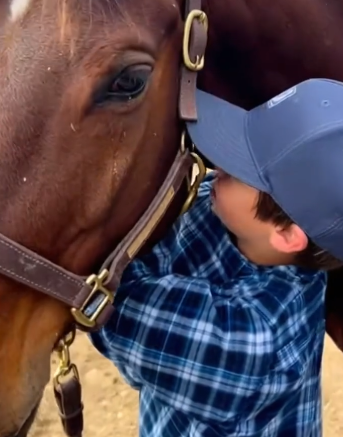
Under a heavy gray sky, a calm yet emotional scene unfolded in a quiet paddock. A brown mare stood motionless, her presence steady but her expression filled with visible distress. Her large, dark eyes appeared wet, reflecting a depth of feeling that was impossible to ignore.
There was no noise from her, no sudden movement or resistance. Instead, she remained still, as if absorbing the moment, while the environment around her carried on with the practical tasks of the day.
This was not an ordinary moment. It marked a transition that is common in farm life but deeply significant for the animals involved.
A separation that marks a new chapter
Nearby, preparations had already been completed for the departure of her young foal. The foal had been carefully loaded into a trailer, ready to be transported to a new home. The process, though routine, carried emotional weight.
The sound of the trailer door closing echoed through the open space, signaling the final step in the separation. For those familiar with farm life, this moment is part of a cycle that repeats over time.
Foals are raised, nurtured, and eventually moved on as they grow. It is a necessary part of breeding and animal management. However, necessity does not remove the emotional impact of the event.
The mare, having carried and cared for her foal, remained attentive to the sounds around her. Even as the physical connection was gone, her awareness of the foal’s presence lingered.
The presence of human care
Standing beside the mare was a young caretaker who had been closely involved in her daily life. He stayed near her, offering quiet reassurance through gentle contact rather than force or urgency.
He placed his arms around her neck and rested his head close to hers, creating a calm and supportive presence. His actions reflected an understanding that animals, like people, respond to comfort and familiarity during moments of stress.
There were no rushed movements or loud instructions. Instead, the interaction remained steady and respectful, allowing the mare to remain calm while processing the change.
This connection between human and animal is a central part of farm life. Caretakers often develop strong bonds with the animals they work with, making moments like this emotionally meaningful for both sides.
The bond between mare and foal
The relationship between a mare and her foal is one of close dependence and care. From birth, the mare provides protection, nourishment, and guidance, shaping the early experiences of the young horse.
This bond is formed through daily interaction, physical closeness, and instinctive behavior. The foal learns to trust and follow the mare, while the mare remains attentive to the foal’s needs.
Over time, this connection becomes deeply rooted, making separation a significant transition. Even when it is expected, the change can be felt in the behavior and demeanor of the animals involved.
The mare’s stillness in the paddock reflected that connection. While she did not act out, her posture and expression suggested awareness of the absence that had just occurred.
The realities of farm life
On farms and ranches, the movement of animals is part of everyday operations. Horses are bred, raised, and eventually sold or relocated as part of a structured system that supports agricultural and equestrian industries.
These decisions are made based on practical needs, including space, resources, and the future development of the animals. Each step is planned to ensure that the animals continue to receive proper care.
While these processes are necessary, they often involve moments of transition that carry emotional significance. For caretakers and animals alike, these changes can be challenging even when they are expected.
The scene in the paddock represented this balance between responsibility and emotion. It showed how routine actions can still carry a sense of weight and meaning.
A shared moment of understanding
The young caretaker remained by the mare’s side as the trailer engine started and the vehicle prepared to leave. He continued to offer quiet reassurance, maintaining a calm environment despite the activity nearby.
The mare did not pull away. Instead, she remained close, accepting the presence of the person who had been part of her daily routine. This moment highlighted a shared sense of understanding between them.
Without words, the interaction communicated support and stability. It demonstrated how consistent care can create trust that endures even during difficult moments.
Such interactions are often overlooked, but they form an essential part of responsible animal care. They reflect patience, empathy, and a recognition of the animal’s experience.
The departure
As the trailer slowly moved away, the environment grew quieter. The sound of the engine faded, leaving behind the stillness of the paddock and the absence of what had just departed.
The mare lifted her head slightly, her attention following the direction of the departing vehicle. Even without visual contact, her awareness remained focused on the change that had taken place.
The caretaker stayed beside her, not rushing the moment or attempting to distract her. Instead, he allowed the transition to unfold naturally, offering continued presence without pressure.
This approach reflected an understanding that adjustment takes time. Both animals and humans process change in their own ways, and patience is often the most effective response.
Adjustment over time
In the days following such a separation, routines begin to reestablish themselves. The mare would return to grazing, moving within familiar spaces, and interacting with her environment as before.
Gradually, the intensity of the moment would lessen, replaced by the steady rhythm of daily life. This process is part of how animals adapt to changes in their surroundings.
However, moments of awareness can still occur. Sounds, movements, or quiet periods may bring brief reminders of what has changed. These moments are part of the adjustment process.
Over time, stability returns, supported by consistent care and familiar routines. The environment remains the same, providing a foundation for continued well-being.
The role of compassion in animal care
The scene in the paddock highlights the importance of compassion in farm management. While practical decisions are necessary, the way those decisions are carried out can make a significant difference.
Providing calm handling, maintaining familiar routines, and offering reassurance all contribute to the well-being of the animals involved. These practices support smoother transitions and reduce unnecessary stress.
The caretaker’s actions demonstrated how simple gestures can create a sense of stability. His presence allowed the mare to remain calm, even during a moment of change.
This approach reflects a broader understanding that responsible animal care involves both management and empathy. It is not only about meeting physical needs but also about recognizing behavioral and emotional responses.
A lasting impression
Moments like this leave a lasting impression on those who witness them. They serve as reminders of the strong connections that exist between animals and the environments in which they are raised.
They also highlight the role of humans in supporting those connections, especially during times of transition. The balance between practicality and care is a defining aspect of life on a farm.
While separations are part of the cycle, they are never entirely without meaning. Each one reflects a stage in growth, development, and change.
The quiet scene in the paddock captured that reality in a simple yet powerful way. It showed that even in routine moments, there can be depth, connection, and a need for understanding.
Understanding the cycle of care and change
Farm life operates within a continuous cycle of care, growth, and transition. Each stage plays a role in maintaining balance and supporting the long-term well-being of animals and operations.
The separation of a mare and her foal is one part of that cycle. It represents both an ending and a beginning, marking progress while also requiring adjustment.
Through careful handling and consistent care, these transitions can be managed in a way that respects both the needs of the animals and the responsibilities of the caretakers.
In the end, the scene serves as a reminder that change, while sometimes difficult, is an essential part of life. With patience, care, and understanding, both animals and people move forward together within that shared experience.