
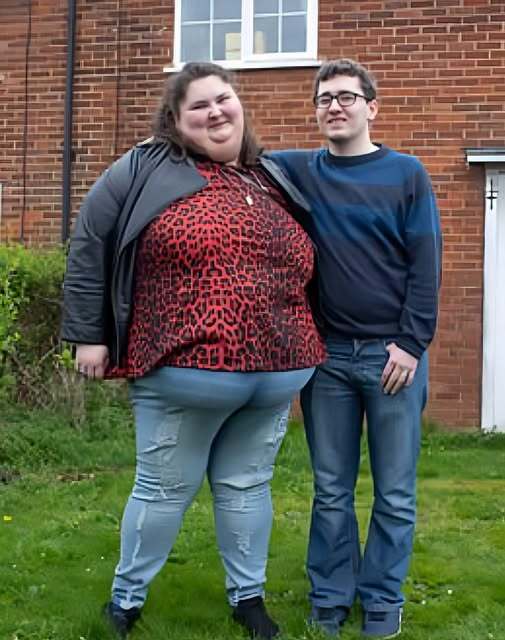
Amalie Endured Years of Bullying Before Learning Her Body Did Not Define Her Worth
Her Struggles With Weight Began in Early Childhood
Amalie’s difficulties with her weight began before she was old enough to understand why adults were concerned. By the age of two, she was already gaining weight quickly, prompting doctors to examine her while the adults around her quietly discussed what was happening.
At that young age, she could not fully understand the medical attention or the worried conversations taking place around her. What she did gradually recognize was that her body seemed to draw attention wherever she went.
That attention became especially painful when she started school. Amalie remembers being bullied from as early as kindergarten, a period when children are normally beginning to form friendships and discover where they belong.
Instead of feeling accepted by her classmates, she regularly faced pointing, laughter, and cruel remarks. Other children treated her appearance as entertainment and repeatedly turned her body into a punchline.
The teasing was not limited to a single incident or one difficult school year. It became a persistent part of her childhood, following her as she grew and shaping the way she began to see herself.
The Bullying Became More Severe as She Grew Older
As Amalie got older, she continued to gain weight. The physical changes that came with growing up also brought harsher comments from the people around her.
The bullying escalated as her body became more noticeable to classmates. Remarks that may once have seemed childish became increasingly personal, deliberate, and damaging.
For Amalie, school was not simply a place to learn. It was also an environment where she had to prepare herself for the possibility of being mocked, judged, or singled out because of her size.
Repeated criticism can become difficult to separate from a person’s own thoughts. After hearing negative messages about her appearance for years, Amalie began to internalize the treatment she received from others.
The cruelty affected far more than her experience in the classroom. It influenced how she felt when she looked at herself, how she approached ordinary activities, and whether she believed she deserved to be seen positively.
While the children around her may have treated their comments as jokes, the consequences for Amalie were serious. The words followed her beyond the school grounds and remained present during moments when she was alone.
She Began Avoiding Her Own Reflection
Over time, Amalie developed an intensely negative relationship with her appearance. Mirrors became something she avoided because she hated the person she believed she saw looking back at her.
Her reflection did not simply show her physical appearance. It also reminded her of the insults, laughter, and rejection she had experienced throughout her childhood.
Rather than seeing herself as a complete person with emotions, interests, and potential, she increasingly focused on the feature that others had repeatedly used against her. Her body became connected with shame in her mind.
The distress became so severe that Amalie began to self-harm. It was a painful sign of how deeply years of bullying had affected her emotional well-being and sense of personal value.
Her experience demonstrates how repeated humiliation can continue long after a particular comment has been made. The people responsible may move on quickly, but the person targeted can carry the emotional weight of those moments for years.
Amalie had been taught through the behavior of others that her appearance made her different. Eventually, that message influenced the way she treated herself.
Clothes Shopping Became a Source of Pain
Shopping for clothes was another ordinary part of childhood that became emotionally difficult for Amalie. For many girls her age, choosing new outfits was an opportunity to explore colors, styles, and personal preferences.
For Amalie, the experience was very different. The children’s department rarely offered clothing that fit her body, preventing her from participating in the experience in the same way as other children.
While other girls searched through fun and colorful outfits designed for their age group, Amalie was directed toward the women’s section. She had to look for clothes among items created for adults because the available children’s sizes did not accommodate her.
The situation made her feel separated from other girls before she had even finished growing up. Clothing labels and department divisions became another reminder that she did not seem to fit into the spaces created for children her age.
The difficulty was not only about finding something comfortable to wear. Each shopping trip reinforced the feeling that the world had not considered children with bodies like hers.
Instead of leaving a store excited about a new outfit, Amalie could leave feeling embarrassed and excluded. A routine family activity became an experience she associated with disappointment and emotional pain.
She was placed in an uncomfortable position between childhood and adulthood. She was still a young girl, but the clothing available to her did not always reflect her age, personality, or desire to dress like her peers.
She Felt as Though She Belonged Nowhere
Being sent to the women’s section made Amalie feel that she did not belong in either part of the store. The children’s clothing did not fit her body, while the adult section did not represent who she was at that stage of her life.
That sense of exclusion extended beyond clothing. It became part of a wider feeling that familiar social spaces were not designed to include her.
At school, she was singled out by classmates. In stores, she struggled to find age-appropriate clothes. In private, she avoided mirrors because her reflection had become connected to everything others had taught her to dislike.
These experiences combined to create a powerful sense of isolation. Amalie was surrounded by other people, yet she rarely saw evidence that someone with her body could be fully accepted.
Childhood is a period when many people begin building their identity through friendships, family experiences, entertainment, and comparisons with others. Amalie’s identity was instead repeatedly challenged by messages suggesting that her size made her an outsider.
Her difficulty was not created by one clothing rack, one classmate, or one insult. It came from encountering the same message in multiple areas of her life until it began to feel unavoidable.
Representation Offered Little Comfort
Amalie also struggled to find people who looked like her in books, movies, and magazines. The stories and images surrounding her rarely presented larger bodies in a way that made her feel visible or valued.
When bigger people did appear, they were often placed in limited roles. They might be used as the joke, positioned as the sidekick, or presented as the person who needed to change before life could truly begin.
For a child already experiencing bullying, those portrayals could reinforce the same painful ideas expressed by classmates. The absence of positive representation made it harder for Amalie to imagine herself being treated as important.
She did not often see someone with a body like hers presented as confident, admired, complex, or central to the story. Instead, larger characters were frequently defined by their size.
This created another form of exclusion. Even in fictional worlds, where many different lives and possibilities could be shown, people who resembled Amalie were rarely allowed to be the main character.
The limited portrayals supported the belief that someone like her was supposed to remain in the background. They suggested that larger bodies existed to create humor, support someone else’s journey, or symbolize an earlier and less desirable stage of life.
Negative Messages Shaped Her View of Herself
For Amalie, the lack of representation did not exist separately from the bullying. It worked alongside the comments she heard at school and the difficulties she faced while shopping for clothes.
Each experience appeared to confirm the next. Classmates mocked her body, stores failed to provide suitable children’s clothing, and popular stories rarely showed larger people as worthy of attention or admiration.
Together, these messages affected how she understood her place in the world. She began to believe that people with bodies like hers were not expected to be celebrated, chosen, or placed at the center of their own stories.
The effect was particularly damaging because these ideas reached her during childhood. She encountered them while still developing the confidence and emotional tools needed to challenge what others said about her.
Without many visible examples offering a different perspective, the negative treatment could feel like proof rather than prejudice. Amalie had little reason to believe that the cruelty directed toward her reflected a problem in others rather than a problem within herself.
That belief contributed to her avoidance of mirrors and the pain she experienced during clothes shopping. It also deepened the emotional distress that eventually led her to harm herself.
A Childhood Marked by Exclusion
Amalie’s early life was shaped by a series of experiences that repeatedly told her she was different. Her rapid weight gain attracted concern from adults before she could understand it, while bullying began as early as kindergarten.
As she grew, the remarks became more severe. She was not given the freedom to forget about her body because other people continually drew attention to it.
Activities that should have been ordinary became sources of anxiety. Looking into a mirror brought back feelings of shame, while shopping for clothes emphasized the lack of options created for children with bodies like hers.
Entertainment and media offered few positive counterexamples. When larger people appeared, they were often reduced to narrow roles that reinforced the idea that their bodies were a problem or a joke.
These pressures left Amalie feeling as though she did not belong anywhere. She was excluded socially by bullying, practically by clothing limitations, and symbolically by the stories that failed to represent her with dignity.
Her experience shows how body-based bullying can affect nearly every part of a young person’s life. The damage is not restricted to the moment an insult is spoken, because repeated mistreatment can reshape self-image, daily behavior, and emotional health.
More Than a Body Used as a Punchline
Throughout her childhood, other people often treated Amalie’s size as the most important thing about her. Their behavior overlooked the fact that she was a young person trying to learn, grow, make friends, and feel accepted.
The constant focus on her appearance denied her the same freedom many children receive to develop without having their bodies repeatedly judged. Instead of being allowed to discover who she was, she was pressured to define herself through the criticism of others.
Her story reflects the lasting harm caused when a child is repeatedly reduced to a physical characteristic. Laughter that may seem brief to those participating can become part of the targeted child’s internal voice.
Amalie’s pain was intensified by the absence of spaces where she could see herself treated as normal and worthy. School, shopping, mirrors, books, movies, and magazines all became connected to the same message of exclusion.
For years, she was made to feel that people like her could not be the center of a story. The treatment she experienced encouraged her to hide, dislike her reflection, and believe that belonging was reserved for people whose bodies matched a narrower expectation.
Behind the comments and clothing sizes was a child who wanted the same acceptance available to everyone else. Amalie’s experience reveals why dignity, inclusion, and representation matter deeply, especially during the years when a person is first learning how to see themselves.