
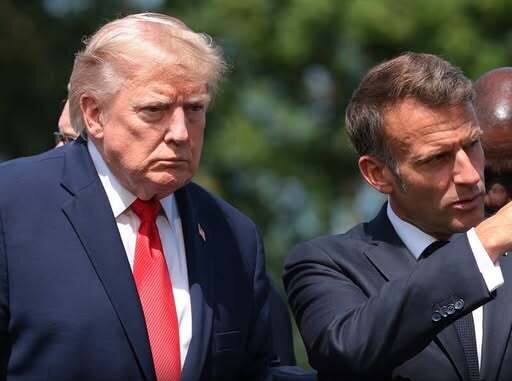
Awkward G7 Greeting Highlights Tensions Around Donald Trump on World Stage
The room appeared to understand the weight of the moment before anyone said a word. Cameras were fixed on the leaders, every movement captured, every gesture magnified, and every greeting turned into a signal about power, trust, and political distance.
As Donald Trump entered the G7 spotlight, the reception around him seemed noticeably cooler than the warmth shown to others nearby. What might have lasted only seconds quickly became the kind of moment that invites interpretation, especially at a summit already shaped by serious disagreements and delicate diplomacy.
Trump received a polite handshake. Other leaders were greeted with kisses, embraces, and more relaxed signs of familiarity. In the carefully watched environment of an international summit, that contrast carried meaning far beyond ordinary etiquette.
A Brief Greeting With Larger Meaning
The moment centered on Ursula von der Leyen as she greeted Donald Trump with restraint before turning toward Emmanuel Macron, Volodymyr Zelensky, and Canada’s Mark Carney with noticeably warmer gestures. The shift from formality to affection was difficult to miss.
Diplomatic events are built around protocol, but protocol does not erase body language. A handshake can be respectful, yet distant. An embrace can suggest trust, closeness, and shared understanding. When those gestures unfold side by side, the comparison becomes part of the message.
For Trump, the scene placed him in an unusual position. He entered projecting authority and confidence, yet briefly appeared separate from the more comfortable exchanges happening around him. The image of a leader standing slightly apart from a circle of warmer greetings created a striking visual contrast.
The G7 setting made the moment even more significant. These summits are designed to communicate coordination among powerful nations. Even when disagreements exist behind closed doors, public appearances often aim to show unity, steadiness, and mutual respect.
In this case, the formal handshake and the warmer embraces that followed suggested a more complicated atmosphere. The leaders were gathered at the same table, but the gestures around that table hinted at uneven levels of comfort and confidence.
Body Language in a Strained Summit
The conference took place amid major international tensions. Iran, Ukraine, and crises across the Middle East were already placing pressure on the discussions. These issues demanded careful language, coordinated positions, and a public display of cooperation.
Yet while official statements can be measured and cautious, body language often feels more immediate. A glance, a pause, or a restrained greeting can appear to reveal what formal remarks leave unsaid.
That is why the scene drew attention. It was not only about whether one leader kissed another or offered a handshake. It was about how those gestures looked in relation to each other at a moment when the summit was already under strain.
Trump’s presence carried its own symbolism. As a former president returned to a central global stage, he represented American power, influence, and unpredictability all at once. His arrival was not treated as an ordinary entrance by observers watching the room closely.
He seemed to scan the space as others moved into familiar greetings. The contrast between his formal welcome and the easy warmth shown among other leaders created an image of distance within a gathering meant to project unity.
America at the Center, But Not Always Embraced
The United States remained central to the discussions. No major G7 summit can unfold without attention to Washington’s role, especially when questions of security, global stability, and crisis management are on the agenda.
But the moment suggested that centrality does not always equal closeness. America may still be essential to the room, yet the affection surrounding its leadership appeared less certain in that brief exchange.
That distinction matters because international alliances depend on more than formal commitments. They also rely on confidence, familiarity, and the belief that partners will act predictably when pressure rises.
The cooler reception for Trump appeared to reflect doubts about Washington’s reliability. Those doubts were not expressed through open confrontation in the room, but the visual contrast made them difficult to ignore.
Leaders can praise cooperation in public while still carrying private concerns. They can stand together for photographs while disagreeing on strategy. They can issue statements of unity while their gestures reveal tension beneath the surface.
Public Praise and Private Unease
During the summit, leaders publicly praised a “diplomatic breakthrough” and emphasized the need to reopen the Strait of Hormuz. The language of cooperation remained present, and the official tone continued to focus on unity, stability, and shared responsibility.
Those statements were designed to reassure. At moments of international uncertainty, public messaging from global leaders often aims to calm markets, allies, and citizens who are watching for signs of division.
Still, the awkward greeting complicated that message. It created a second narrative beside the official one: a narrative of discomfort, caution, and shifting relationships among leaders who must work together despite visible strain.
The gap between words and gestures became the heart of the moment. On paper, the summit emphasized common purpose. In the room, the greeting suggested that trust may be thinner than the official language allowed.
That does not mean the alliance structure collapsed in a single exchange. It does mean that the moment became a symbol of how fragile cooperation can look when personal chemistry and political uncertainty enter the frame.
The Power of a Captured Moment
Modern diplomacy happens under constant observation. Cameras do not only record speeches and agreements; they capture pauses, expressions, and interactions that can shape public understanding of an event.
In this case, the cameras caught everything. The handshake, the embraces, Trump’s position in the room, and the warmer exchanges around him all became part of the story.
A summit can last for hours, but a few seconds can define how it is remembered. The public often reads these brief scenes as emotional summaries of complex relationships. That is why one greeting can become more memorable than an entire communiqué.
The moment also showed how political symbolism can emerge without anyone formally announcing it. No leader needed to make a direct criticism. No statement needed to name the tension. The contrast itself did the work.
For supporters of Trump, the handshake may have seemed like standard diplomatic courtesy. For critics, the warmer greetings offered to others may have appeared to confirm a wider discomfort with his leadership style and international approach.
A Summit Marked by Fragile Alliances
The G7 was already dealing with a difficult agenda. Ukraine remained a central concern. Iran and Middle East crises added further pressure. The question of coordination among major democratic powers remained urgent.
Against that backdrop, the greeting became more than a social exchange. It served as a small but powerful reminder that alliances are not automatic. They must be maintained, renewed, and trusted by those who depend on them.
When leaders appear relaxed with one another, it can strengthen the image of partnership. When one leader appears more isolated, even briefly, it can raise questions about confidence and cohesion.
Trump’s brief separation from the warmer circle around him therefore carried political weight. It suggested that while America remained present and powerful, its relationships with key partners were not being expressed with the same ease shown among others.
The conference room became a stage where protocol, personality, and geopolitics overlapped. Every handshake and embrace seemed to carry an extra layer of meaning because the summit itself was already filled with uncertainty.
The Message Behind the Formality
A polite handshake is not an insult. In diplomatic terms, it remains a normal and respectful gesture. But when it is followed immediately by more affectionate greetings for other leaders, the difference becomes visually sharp.
That was the force of the moment. It was not defined by hostility, but by contrast. Trump was not openly rejected, yet he did not appear to receive the same warmth that surrounded others nearby.
The symbolism was subtle but strong. It suggested caution rather than comfort, formality rather than familiarity, and respect without obvious affection.
Such distinctions matter in diplomacy because leaders often communicate through tone as much as language. A restrained greeting can signal distance without creating a formal dispute. A warmer embrace can signal trust without requiring a written agreement.
In a room where everyone understood the importance of public perception, those gestures became part of the political atmosphere. They shaped how the summit looked, even before the official statements were examined.
A New Reality on the Global Stage
The awkward exchange hinted at a broader reality facing American leadership in the international arena. The United States remains central to global decision-making, but the emotional certainty surrounding its leadership appears less secure.
America’s role at the table was not in question. Its military, political, and diplomatic weight continued to matter. But the warmth traditionally associated with close alliances seemed more complicated in that moment.
Trump’s appearance at the summit brought questions about ego, authority, and trust into sharper focus. He stood inside the circle of global power, yet the greetings around him suggested that influence and affection are not the same thing.
The official message of the G7 remained one of cooperation. Leaders continued to stress unity, stability, and shared responsibility. But the room told a more layered story.
That story was about a powerful country still at the center of the stage, led by a figure whose presence can make allies more cautious. It was about diplomacy continuing despite visible discomfort. It was about a world where gestures can expose uncertainty faster than words can hide it.
Why the Moment Resonated
The scene resonated because it was simple to understand. No complex policy language was needed. Viewers saw one kind of greeting for Trump and another kind of greeting for several leaders beside him.
That visual difference gave the moment its force. It turned an ordinary diplomatic arrival into a symbol of strained relationships at a high-stakes summit.
For a leader who often presents himself as commanding and dominant, the image of standing apart while others exchanged warmer greetings carried particular impact. It briefly shifted the focus from power to belonging.
The moment did not rewrite the summit’s official agenda, but it did shape the emotional reading of the gathering. It suggested that behind the formal language of cooperation, there were still doubts, hesitations, and unsettled relationships.
In the end, the conference room offered two messages at once. The official message stressed unity and shared responsibility. The silent message, captured in a handshake and a series of embraces, suggested that unity may be more fragile than leaders wished to admit.
That is why the moment lingered. It was brief, controlled, and polite, yet it revealed enough contrast to become a symbol. America remained in the room, still powerful and impossible to ignore, but the warmth around that power appeared far less guaranteed.