
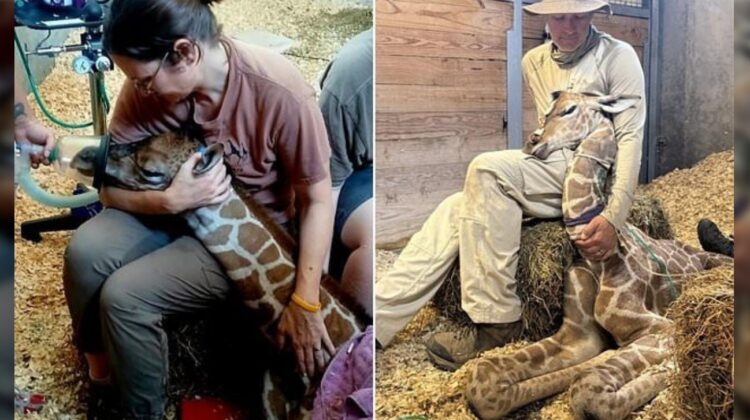
Newborn Giraffe Milani Defies 5% Survival Odds After Rare Emergency Birth in Kansas
A Critical Pregnancy Emergency
A newborn giraffe at Tanganyika Wildlife Park in Kansas has survived an extraordinary medical emergency after veterinarians believed she had only a 5% chance of living.
The calf, named Milani, entered the world through a terminal cesarean section performed after her mother, Virtue, developed severe organ failure during the final stage of pregnancy.
The procedure represented a final attempt to save the unborn calf after the veterinary team determined that Virtue’s condition could not be treated successfully.
Milani’s survival has since become one of the most remarkable events in the wildlife park’s history, with specialists describing the circumstances surrounding her birth as exceptionally rare.
Virtue’s Condition Rapidly Deteriorated
Virtue became critically ill while carrying her calf, suffering serious failure involving her heart, kidneys, and other organs.
Her health declined quickly, leaving the veterinary team with very limited options. As her condition worsened, it became clear that she could not recover and that the pregnancy itself was facing an immediate crisis.
The veterinarians were forced to make a heartbreaking decision. Although Virtue could not be saved, there was still a small possibility that her unborn calf might survive if delivered immediately.
A specialized team prepared for an emergency cesarean section, knowing that the procedure carried enormous risks for the premature calf.
Virtue was placed under anesthesia before the operation began. The veterinary specialists then carefully removed Milani from her mother while working to give the calf the best possible chance of survival.
After the calf had been delivered, Virtue was humanely euthanized while she remained under sedation, preventing her from experiencing additional suffering.
A Procedure With Almost No Successful Precedent
A terminal cesarean section is used only in the most serious circumstances, when the mother cannot survive and the remaining goal is to attempt to save the unborn calf.
The specialists involved in Milani’s care faced a situation that few giraffe medical teams had encountered before.
Giraffe neonatal experts consulted about the case had no previous experience with a premature calf surviving delivery under these particular conditions.
That made every stage of Milani’s treatment uncertain. The medical team could not rely on a familiar recovery pattern because there was little evidence showing how a giraffe calf might respond after such an emergency birth.
Milani’s survival may represent the first documented case involving a premature giraffe calf living after this type of terminal procedure.
Although the operation successfully delivered her, the most dangerous period began immediately afterward.
Milani Struggled to Take Her First Breath
A natural giraffe birth includes several physical processes that help prepare a calf for life outside the womb.
During a typical delivery, a newborn giraffe falls nearly six feet to the ground. That sudden movement helps stimulate the calf’s first breath and naturally separates the umbilical cord.
Because Milani was delivered surgically, she did not experience those important moments.
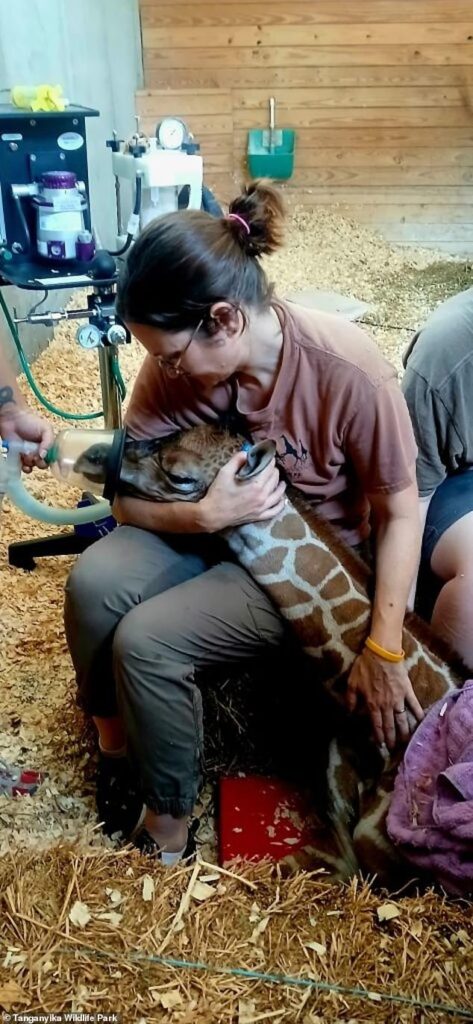
After being removed from Virtue, the newborn did not begin breathing immediately. Nearly two minutes passed before she took her first breath.
The veterinary team responded with oxygen therapy and intensive emergency care. Every second was important as specialists worked to support her breathing and stabilize her fragile body.
The delay placed Milani in an extremely vulnerable position. As a premature calf born through surgery, she had to adjust suddenly to conditions her body was not fully prepared to handle.
Her first breath became the earliest sign that she might overcome the severe odds placed against her.
Missing the Protection Normally Provided by Her Mother
Milani faced another major challenge because Virtue could not nurse her after birth.
Newborn giraffes normally receive colostrum from their mothers shortly after delivery. This early milk contains important antibodies that help protect the calf while its immune system is still developing.
Without colostrum, Milani lacked the natural immune support that a healthy newborn would ordinarily receive.
Veterinarians addressed the problem by giving her plasma donated by another giraffe named Mili.
The donated plasma provided essential support during the calf’s earliest and most medically dangerous days.
Mili’s contribution also inspired part of the newborn’s name. Milani carries a meaning connected with a “new birth” or “new era,” reflecting both the beginning of her life and the unusual circumstances of her survival.
The name became especially fitting as the calf continued reaching milestones that initially appeared unlikely.
Round-the-Clock Care During the Most Dangerous Days
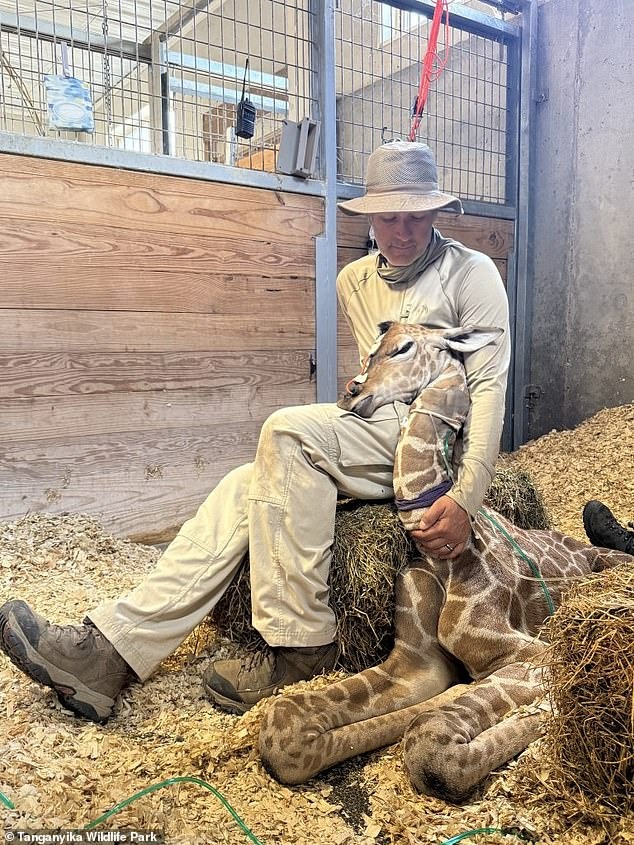
Milani required constant monitoring after the operation. Her veterinary team remained focused on her breathing, feeding, movement, strength, and overall development.
Because she had arrived prematurely and without the usual benefits of a natural delivery, she needed support with many basic functions.
Assisted feedings helped provide the nutrition her growing body required. Specialists also used physical therapy to encourage muscle development and improve her ability to stand.
Standing is an especially important milestone for a newborn giraffe. A healthy calf is expected to begin using its long legs soon after birth, but Milani’s weakened condition made that process much more difficult.
The team helped her remain upright while she gradually developed the balance and strength needed to support herself.
Every successful attempt represented progress. First, she learned to sit and rise with assistance. Later, she began standing more independently.
Those small improvements gave the veterinary staff increasing hope that she could survive the critical neonatal period.
Her First Steps Marked a Turning Point
As Milani’s condition improved, she began taking her first steps without the same level of support.
The progress was significant because her survival depended not only on overcoming the immediate birth emergency but also on developing normally outside the womb.
Her muscles, balance, immune system, and internal organs all needed time to strengthen.
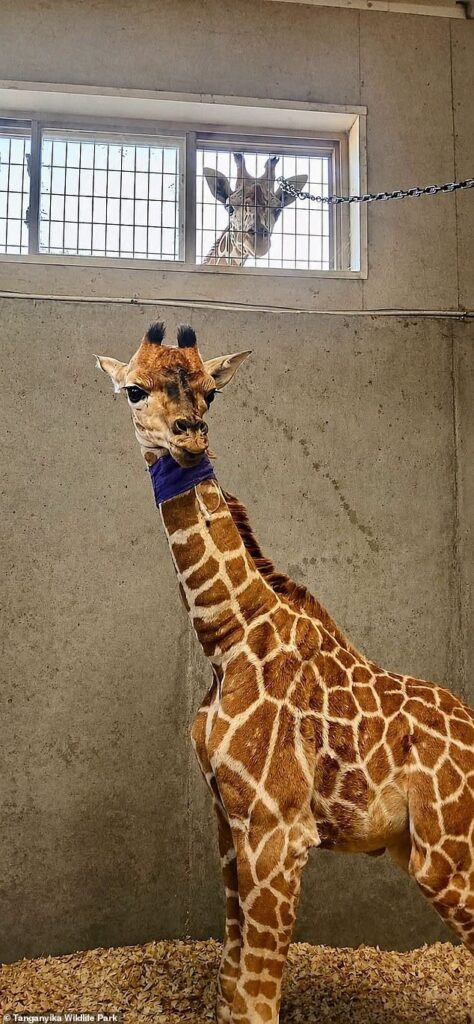
Over the following days and weeks, Milani became increasingly active. Updates showed her standing on her own and moving around her space with growing confidence.
She later began running and jumping in her enclosure, movements that demonstrated a dramatic improvement from the newborn calf who had once struggled to breathe.
Eventually, Milani was also able to move around without intravenous support.
The removal of those treatments marked another major stage in her recovery. It showed that she was becoming less dependent on intensive medical intervention and more capable of maintaining her strength independently.
An Extraordinary Case in the Park’s History
Tanganyika Wildlife Park has considerable experience caring for giraffes and their newborn calves.
More than 90 giraffe calves have been born at the park during the past three decades.
Despite that long history, none of those births involved circumstances comparable to Milani’s arrival.
Her mother’s severe illness, the terminal cesarean section, the delayed first breath, premature development, lack of maternal colostrum, and need for prolonged intensive care combined to create an exceptionally difficult case.
Each complication reduced the calf’s chances of survival, which is why her original medical outlook was so poor.
The estimated 5% survival chance reflected the seriousness of the emergency rather than a routine concern associated with a difficult delivery.
Milani had to overcome several life-threatening obstacles at once, beginning within seconds of being born.
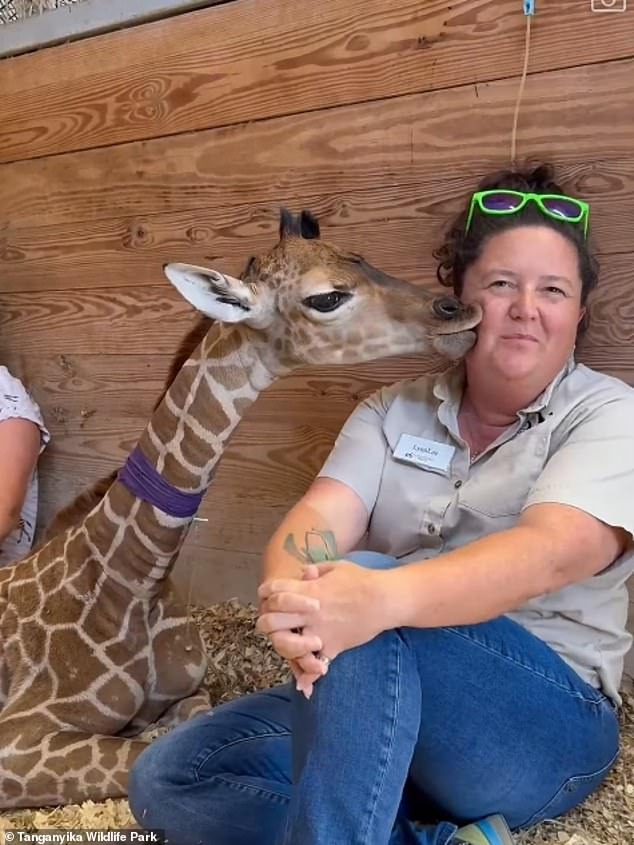
A Recovery That Continues to Inspire
Veterinarians continue to monitor Milani closely as she grows and develops.
Her early progress has been highly encouraging, but her unusual birth means careful observation remains important.
The veterinary team must continue watching her physical development, mobility, feeding, immune health, and general behavior as she becomes stronger.
Her recovery has already become a powerful example of what specialized wildlife medicine can accomplish during an extreme emergency.
The operation required difficult decision-making, rapid coordination, neonatal expertise, donated plasma, physical therapy, assisted feeding, oxygen support, and uninterrupted care.
Milani’s survival depended on all of those efforts working together during the most fragile period of her life.
Her story also reflects the emotional challenges faced by animal care teams. The specialists could not save Virtue, but their final intervention created a narrow opportunity for her calf to live.
That opportunity has grown into a remarkable recovery as Milani has progressed from needing immediate breathing assistance to standing, walking, running, and exploring without an intravenous line.
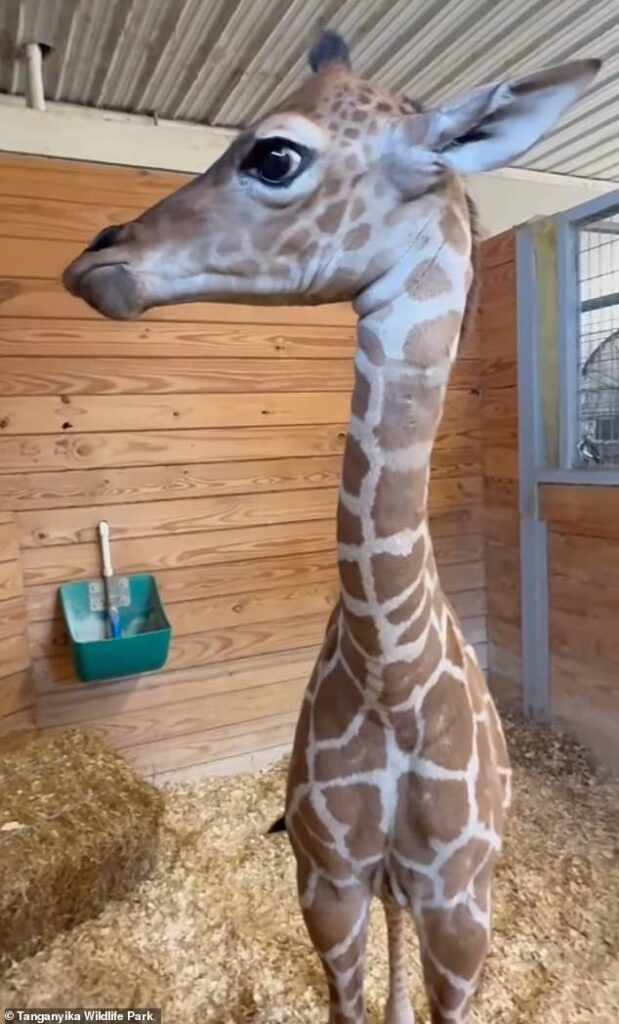
A New Beginning After a Heartbreaking Loss
Milani’s birth began with the loss of her mother and an operation performed under the most serious possible conditions.
Yet the calf’s determination and the veterinary team’s continuous care transformed a nearly hopeless emergency into a story of survival.
Her name now represents more than a new arrival at the wildlife park. It reflects a new beginning created through medical skill, careful planning, and the support of another giraffe whose plasma helped protect her.
Although Milani’s long-term development will continue to be observed, her achievements have already exceeded the expectations formed during the first moments of her life.
From a 5% chance of survival to running and jumping in her enclosure, the young giraffe has passed a series of milestones that once appeared almost impossible.
Her recovery is being celebrated as an extraordinary veterinary achievement and a reminder of the commitment required to care for vulnerable wildlife during complex medical emergencies.
For the team that watched her struggle for her first breath, every independent step now represents the outcome of a decision made during an unforgettable crisis: when Virtue could no longer be saved, they chose to give her unborn calf one final chance.