
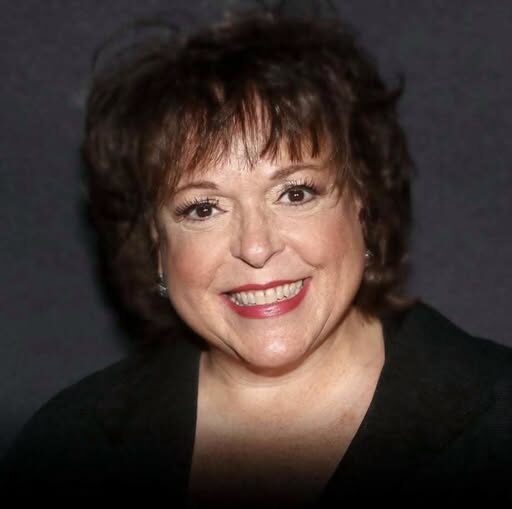
Broadway Actress Gina Ferrall Dies at 67 After a Career Spanning More Than Three Decades
Her Stage Work Included Mamma Mia!, Les Misérables, Wicked and Leopoldstadt
Gina Ferrall, a stage actress whose career spanned more than three decades, died at 67 after a brief illness with uterine sarcoma. Her credits included Mamma Mia!, Les Misérables, Wicked and Leopoldstadt. She was married to musician Kory Grossman, who shared her connection to Broadway.
Ferrall’s work reached generations of theatergoers. Some encountered her in the ensemble storytelling of Les Misérables, while others knew her through the songs of Mamma Mia! or the fantasy world of Wicked. Her work in Leopoldstadt brought her into a play centered on a family across generations.
Those four titles offer a view of the different kinds of theater Ferrall worked in over the course of her career. Each production had its own demands, and each gave audiences a different setting in which to see her perform. For people who worked alongside her, those credits also mark productions they helped bring to the stage together.
From Mamma Mia! to Les Misérables
Mamma Mia! and Les Misérables both use music to advance their stories, yet they ask different things of the people onstage. In Mamma Mia!, much of the movement between comedy and more intimate moments takes place through songs audiences may recognize. Performers work within that familiarity while giving the songs a purpose in the lives of the characters.
Les Misérables tells its story through a score that moves between private decisions and events involving large groups of people. A performer can be part of a scene that depends on the sense of a crowd, then contribute to a much quieter passage in the same show. The transitions help the audience follow a story that covers more ground than any one character can see.
Ferrall’s credits place her within both approaches to musical theater. One production builds on songs with a life outside the show, while the other relies on recurring musical ideas to connect characters and events. In both, timing matters beyond the individual performance. A cue can change the mood of a scene, and one performer’s entrance or response can affect how clearly the next moment lands.
Wicked and Leopoldstadt Added Different Work to Her Stage Career
Wicked brought another kind of musical into Ferrall’s career. The production builds a fantasy world while following relationships that audiences can understand through the characters’ choices and reactions. Even in a setting shaped by spectacle, the cast has to make clear who is watching, who understands what just happened and whose response will carry the scene forward.
Leopoldstadt works on a different scale. Its story follows a family across generations, and the passage of time changes the meaning of what the characters say and do. Audiences have to absorb the relationships within each scene while keeping track of how the people they are watching connect to those who came before them.
That kind of play depends on the cast making family ties legible as the story moves forward. A response that seems minor when it first occurs can matter later, after the audience sees how a relationship has changed. It is a different use of timing and attention from the coordination required by a musical number.
Ferrall’s work in Wicked and Leopoldstadt therefore offers two more points of reference for a career sometimes remembered through a list of familiar titles. One is a large-scale musical that uses fantasy to tell its story. The other places the audience inside the changing life of a family. Both are part of the work she left behind.
What Three Decades on Stage Meant for Her Audiences
A career lasting more than three decades creates many different points of entry for theatergoers. Two people can remember the same performer from completely different productions, and their memories can reflect different periods in that performer’s working life. For Ferrall, the combination of musicals and a play widened the range of audiences who could encounter her onstage.
Production credits are the clearest public record of those encounters. They identify the shows where an actor worked and let theatergoers place a memory in the context of a particular production. The credits alone cannot capture what it was like to see a performance unfold in the room, where the pace and emphasis of a scene depend on the people playing it together.
The length of Ferrall’s career also matters because audiences rarely see the whole of a stage performer’s work. Someone who saw her in one production might never have had the opportunity to see her in another. The range of her credits brings those separate experiences together and gives a fuller account of where she worked over the years.
Her Marriage to Musician Kory Grossman
Ferrall’s connection to Broadway extended into her life with her husband, Kory Grossman. His work as a musician and hers as an actress linked them to different aspects of performance. Onstage, an actor works with movement, words and the responses of other performers. Musical work brings its own attention to pacing, cues and the way individual contributions fit into the whole.
That shared connection is part of Ferrall’s life beyond the productions audiences associate with her. Her death is a personal loss for Grossman, who knew her as his wife. Colleagues and theatergoers remember her from positions of their own, shaped by the time they spent working with her or watching her perform.
Colleagues and Theatergoers Remember Her From Different Perspectives
People who work together on a production share long stretches of preparation for moments the audience experiences only once in an evening. They learn how others handle a pause, recover from a change in timing or give a scene room to settle. For colleagues remembering Ferrall, the experience of working through those details belongs to the history of the production as much as the performance the audience saw.
Theatergoers carry a different record. What stays with someone may be a brief exchange between characters, a moment in a song or the way a scene changed when another performer entered. Those impressions explain why a familiar title can take on a more personal meaning when an actor who helped bring it to the stage dies.
Ferrall’s career gave audiences and colleagues more than 30 years of such encounters. Mamma Mia!, Les Misérables, Wicked and Leopoldstadt document part of that work, across productions with different stories and different demands on their casts. The people who saw those shows can remember the performances they attended, and the people who shared the stage with her can remember how those performances came together.