
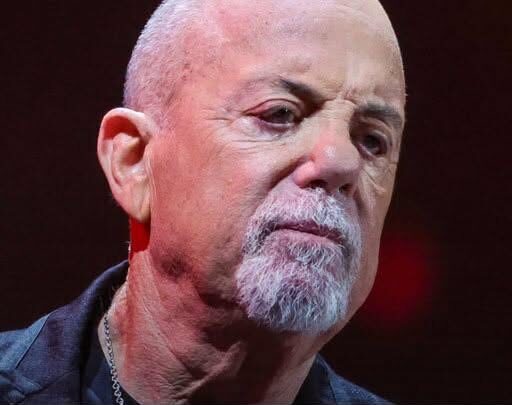
Billy Joel, 77, Faces Uncertain Future After Brain Condition Forces Him Offstage — Now He’s Parting With More Than 70 Beloved Motorcycles
Billy Joel, 77, Faces Uncertain Future After Brain Condition Forces Him Offstage — Now He’s Parting With More Than 70 Beloved Motorcycles
For generations of music lovers, Billy Joel has been the unmistakable voice behind songs that became the soundtrack to countless lives.
From Piano Man and Vienna to Uptown Girl and New York State of Mind, his music has accompanied weddings, family celebrations, road trips, heartbreaks, and memories that have lasted decades.
But now, at 77, the legendary singer and songwriter is facing a deeply personal challenge that has left his future onstage uncertain.
Joel has revealed that doctors are not currently allowing him to perform live or drive because of a neurological condition known as normal pressure hydrocephalus.
The diagnosis, announced in May 2025, forced him to cancel his remaining scheduled concerts.
Since then, he has undergone surgery and reported encouraging improvements in his memory and balance.
However, returning to the demanding environment of a live concert requires further medical evaluation.
And while fans continue hoping to see him behind a piano again, Joel is making another significant change in his personal life.
He is preparing to sell more than 70 motorcycles from a collection he spent years building.
The upcoming auction has brought renewed attention to the difficult adjustments he is making because of his age and health.
Still, Joel has offered an important reassurance to his audience.
“I’m not going anywhere.”
The Health Diagnosis That Changed Billy Joel’s Plans
In May 2025, Joel publicly announced that he had been diagnosed with normal pressure hydrocephalus, commonly abbreviated as NPH.
The condition involves an abnormal buildup of cerebrospinal fluid in cavities within the brain.
Although the name may be unfamiliar to many people, its effects can interfere with important aspects of daily functioning.
Individuals with NPH may experience walking difficulties, balance problems, changes in memory or thinking, and urinary symptoms.
The condition can be treatable, but its course and response to medical intervention vary.
For Joel, the diagnosis meant reconsidering activities that had been central to his life for decades.
Performing onstage was one of them.
Driving was another.
What had once been ordinary parts of his schedule now required medical caution.
Why Billy Joel Canceled His Remaining Concerts
When Joel revealed his diagnosis, he also announced the cancellation of his upcoming concert dates.
The decision disappointed fans who had hoped to see him perform his classic songs live.
But the cancellations reflected concerns about his health and the need to prioritize treatment.
Live concerts can be physically demanding, particularly for performers who spend long periods under bright lights while surrounded by powerful sound systems.
There is also the pressure of coordinating with musicians, responding to audiences, and maintaining concentration throughout a show.
Joel’s medical team advised him to avoid those demands while recovering.
The decision marked a major interruption in a career celebrated for its live performances.
For an artist whose songs have filled arenas for decades, being unable to return to the stage represented a significant adjustment.
His Neurologist Has Warned Him Against Performing
In an October 2026 interview with The Hollywood Reporter, Joel discussed why returning to live performances remains difficult.
He explained that his neurologist had advised against concerts because of the intense physical and sensory demands they create.
The combination of loud music, lighting, movement, and performance-related stress raised concerns about how his condition might respond.
Joel described his doctor’s warning using a comparison involving the effects of repeated concussions.
That comparison reflected his physician’s concern about the strain of performing; it did not mean that concerts had literally caused repeated concussions.
The warning helps explain why Joel has not simply resumed singing after experiencing some improvement from treatment.
His doctors want further assessment before determining whether performing could be safe.
Surgery Has Brought Encouraging Improvements
Despite the restrictions, Joel has shared positive developments about his health.
He underwent surgery to have a shunt inserted to help manage the abnormal accumulation of fluid.
A shunt is a medical device designed to redirect cerebrospinal fluid from the brain to another part of the body where it can be absorbed.
For some patients with normal pressure hydrocephalus, this treatment can improve symptoms.
Joel reported that his memory and balance have improved since the procedure.
Those changes are encouraging, particularly because these functions had been affected by his condition.
However, improvement does not automatically mean a complete recovery or immediate clearance to resume every previous activity.
Joel continues to follow medical advice as his condition is assessed.
He’s Still Hoping to Return to the Stage
One of the most important parts of Joel’s recent update is that he has not announced a definitive retirement from live music.
He has acknowledged that he does not yet know whether he will be able to perform again.
Further medical tests are needed before a decision can be made.
That uncertainty is understandably difficult for fans.
Many have spent years attending his concerts, sometimes returning repeatedly to hear songs that hold special personal meaning.
For those audiences, another Billy Joel performance would represent more than an evening of entertainment.
It would be an opportunity to reconnect with an artist whose music has accompanied important chapters of their lives.
Joel has expressed hope about performing again, but he has also made clear that his health must come first.
Doctors Have Also Told Him Not to Drive
Joel’s neurological condition has affected more than his career.
He has also been advised not to drive.
Driving requires coordination, attention, balance, judgment, and the ability to respond quickly to unexpected circumstances.
Some of those functions can be affected by normal pressure hydrocephalus.
Because of his individual health circumstances, Joel has been following medical restrictions on operating vehicles.
For someone who has spent decades enjoying motorcycles, that limitation carries particular significance.
Motorcycling requires physical balance and control in addition to the judgment and reactions needed for driving.
It is therefore understandable that his condition would lead him to reconsider a hobby that has meant so much to him.
More Than 70 Motorcycles Are Going Up for Auction
Joel’s collection of more than 70 motorcycles is scheduled to be offered through Gooding Christie’s at Rétromobile New York.
The auction is set for November 20 and 21, 2026, at the Javits Center in New York City.
According to the auction house, the motorcycles will be offered without reserve.
That means the lots will not have a predetermined minimum selling price that must be met for a sale to proceed.
The collection represents many years of enthusiasm for motorcycle engineering, design, and history.
Its sale is not simply an ordinary garage clear-out.
It brings together machines from renowned manufacturers and multiple eras of motorcycle development.
For enthusiasts, the opportunity to purchase a motorcycle formerly owned by Joel has generated considerable interest.
The Collection Reflects a Lifelong Passion
Although Joel is best known for his music, motorcycles have long been an important part of his personal interests.
He developed an appreciation for machines that combine engineering, performance, and distinctive design.
His collection includes motorcycles from manufacturers such as BMW, Ducati, Harley-Davidson, Triumph, Moto Guzzi, Kawasaki, Honda, and Yamaha.
Rather than collecting only one style, he explored motorcycles from different periods and traditions.
Some are known for their performance.
Others are celebrated for elegant design or historical significance.
The diversity of the collection reflects an enthusiasm that extended beyond simply owning expensive vehicles.
For Joel, motorcycles were objects of craftsmanship and personal fascination.
Parting With the Collection Is a Difficult New Chapter
Joel’s decision to sell the motorcycles comes at a time when his health has changed what he can comfortably and safely do.
He has cited his age as well as restrictions related to his condition.
At 77, he recognizes that the practical realities of riding are different from what they were years earlier.
His decision also follows the closure of his Long Island motorcycle shop, 20th Century Cycles.
The collection had been assembled over many years.
For someone who values mechanical craftsmanship, letting go of that many motorcycles represents a meaningful transition.
But Joel has approached the sale with the idea that other enthusiasts can now appreciate the machines.
Rather than allowing them to remain unused, he is giving the collection a new chapter with other owners.
A Special Triumph Motorcycle Honors His Madison Square Garden Legacy
Among the notable motorcycles in the collection is a customized 1978 Triumph T140 Bonneville.
The motorcycle was presented to Joel by Madison Square Garden to celebrate his extraordinary milestone of 150 sold-out performances at the venue.
Its decoration includes piano-themed elements that connect the motorcycle directly to his musical identity.
A matching helmet commemorates his performances at the arena.
The machine represents a meeting of two major passions in Joel’s life.
On one side is music, the career that made him internationally famous.
On the other is motorcycling, a personal enthusiasm he maintained outside the recording studio and concert stage.
For collectors, that connection gives the motorcycle a distinctive story beyond its mechanical features.
The Auction Includes Rare and Historic Models
The collection also includes motorcycles prized for their design and historical associations.
One example is a 1982 Ducati 900 Mike Hailwood Replica, inspired by the motorcycle associated with racing legend Mike Hailwood’s celebrated return to competition.
Another is a restored 1975 Ducati 750 Sport.
These machines illustrate why collectors value motorcycles as examples of industrial design and engineering history.
Some models represent important moments in racing.
Others reflect influential developments in motorcycle manufacturing.
For enthusiasts, Joel’s sale offers an unusual opportunity to encounter several decades of motorcycle history in one collection.
The Auction Will Support The Joel Foundation
The sale has another important purpose beyond transferring the motorcycles to new owners.
According to Gooding Christie’s, Joel intends to direct proceeds toward The Joel Foundation.
The charitable organization supports causes including music education and community initiatives.
This adds a philanthropic dimension to a personally significant decision.
The motorcycles that brought Joel enjoyment for years may now help support programs beyond his own collection.
While the auction results will determine the final amounts raised, the announced intention connects the sale to the singer’s broader charitable work.
His Health Update Has Left Fans With Mixed Emotions
Joel’s recent disclosures have brought both relief and concern.
Fans have been encouraged by reports that surgery improved his balance and memory.
At the same time, restrictions on performing and driving demonstrate that he is still managing meaningful health challenges.
The motorcycle auction has made those adjustments especially visible.
For people who have followed his career for decades, watching him step away from activities he loves can feel emotional.
But the sale should not be interpreted as proof that his condition has suddenly worsened.
It reflects the decisions he has publicly described about age, safety, and his changing circumstances.
Billy Joel’s Career Has Spanned Generations
Few American singer-songwriters have created a catalog as widely recognized as Billy Joel’s.
Born on May 9, 1949, in New York, he developed a musical identity grounded in piano performance, storytelling, and memorable melodies.
His songs often feature characters and situations that listeners recognize from everyday life.
Some explore ambition and regret.
Others describe relationships, working-class experiences, or the passage of time.
Joel’s ability to combine those themes with accessible melodies helped him reach an enormous audience.
His recordings have continued finding new listeners decades after their original release.
That longevity helps explain why news about his health generates such strong reactions.
Piano Man Became His Signature Song
Released in 1973, Piano Man became the song most closely associated with Joel’s public identity.
The recording tells the story of people gathered around a piano in a bar.
Its characters share their frustrations, dreams, and complicated personal circumstances.
Joel’s storytelling gives the song an emotional quality that extends beyond its familiar melody.
Over the years, Piano Man became a centerpiece of his live performances.
Audiences frequently joined in, transforming the song into a collective experience.
That tradition made his concerts especially memorable.
For many fans, hearing the song performed live became a cherished experience.
His Music Became the Soundtrack to Millions of Lives
Joel’s influence extends far beyond one recording.
Uptown Girl became a recognizable pop hit.
Vienna developed a devoted following among listeners who connected with its reflections on life and expectations.
New York State of Mind became deeply associated with the city that helped shape his musical identity.
Scenes From an Italian Restaurant demonstrated his ability to build a detailed narrative within a single song.
And Only the Good Die Young became one of his best-known recordings from the 1970s.
These songs cover different styles and subjects.
Yet together, they helped make Joel an artist whose music continues resonating across generations.
Madison Square Garden Became a Second Musical Home
Joel’s relationship with Madison Square Garden occupies a special place in his career.
His performances at the New York arena became a celebrated tradition.
Over time, he established major records for sold-out appearances there.
The venue became closely associated with his status as one of New York’s most beloved musicians.
Audiences traveled from different locations to see him perform.
Some had followed his career for decades.
Others were experiencing his music live for the first time.
The custom Triumph motorcycle commemorating his 150th sold-out show reflects just how significant that relationship became.
It is a piece of motorcycle history tied directly to a major achievement in his musical life.
Why Returning to the Stage Matters So Much
For Joel, performing is more than simply playing songs he recorded years ago.
Live music creates a connection between an artist and the audience that cannot be completely replicated through recordings.
A concert allows familiar songs to become new shared experiences.
Different audiences bring different memories and emotions into the venue.
The energy of a live performance can transform even a well-known song into something uniquely memorable.
That is one reason Joel’s uncertain performing future has drawn so much attention.
His music remains available to listeners.
But the possibility of experiencing it live again is still unresolved.
Normal Pressure Hydrocephalus Is Not the Same for Everyone
Although Joel has spoken about his experience, normal pressure hydrocephalus affects individuals differently.
The condition is associated with abnormal cerebrospinal fluid dynamics and can produce problems with walking, cognition, and bladder control.
Evaluation may involve neurological examinations, imaging, and other specialized testing.
Some patients benefit from shunt surgery.
Others may have different outcomes depending on their overall medical condition and the nature of their symptoms.
Joel’s reported improvement after surgery is encouraging, but it does not establish how quickly or completely he might recover.
Decisions about returning to activities such as driving or performing require his treating physicians’ assessment.
Why Medical Testing Is Still Necessary
After receiving a shunt, patients may require follow-up examinations to assess recovery and the device’s effectiveness.
Doctors may monitor changes in gait, balance, cognition, and other symptoms.
For Joel, the question is especially important because his professional activities involve demanding environments.
Performing live requires much more than being able to sit at a piano.
It involves sustained concentration, sensory stimulation, movement, and the unpredictable demands of a concert.
Even if day-to-day functioning improves, medical professionals may need additional information before deciding whether such activities are appropriate.
Joel has acknowledged that he must complete further testing.
Until those assessments are finished, there is no confirmed timetable for his return.
He Has Not Announced a Permanent Farewell
Some headlines have suggested that Joel’s inability to perform means his concert career is over.
But that conclusion goes further than the information currently supports.
Joel has said he is not allowed to perform at present.
He has also expressed hope that he may be able to return someday.
The outcome depends on future medical evaluations.
There is an important difference between a medically required break and a definitive retirement announcement.
As of the October 2026 update, Joel’s future onstage remains uncertain rather than officially concluded.
For fans, that uncertainty leaves room for cautious hope without guaranteeing another concert.
The Motorcycle Auction Marks a Personal Turning Point
The planned sale of more than 70 motorcycles represents another major change in Joel’s daily life.
His collection was built through years of appreciation for engineering, design, and the experience of riding.
Now, with his doctors advising against driving and his age becoming another practical consideration, Joel has decided that the machines can find new owners.
The auction will take place on November 20 and 21, 2026, in New York City.
Because the motorcycles will be offered without reserve, collectors will have an opportunity to bid on a wide variety of models from his personal collection.
For Joel, the sale reflects a willingness to make difficult practical decisions while preserving the significance of what he has enjoyed throughout his life.
Fans Are Hoping for Another Musical Chapter
Despite the changes, Joel’s recent comments have not been entirely pessimistic.
He has described improvements following his surgery and continues working with medical professionals.
His willingness to undergo further tests demonstrates that the possibility of performing remains meaningful to him.
Still, he has avoided making promises about returning to concerts.
That distinction matters.
His fans can hope for another performance without assuming that one has been scheduled or medically approved.
In the meantime, his music continues reaching audiences through recordings, radio, streaming services, and the memories of people who have attended his concerts.
What Billy Joel’s Story Reminds Us About Growing Older
Joel’s situation reflects challenges that can accompany aging and serious health conditions.
Activities that once felt natural may require greater caution.
Longstanding hobbies may become difficult to continue.
And even beloved professional responsibilities sometimes need to be reconsidered.
Those changes can be especially visible when they involve someone whose work has been part of public life for decades.
But adjusting to medical limitations does not erase previous accomplishments.
Nor does it mean that someone’s interests, creativity, and connection to others disappear.
Joel remains an influential songwriter whose music continues to hold meaning for generations of listeners.
Billy Joel’s Future Remains Uncertain, but His Legacy Is Secure
At 77, Billy Joel is navigating one of the most significant health challenges of his life.
His diagnosis of normal pressure hydrocephalus in May 2025 forced him to cancel concerts and reconsider everyday activities, including driving.
Shunt surgery has reportedly improved his memory and balance, but his doctors have not yet cleared him to return to live performances.
Meanwhile, more than 70 motorcycles from his personal collection are scheduled to be auctioned through Gooding Christie’s in November 2026, with proceeds intended to support The Joel Foundation.
For someone whose life has been defined by both music and a passion for motorcycles, these are meaningful adjustments.
Yet the story is not a confirmed farewell.
Joel continues to hope that further medical testing will eventually allow him to perform again.
And even if his future onstage remains uncertain, the music he has already created is not going anywhere.
His songs have accompanied generations through love, heartbreak, celebration, and change.
Now, as the Piano Man faces a difficult new chapter, those same generations are hoping he receives the time and care he needs.
Because while nobody can promise another Billy Joel concert, his place in musical history is already firmly established.
And for millions of fans, the familiar sound of his piano will always remain.