
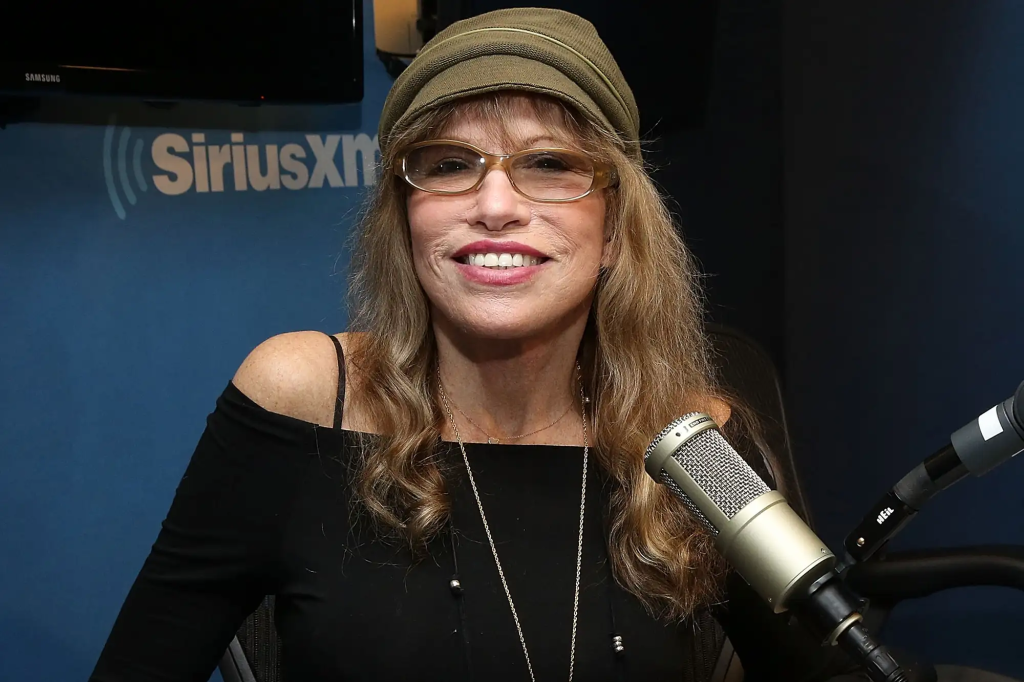
Carly Simon Opens Up About Parkinson’s Diagnosis, Cancer Surgery, and Her Return to Music
The 83-Year-Old Singer Reveals the Health Struggles Behind Her Quiet Years and Announces Her First Album of Original Songs in 18 Years
Carly Simon has shared a deeply personal explanation for the long period in which she largely disappeared from public view, revealing that she has been living with Parkinson’s disease while also recovering from surgery to remove skin cancer from her face.
In a statement released on July 27, the 83-year-old singer described the physical and emotional difficulties that gradually pushed her away from public appearances. The performer behind enduring songs such as “You’re So Vain” explained that her health struggles developed over time rather than arriving as one sudden medical crisis.
Simon said the early warning signs were difficult to recognize because she was already dealing with serious joint problems. Arthritis had affected both of her knees as well as one hip, eventually leading her to undergo replacement procedures for all three joints.
Walking Problems Continued After Joint-Replacement Surgery
Following the operations, Simon initially believed that her difficulty walking was part of the recovery process. Major joint replacements can require a lengthy adjustment period, and she assumed her body simply needed more time to regain strength, balance, and confidence.
Instead of steadily improving, however, everyday movement became increasingly challenging. Tasks that once required little thought began demanding considerable effort and, at times, assistance from another person.
Standing up from a soft chair became especially difficult. Deep couches and heavily cushioned furniture created another obstacle, leaving her with the sensation that she might sink into them and be unable to rise without help.
There were also periods when walking independently was no longer possible. The continuing decline concerned her family, who began to suspect that the symptoms could not be explained entirely by arthritis, surgery, or the expected rehabilitation process.
Their concerns eventually led to a more extensive medical evaluation at the Mayo Clinic. After undergoing a thorough assessment, Simon received a diagnosis of Parkinson’s disease.
Adjusting to an Unpredictable Neurological Illness
After the diagnosis, Simon began taking medication intended to reduce stiffness and manage other symptoms associated with the condition. Treatment offered some support, but it did not make every day predictable.
She described Parkinson’s as an illness that can change from one day to the next. On some mornings, fatigue is so overwhelming that simply beginning the day can feel almost impossible.
At other times, the symptoms ease enough for her to think more clearly, work on creative ideas, and reconnect with the parts of her life that still feel familiar. Those better periods give her space to write, sing, reflect, and experience a stronger sense of independence.
The physical effects include problems with movement, balance, stiffness, and tremors. Simon also emphasized that the illness reaches beyond the visible symptoms that people often associate with Parkinson’s.
Anxiety, depression, severe exhaustion, and emotional detachment can also become part of the experience. These less visible effects may be difficult for others to understand because they do not always appear as obvious physical limitations.
Simon gave particular attention to the feeling of apathy that can accompany the illness. She compared it to remaining motionless like a starfish resting on a beach, without an internal signal urging her to stand, participate, or reconnect with the world around her.
She made clear that this condition should not be mistaken for laziness or ordinary sadness. In her description, it feels more like the part of the brain responsible for inviting someone into daily life has briefly stopped sending invitations.
Skin Cancer Surgery Added Another Challenge
While she was still learning how to manage Parkinson’s disease, Simon faced a separate health issue involving basal cell carcinoma. The common form of skin cancer had developed on her face and required surgical removal.
The procedure successfully removed the cancer, but the operation left visible changes that affected the way she felt about her appearance. The medical problem had been addressed, yet the emotional consequences continued after the physical treatment was completed.
Simon acknowledged that she has long been highly critical of her own appearance. The changes caused by the facial surgery intensified that self-consciousness and made the idea of being photographed or seen publicly more difficult.
She recognized the irony of those concerns because of the song for which she remains especially well known. Even so, the combination of illness, surgery, changing mobility, and insecurity placed significant pressure on her willingness to appear before audiences or cameras.
Why She Withdrew From Public Life
The decision to step back was not connected to one single event. It came from the accumulated weight of several challenges that were unfolding at the same time.
Her mobility had become unreliable, the Parkinson’s diagnosis required an entirely new way of managing daily life, and the facial surgery made her increasingly uncomfortable with public attention. The emotional burden of those experiences made privacy feel necessary.
Simon compared herself to a bear that hibernates through every season rather than emerging after winter. The image reflected the depth of her retreat, as well as the way her absence extended far beyond a temporary break.
Despite withdrawing from public view, she stressed that she had not stopped living or creating. Her reduced visibility did not mean that her imagination, musical instincts, or desire to work had disappeared.
Behind the quiet years, she was still thinking about songs, revisiting unfinished ideas, and finding ways to remain connected to music even when illness limited other parts of her routine.
A New Album Took Shape During the Difficult Years
During this period, Simon began recording a new album titled Comes in Waves. The project is scheduled for release on August 14 and will be her first collection of original songs in 18 years.
The album grew from musical ideas that had been waiting for her attention. Some of the songs and fragments had remained unfinished for years before she found the time and emotional space to return to them.
Music became a steady presence during days that otherwise felt uncertain or without structure. Simon described it as something that understands when to arrive, almost like a quiet animal that senses when a person needs companionship.
Working on the recordings gave form to periods that might otherwise have felt empty. The process created goals, encouraged concentration, and offered a reason to remain engaged even when physical movement was difficult.
The project also reminded her that a diagnosis can alter a person’s life without taking ownership of every part of it. Parkinson’s changed her routine, energy, and independence, but it did not remove her ability to create or erase the artistic identity she had built over decades.
She Does Not Describe the Illness as a Gift
Simon was careful not to romanticize her condition. She said she does not view Parkinson’s disease as a gift, a blessing, or an experience that should be treated as secretly positive.
For her, the illness is difficult, frustrating, unpredictable, and sometimes frightening. Its effects can interfere with even ordinary activities, leaving her dependent on others in situations she once managed alone.
She is still learning how to accept assistance without feeling that she has surrendered an essential part of herself. That adjustment involves recognizing new limitations while continuing to protect her independence, personality, and sense of purpose.
Even on the hardest days, Simon said she continues to write, sing, imagine, laugh, remember, and worry. The illness may slow those activities or interrupt them, but it has not ended them.
She also maintained a sense of humor about her circumstances, including the possibility of finding herself trapped in an overstuffed chair. That humor sits beside a serious acknowledgment of how much effort daily life can now require.
Family, Friends, and Caregivers Have Helped Her Continue
Simon expressed strong gratitude for the people who have supported her throughout the medical challenges. Her children, relatives, friends, caregivers, and medical team have all played important roles during the periods when she could not manage alone.
The support has been both practical and emotional. Some days require help with movement, while others require patience, encouragement, or an understanding of symptoms that are not immediately visible.
Her family’s decision to pursue further medical evaluation was particularly important. What first appeared to be a difficult recovery from joint surgery was eventually recognized as a separate neurological condition that required its own treatment plan.
That diagnosis did not solve every problem, but it gave Simon and those close to her a clearer understanding of what was happening. It also allowed her to begin medication and adjust her routines around the realities of Parkinson’s.
Carly Simon Says She Is Still Here
Simon now moves more slowly and depends on other people more often than she once did. Her energy, balance, and ability to participate in everyday activities can vary considerably from one day to another.
Those changes contributed to her absence, but they did not signal an end to her work. Her return with Comes in Waves shows that creative activity continued even while much of her life remained private.
The new album represents more than a return after an 18-year gap between collections of original material. It also reflects the way Simon used music to create stability during a time defined by medical uncertainty and personal change.
Her statement offered fans an explanation for years of silence without presenting her life as finished or completely controlled by illness. She remains aware of what Parkinson’s has taken from her, but she is equally aware of what remains.
Her pace has changed, her daily life requires more help, and no two days feel entirely alike. Even with those realities, Simon emphasized one central message: she is still present, still creating, and still very much herself.