
Hidden Profanity on Iowa Headstone Sparks Bitter Cemetery Dispute
A Quiet Cemetery Became the Center of a Growing Controversy
A small cemetery in Iowa has become the focus of a deeply emotional dispute after a family’s unusual tribute on a loved one’s headstone triggered outrage among cemetery officials and divided the local community.
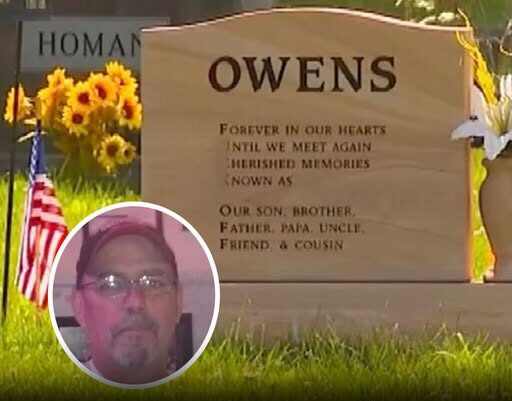
At the center of the conflict is the grave of Steven Paul Owens, whose family approved a memorial design that carried a hidden profane message arranged as an acrostic. While the phrase was intended as a personal and affectionate joke, cemetery trustees argue that it crossed a line in a public place dedicated to mourning and remembrance.
The disagreement has now escalated far beyond a private family matter. Lawyers have become involved, tensions continue to rise, and the future of the headstone remains uncertain.
A Tribute Meant to Reflect One Man’s Personality
For Owens’ family, the inscription was never meant to shock strangers or create controversy. They believed the hidden wording represented the personality of the man they loved and lost.
Family members described him as someone with a sharp sense of humor and a rough but affectionate style of communication. They explained that phrases many people would consider offensive often carried warmth and closeness when spoken by him.
To those who knew him best, the message on the stone symbolized familiarity, loyalty, and the unique way he connected with the people around him.
Rather than viewing the wording as disrespectful, the family considered it deeply personal. They believed it captured his identity more honestly than a formal or traditional inscription ever could.
In their eyes, the memorial was not an act of rebellion. It was a final joke shared with someone who had spent his life expressing affection through humor and sarcasm.
The Hidden Message Was Not Immediately Obvious
The controversy became even more unusual because the profanity was not openly displayed in a typical sentence.
Instead, the wording was concealed through an acrostic arrangement, meaning the offensive phrase could only be discovered by carefully examining the first letters of multiple lines.
At first glance, the headstone appeared ordinary to visitors walking through the cemetery grounds. Many people passed by without noticing anything unusual.
Once the hidden message was recognized, however, reactions quickly intensified.
Some visitors viewed the inscription as clever and harmless. Others believed the very existence of profanity in a cemetery setting was inappropriate regardless of how subtly it was presented.
Cemetery Trustees Say Boundaries Matter
Trustees overseeing Warren-Powers Cemetery argued that the issue extends beyond one family’s personal wishes.
They stressed that cemeteries are shared public spaces where many families gather to mourn loved ones, reflect quietly, and preserve memories with dignity.
From their perspective, allowing a hidden profane message to remain could create long-term problems for the cemetery and the broader community.
Trustees expressed concern that children visiting family graves could eventually discover the wording.
They also worried the memorial could discourage future burials near the site if families felt uncomfortable with the language connected to the nearby grave.
Another major concern involved precedent. Cemetery officials feared that permitting one controversial inscription might encourage increasingly provocative memorials in the future.
Some trustees reportedly viewed the dispute as a matter of maintaining standards rather than targeting one family specifically.
They believed cemeteries require common rules that apply equally to everyone, especially in spaces where many grieving families must coexist peacefully.
The Family Refuses to Remove the Stone
Despite mounting pressure, Owens’ family has continued defending the memorial.
Relatives insist the inscription reflects the deceased authentically and respectfully within the context of his life and relationships.
To them, demands for removal feel deeply personal.
They argue that grief does not always follow traditional expectations and that memorials should allow room for individuality, humor, and emotional honesty.
Family members believe outsiders are interpreting the message without understanding the man behind it.
What critics see as offensive language, they see as affection frozen in stone.
The family has also resisted the idea that the memorial harms anyone. Because the wording remains hidden unless intentionally examined, they argue that visitors who never search for it will never even notice it.
From their point of view, the controversy grew only because attention was drawn to the inscription after the acrostic became publicly known.
A Debate Over Public and Private Memory
The dispute has raised larger questions about the purpose of cemeteries and the limits of personal expression within shared spaces.
For some people, a grave is fundamentally private even when placed in a public setting. They believe families should have broad freedom to memorialize loved ones in ways that feel emotionally meaningful to them.
Others argue that cemeteries operate under community standards because they serve many grieving families at once.
That tension sits at the heart of the ongoing conflict in Warren-Powers Cemetery.
The argument is no longer only about one hidden phrase. It has become a broader discussion about grief, humor, personal identity, and the rules society places on remembrance.
Supporters of the family often describe the headstone as humanizing. They say it reflects the imperfect, complicated nature of real people rather than presenting a polished version designed only for public approval.
Critics counter that memorials should provide comfort and respect in a shared environment where visitors expect solemnity rather than shock or controversy.
The Case Continues to Divide Opinions
As the dispute has spread beyond the cemetery, public reactions have remained sharply divided.
Some people admire the family’s determination to preserve a tribute they feel genuinely represents their loved one.
Others believe the cemetery trustees are right to defend standards for what can appear on permanent public memorials.
The unusual nature of the case has also fueled wider discussion about freedom of expression and whether emotional intention changes how offensive language should be judged.
Even among those who personally dislike profanity, some have questioned whether removing the headstone would ultimately erase an important part of the deceased man’s identity.
Meanwhile, supporters of stricter cemetery rules argue that shared public spaces cannot function without limits that apply consistently to everyone.
Neither side appears willing to compromise.
Lawyers and Legal Questions Enter the Dispute
As emotions intensified, legal concerns soon followed.
Attorneys became involved as both sides attempted to determine what authority cemetery officials actually possess regarding memorial removal and enforcement.
The conflict introduced difficult questions about ownership, regulations, and interpretation of cemetery policies.
Because memorials often represent permanent structures purchased and installed by families, disputes over removal can quickly become legally and emotionally complex.
The passage of time has only made the situation more difficult.
Years after the stone was placed, the disagreement remains unresolved, with the memorial still standing while arguments continue around it.
That lingering uncertainty has transformed the grave into something far larger than a private resting place.
It has become a symbol of an unresolved clash between personal tribute and public expectation.
A Conflict Rooted in Grief and Identity
At its core, the dispute surrounding Steven Paul Owens’ headstone reflects the complicated ways people process loss.
Some families honor loved ones through quiet tradition and solemn words.
Others lean on humor, inside jokes, and personal symbols that would make little sense to outsiders.
For Owens’ family, the acrostic represented connection, memory, and authenticity.
For cemetery trustees, it represented a challenge to the standards they believed protected the dignity of a shared sacred space.
Neither side sees the issue as trivial.
That is why a single hidden phrase carved into stone has continued generating conflict long after the burial itself.
In Warren-Powers Cemetery, the headstone remains in place for now, standing quietly among other graves while the argument around it refuses to disappear.
The controversy has forced one small Iowa cemetery into the center of a much larger debate: whether memorials belong entirely to grieving families, or whether public spaces of remembrance must ultimately answer to shared community boundaries.