
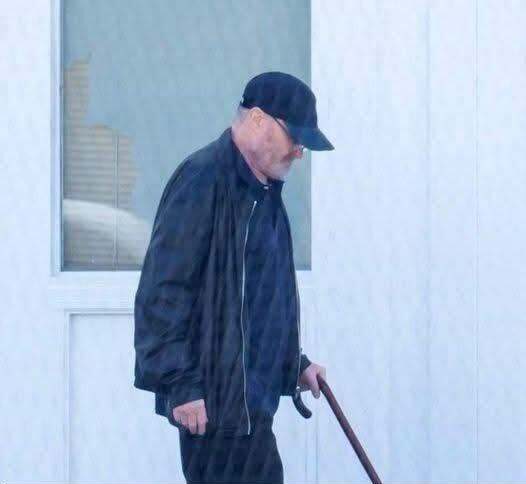
Phil Collins Faces Painful Health Struggles and a Bitter Battle Over His Miami Home
The Genesis legend has endured spinal damage, limited mobility, surgery, and a deeply personal legal dispute
Phil Collins spent decades commanding some of the world’s largest stages, first as the driving force behind the drums for Genesis and later as one of the most recognizable solo performers of his generation.
Now, the musician who once appeared unstoppable is confronting a much different reality. At 70, severe physical problems have left him unable to hold a drumstick, dependent on a cane, and frequently reliant on a wheelchair.
The decline has been especially painful because drumming was never simply a part of Collins’ work. It was central to his identity, his sound, and the career that made him an international music icon.
Decades Behind the Drums Took a Heavy Physical Toll
Collins spent years seated behind a drum kit, often leaning forward as he performed with enormous intensity. Over time, that demanding posture placed serious pressure on his spine.
The damage eventually became severe enough for his vertebrae to affect his spinal cord. The condition changed his ability to move and ended the physical freedom he once took for granted.
For much of his career, Collins was known for his energy. He moved between the drum kit and the microphone with ease, carrying the rhythm of Genesis while also emerging as the band’s unmistakable voice.
That physical confidence gradually disappeared as pain and spinal problems became harder to manage. What had once felt natural became difficult, and the instrument he had mastered for decades moved beyond his reach.
The loss was not limited to professional inconvenience. Being unable to hold a drumstick meant Collins was being separated from an activity that had shaped nearly every stage of his adult life.
A Fall and Surgery Deepened His Mobility Problems
Years of spinal pain were followed by a devastating fall and further medical treatment. Surgery addressed some of the damage, but it did not restore the strength and mobility Collins once possessed.
He was left needing a cane to walk and often used a wheelchair. These changes made even ordinary movement more complicated and placed significant limits on what he could do onstage.
For a performer accustomed to controlling the pace of a concert, depending on assistance represented a profound adjustment. The stage had always been a place where Collins appeared powerful, confident, and completely in command.
His physical condition transformed that familiar environment into difficult territory. Walking across a stage became challenging, while returning to the drum kit was no longer a realistic possibility.
The contrast was stark. A man once celebrated for the force of his playing was now struggling with the basic movements required to perform.
The Dream of Playing Alongside His Son Slipped Away
One of the most emotional consequences of Collins’ declining health involved his hope of sharing the stage behind the drums with his son.
The possibility carried meaning beyond a normal performance. It represented a connection between generations and a chance for Collins to experience his musical legacy through his own family.
Pain, surgery, and the continuing deterioration of his spine made that dream increasingly unreachable. His body could no longer meet the demands placed on it by the instrument that had defined him.
For Collins, the loss was not simply about missing another concert. It meant accepting that an intimate musical moment he had imagined might never happen in the way he wanted.
His son could continue the rhythm, but Collins could no longer sit beside him and play with the strength that had once made his performances so distinctive.
From Genesis Drummer to Solo Superstar
Collins first became widely known as the drummer for Genesis. His precise playing and powerful sense of rhythm helped form the foundation of the group’s sound.
He later stepped forward as a singer, giving the band a voice that became familiar to audiences around the world. His ability to move from drummer to frontman helped reshape both his own career and the identity of Genesis.
His solo success further expanded his influence. Collins became more than a member of a celebrated band; he became an icon whose voice and songs reached listeners across generations.
That history makes his current physical struggles particularly difficult. The body that allowed him to build a life through music is now the source of the limitations separating him from it.
Even when he could still sing, his inability to play the drums changed the nature of his connection to the stage. A crucial part of the performer audiences had known was no longer physically available to him.
His Private Life Was Unraveling at the Same Time
As Collins dealt with worsening health, his personal life entered a period of turmoil. His relationship with his former wife, Orianne Cevey, became the center of a painful and highly contentious dispute.
Cevey secretly married another man in Las Vegas. She then allegedly attempted to conceal the marriage, creating a sense of betrayal that intensified the collapse of her relationship with Collins.
The discovery led to accusations, legal threats, and a bitter confrontation over property. What might once have remained a private family matter developed into a dispute surrounding one of Collins’ most valuable homes.
The timing made the conflict especially difficult. Collins was already coping with pain, limited movement, and the emotional consequences of losing his ability to drum.
Instead of finding stability in his private life, he faced another struggle in which trust, security, and a place he considered a sanctuary were all placed at risk.
A $40 Million Miami Property Became the Center of the Conflict
The dispute focused heavily on Collins’ Miami home, a property valued at approximately $40 million. The residence represented far more than a large financial asset.
For Collins, the house had become a place of comfort during a period when his physical world was steadily narrowing. As his ability to travel and perform declined, the importance of a secure home naturally increased.
The legal confrontation threatened that sense of security. Accusations and competing claims turned the residence into the center of an increasingly bitter conflict.
The home Collins loved was no longer simply a private retreat. It became tied to arguments over relationships, ownership, and control.
The musician was eventually forced to sell the property. Losing it added another painful chapter to a period already defined by physical decline and personal upheaval.
The Sale Represented More Than a Financial Loss
A home can carry particular significance for someone whose mobility has become limited. Familiar rooms, routines, and surroundings may provide a sense of independence that becomes increasingly difficult to preserve.
For Collins, the Miami residence appeared to offer that kind of refuge. It was a place removed from the demands of the stage and the public pressure that had followed him throughout his career.
Being forced to sell meant giving up a sanctuary at the same time he was losing control over his body. The two experiences became closely connected.
His spine had already taken away much of his ability to perform. The dispute over the property then removed a place where he could have found stability while adapting to those limitations.
The loss therefore carried emotional weight beyond the home’s considerable value. It symbolized another part of Collins’ life slipping beyond his control.
Public Success Could Not Protect Him From Private Pain
Collins’ career brought fame, wealth, awards, and the loyalty of audiences around the world. None of those achievements could shield him from aging, injury, or personal betrayal.
His experience illustrates the sharp divide between public success and private reality. To millions of listeners, his voice remains connected with strength, memory, and emotional power.
Behind that familiar voice, however, Collins has faced severe pain, medical procedures, damaged mobility, and the breakdown of an important relationship.
The applause that once surrounded him could not repair his spine. The success of Genesis could not restore his ability to grip a drumstick, and the value of his property could not prevent it from becoming the subject of conflict.
The contrast between his public image and personal circumstances has made his situation especially moving for longtime admirers.
Accepting a Life Without the Instrument That Defined Him
For a musician, losing the physical ability to play can create a form of grief. Collins was not voluntarily stepping away from the drums after deciding that his career was complete.
He was being forced away by pain and physical damage. The choice was made by his body rather than by his ambition or love of music.
That distinction matters because Collins’ connection to drumming remained deeply personal. The instrument had helped him communicate before his voice became equally famous.
Behind the kit, he shaped songs through movement, timing, and instinct. When spinal damage removed that ability, it also disrupted a language he had spoken for most of his life.
Even standing onstage could no longer feel the same. The drum kit remained visible, but the path back to it had effectively closed.
A Legacy That Remains Larger Than His Physical Limitations
Although Collins can no longer perform as he once did, his medical struggles cannot erase what he created. His work with Genesis and his solo career remain part of modern music history.
The recordings still preserve the power of his drumming and the distinctive quality of his voice. Audiences who never saw him perform at his peak can still hear the energy that made him famous.
His influence also continues through the musicians who followed him, including his own son. The possibility of a shared performance may have been taken away, but the family connection to music remains.
Collins’ physical condition has changed what he can do in the present. It has not altered the impact of the decades in which he performed, recorded, and helped shape the sound of an era.
His career stands as evidence of a period when his body responded to every demand he placed upon it, even though those demands later contributed to the pain he now endures.
Dignity Amid Loss, Pain, and Change
Collins now faces a life far removed from the image of the tireless performer who once moved effortlessly between microphone and drums.
He has endured spinal damage, a serious fall, surgery, reduced mobility, the loss of his ability to play, and a bitter dispute involving a former wife and a $40 million home.
Each loss has affected a different part of his identity. His health limited the musician, the personal conflict wounded the man, and the sale of the house removed a place that had offered emotional security.
Yet his story is not defined entirely by defeat. Collins remains the artist whose music carried generations through moments of celebration, sorrow, reflection, and change.
His body may no longer allow him to perform with the force he once possessed, but the work created during those years remains untouched.
The stage that once felt like home may now be beyond his reach. The drums may remain silent beneath his hands, and the sanctuary he loved may belong to someone else.
What remains is a musical legacy built over decades and a man confronting pain without losing the dignity that made audiences care about him beyond the songs.