
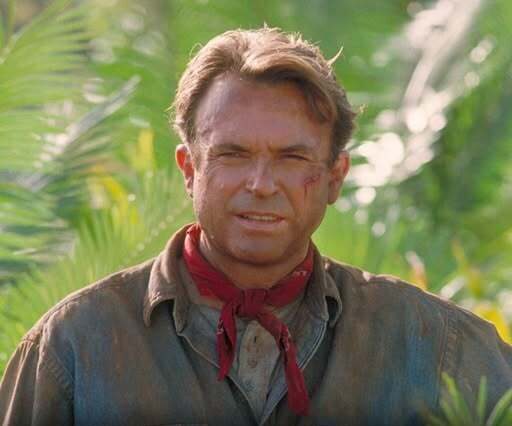
Sam Neill Dies Suddenly at 78 After Celebrating Cancer-Free Milestone
The beloved actor’s family confirmed that he died in Sydney with loved ones nearby, prompting an international wave of grief and remembrance
Sam Neill, the widely admired actor whose career stretched across more than five decades, has died suddenly at the age of 78.
The news stunned fans who had recently celebrated his recovery from cancer. His family announced that Neill remained cancer-free at the time of his death, making the unexpected loss even more difficult for many to understand.
Neill died in a Sydney hospital with members of his family close by. His loved ones protected the privacy of his final moments while preparing to share news that would quickly send grief across the entertainment world.
For millions of viewers, Neill was more than a familiar face on a screen. He became associated with intelligence, quiet courage and a grounded humanity that remained present whether he was appearing in a major adventure film or a deeply personal drama.
His death marks the end of a remarkable career defined not by one character, but by an extraordinary range of performances that connected with audiences across generations.
A Sudden Loss After a Difficult Health Journey
The announcement came after Neill had publicly celebrated being cancer-free, a milestone that had offered hope to his family, friends and supporters.
Because he had survived the illness, many believed he was entering another chapter of life. Instead, his family was forced to confirm a sudden and unexpected death.
No detailed explanation was immediately provided beyond the family’s statement that he had remained free of cancer.
The contrast between recovery and loss intensified the public reaction. Fans who had followed his health journey were confronted with the reality that surviving one serious illness does not remove every uncertainty from life.
Only a short time earlier, Neill’s story had been one of resilience. He had faced illness openly while continuing to express gratitude for the people, work and experiences that shaped his life.
His willingness to discuss vulnerability had allowed many people to see the person behind the celebrated performances. He did not present courage as the absence of fear, but as the determination to continue living meaningfully despite it.
That honesty made news of his death feel deeply personal to admirers who had never met him.
Final Moments Surrounded by Family
Inside the Sydney hospital, Neill’s family remained beside him during his final hours.
The setting was far removed from the film premieres, crowded sets and public celebrations that had defined so much of his professional life. In the end, the people closest to him created a quiet space where he could be surrounded by love rather than attention.
His family requested privacy as they began processing the loss.
That request reflected the difficult position faced by the relatives of a globally recognized figure. While the public wished to mourn, remember and search for answers, Neill’s family was experiencing the immediate reality of losing a father, grandfather and deeply loved relative.
Their grief was personal before it became international news.
As tributes began spreading around the world, the family’s appeal for space served as a reminder that the actor known by millions belonged most intimately to a much smaller circle of people.
They had witnessed his health struggles, celebrated his recovery and ultimately stayed with him as his life came to an unexpected end.
The Role That Introduced Him to a Generation
For countless moviegoers, Neill will always be connected with Dr. Alan Grant, the paleontologist whose scientific certainty is transformed when he encounters living dinosaurs.
The character stood at the center of one of cinema’s most memorable adventures. Neill brought a measured realism to a story filled with extraordinary creatures, technological ambition and escalating danger.
His portrayal balanced wonder with caution. Dr. Grant could look toward a dinosaur with amazement while immediately recognizing the danger created by human overconfidence.
That combination helped make the character believable.
Neill did not play him as a conventional action hero seeking danger or recognition. He presented Grant as an intelligent, reluctant protector forced to respond when an ambitious experiment collapsed into chaos.
The performance introduced Neill to millions of viewers around the world and secured his place in popular culture.
Yet he never allowed the success of one franchise to limit his identity as an actor.
A Career Built on Range and Restraint
Neill’s work extended far beyond the role for which he became most widely recognized.
Throughout his career, he moved between large productions and quieter stories, often choosing characters whose complexity was revealed gradually rather than through dramatic displays.
He could portray confidence without arrogance, fear without exaggeration and grief without allowing a performance to become sentimental.
That restraint became one of his defining strengths.
Neill frequently created characters who appeared controlled on the surface but carried uncertainty, pain or conflict underneath. His performances invited audiences to watch closely rather than simply wait for an obvious emotional moment.
This ability gave him unusual versatility.
He could appear dignified, threatening, vulnerable, humorous or deeply troubled, sometimes allowing several of those qualities to exist within the same role.
Directors and fellow performers valued the professionalism and calm presence he brought to his work. His performances often strengthened a scene without demanding that attention remain fixed entirely on him.
A Public Figure Known for Quiet Kindness
Beyond his acting, Neill developed a reputation for warmth, humility and a dry sense of humor.
Colleagues remembered a man who could bring calm to demanding situations and treat people with respect regardless of their position.
His public personality rarely appeared constructed around celebrity. He seemed more comfortable discussing work, family, the natural world and life’s absurdities than presenting himself as an untouchable star.
That approach allowed audiences to feel unusually close to him.
He could speak thoughtfully about serious subjects while maintaining a playful perspective. His humor often appeared gentle and self-aware, avoiding the need to place himself above anyone else.
These qualities became increasingly important as he spoke publicly about illness.
Rather than allowing his diagnosis to define him, Neill continued sharing moments of ordinary life. His message was not that hardship should be ignored, but that fear could exist beside gratitude, work and humor.
Courage During Illness
Neill’s experience with cancer revealed another side of his character to the public.
He faced a serious health challenge while continuing to remain engaged with life and the people around him.
When he eventually shared that he was cancer-free, the announcement became a moment of celebration for supporters who had followed his journey.
His survival carried meaning beyond his own circumstances. For people facing illness, Neill’s recovery represented the possibility that even a frightening diagnosis could be met with treatment, resilience and hope.
He never suggested that courage made the experience easy.
Instead, he demonstrated that a person could acknowledge uncertainty while refusing to surrender every part of life to it.
That is one reason the sudden announcement of his death felt so disorienting. The public had recently been given a reason to celebrate his future, only to learn that the future had ended unexpectedly.
Fans Search for Answers
News of Neill’s death quickly led to questions about how someone who had defeated cancer could die so suddenly.
His family’s statement made clear that he remained cancer-free, but it did not provide a detailed cause of death.
The absence of further information left many fans struggling to understand what had happened.
For his loved ones, however, the immediate priority was not satisfying public curiosity. It was mourning privately and protecting the dignity of Neill’s final moments.
Sudden loss often creates a powerful desire for explanation. People search for a reason because an answer can create the feeling that an otherwise unpredictable event has some order.
In this case, the limited information reinforced the family’s request for privacy.
What remained certain was that Neill had died surrounded by those closest to him and that cancer had not returned before his passing.
Colleagues Remember a Trusted Friend
Across the entertainment industry, grief emerged through tributes from people who had worked beside Neill.
Many remembered his talent, but their messages also focused on his character away from the camera.
They described kindness, wit, generosity and a professionalism that made difficult work feel more manageable.
Public expressions of emotion revealed how deeply he had affected his colleagues. To audiences, he was an admired actor. To those who shared sets, rehearsals and long production days with him, he was also a trusted friend.
Some struggled to speak about the loss without breaking down.
Their reactions showed that Neill’s importance could not be measured only through awards, box-office success or the number of roles he performed.
His legacy also existed in private conversations, small acts of support and the atmosphere he created around others.
A Connection That Crossed Generations
Neill’s career allowed him to reach several generations of viewers.
Older audiences followed his work long before he became part of a global film phenomenon. Younger viewers discovered him through later appearances or returned to his earlier performances after recognizing his familiar presence.
His work remained accessible because he rarely depended on trends.
The emotions he portrayed were lasting ones: curiosity, regret, fear, loyalty, ambition and the need to protect others.
Even in stories built around extraordinary events, Neill grounded his characters in recognizable human behavior.
That quality helped viewers feel less distant from the worlds presented on screen. He made enormous stories feel personal and intimate stories feel significant.
His ability to create that connection explains why the response to his death extended far beyond dedicated film communities.
More Than a Single Iconic Character
Dr. Alan Grant will remain one of Neill’s most enduring roles, but reducing his career to that character would overlook the depth of his contribution.
His body of work included drama, suspense, adventure and performances that resisted simple classification.
He repeatedly demonstrated that a successful actor did not need to repeat the same personality in every role.
Neill could move from a widely released production to a more restrained project without treating one form of storytelling as more important than another.
He approached each character with seriousness, even when humor or eccentricity shaped the performance.
That commitment earned him respect from audiences and colleagues alike.
It also allowed his work to remain interesting across decades, as viewers could continue discovering different versions of his talent.
A Legacy of Wonder, Humanity and Grace
The grief surrounding Neill’s death reflects the emotional place he occupied in people’s lives.
His performances were present during childhoods, family movie nights and personal moments that became attached to the stories he helped tell.
For some viewers, the image of Dr. Alan Grant staring upward in amazement captured the wonder of seeing something impossible become real.
For others, Neill’s quieter performances offered companionship during periods of loneliness, uncertainty or change.
Actors often enter people’s lives without ever knowing it. Their voices and expressions become familiar, creating a sense of continuity as audiences grow older.
Neill carried that familiarity without losing his ability to surprise.
He could be reassuring in one role and unsettling in another, yet his thoughtful presence remained recognizable.
A Family’s Loss Becomes a Worldwide Farewell
Inside the Sydney hospital, the final chapter of Sam Neill’s life belonged to his family.
Outside that room, the news traveled rapidly across countries and generations, reaching people who had followed his career for decades.
Fans shared favorite scenes, remembered performances and expressed disbelief that an actor who had recently announced such hopeful health news was suddenly gone.
Colleagues honored the person they knew beyond the screen.
His family asked for privacy while facing a loss no public tribute could fully describe.
The world may remember a celebrated performer, but they will remember the person who shared their private lives, supported them and remained close through illness and recovery.
The Final Curtain on an Extraordinary Life
Sam Neill’s death at 78 closes a career that brought intelligence, restraint and emotional depth to an extraordinary range of stories.
He survived cancer and reached a moment when the future appeared open once again. His sudden passing demonstrated how quickly certainty can disappear.
Yet the final meaning of his life will not be defined by the unexpected nature of his death.
It will remain in the performances that continue to be watched, the colleagues who remember his kindness and the family members who surrounded him in his final moments.
Neill gave audiences more than entertainment. He offered characters who faced fear without losing their humanity and uncertainty without abandoning wonder.
In doing so, he helped viewers recognize parts of themselves within worlds that could seem enormous, frightening or impossible.
His death leaves a painful absence, but his work continues to provide the connection that made him so deeply valued.
Sam Neill may be gone, but the dignity, humor and quiet courage he brought to the screen will remain part of the lives he touched for generations to come.