
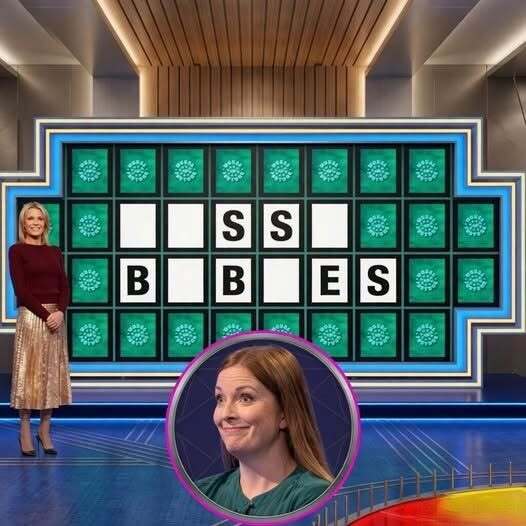
Sarah LaPilusa Wins $40,000 Bonus After Last-Second Answer Is Accepted
A closely contested game ended with a dramatic ruling that pushed the winner’s total earnings to $55,050
What began as a competitive but otherwise familiar television game show episode developed into a memorable finish when a contestant changed her answer moments before the Bonus Round clock expired.
Sarah LaPilusa, Jimmy Holgerson, and Yolanda Tillet entered the competition as evenly matched players. Their performances remained consistent through the early stages, preventing any one contestant from establishing a commanding advantage.
Each player solved puzzles, collected earnings, and remained within reach of the lead. The close scores created steady suspense because the outcome could not be confidently predicted until the main portion of the game had ended.
Three Contestants Remained Competitive
Many game show episodes quickly produce a clear frontrunner. In this contest, however, the balance between the three participants remained one of the episode’s defining features.
LaPilusa, Holgerson, and Tillet each experienced successful moments. Whenever one player appeared ready to pull ahead, another responded with a correct solution or added more money to the scoreboard.
The shifting momentum kept the studio audience involved and gave viewers at home a reason to follow every puzzle closely. With no overwhelming leader, each round carried greater importance.
LaPilusa eventually completed the main game in first place with $15,050. Her advantage was enough to move her into the Bonus Round, but the result reflected how closely the contestants had competed.
Tillet finished close behind with $13,500. The difference between the two leading totals was only $1,550, showing how easily the final position could have changed during the preceding rounds.
Holgerson ended the episode behind both women but still maintained a respectable performance. His participation contributed to the balanced nature of the contest and prevented the game from becoming a simple two-person race too early.
LaPilusa Advanced to the Final Challenge
After securing the narrow lead, LaPilusa moved into the Bonus Round. This stage placed the outcome entirely in her hands and required her to solve one final puzzle within a strict time limit.
The Bonus Round often creates a different kind of pressure from the main game. Contestants no longer have the opportunity to recover during later turns, and one correct response can determine whether they leave with a substantial additional prize.
LaPilusa entered the round with $15,050 already secured. A successful solution would significantly increase that amount, while an unsuccessful attempt would leave her with the winnings earned during the regular portion of the competition.
The selected category was “People,” a broad classification that can contain many possible answers. Although the category may appear straightforward, its wide range can make it difficult to identify the intended phrase from only a limited number of visible letters.
The puzzle appeared on the board as “_ _ S S _ B _ B _ E S.” Several spaces remained blank, leaving LaPilusa to identify the phrase through pattern recognition, available letters, and the category clue.
The Clock Added Immediate Pressure
Once the final countdown began, LaPilusa had only a short period to examine the pattern and say the correct solution. The limited time made hesitation costly and left little room for carefully testing several possibilities.
She studied the board while working through possible combinations. The visible arrangement offered clues, but enough letters were missing to make the answer uncertain under the pressure of the ticking clock.
Her first response did not completely match the required solution. At that point, the remaining seconds became critical because she needed to recognize the mistake, reconsider the puzzle, and deliver a corrected answer before the buzzer.
Rather than remaining committed to the initial attempt, LaPilusa quickly adjusted. In the final moments, she said, “Fussy babies.”
The corrected response matched the puzzle, but its timing was extremely close. The answer was delivered so near the end of the countdown that immediate confirmation was not possible.
A brief pause followed. The uncertainty shifted attention away from the solved phrase and toward the exact moment the words had been spoken.
Judges Reviewed the Final Seconds
When an answer occurs close to the buzzer, determining whether it qualifies can require a careful review. The central question was not whether LaPilusa had found the correct phrase, but whether she had completed the correction within the permitted time.
The judges examined the sequence in detail. Everyone involved had to wait while the timing was evaluated before the final decision could be announced.
The review concluded that LaPilusa had given her corrected answer before the buzzer sounded. Her solution was therefore ruled valid.
That decision awarded her the $40,000 Bonus Round prize. Combined with the $15,050 she had earned during the main game, her final total reached $55,050.
The ruling transformed a narrow regular-game victory into a much larger financial result. A correction made during the final seconds added $40,000 to her winnings and became the episode’s most significant moment.
Viewers Reacted to the Close Decision
Although the official outcome was settled, the timing prompted discussion among viewers. Close game show rulings often attract attention because fractions of a second can decide whether a contestant receives a major prize.
Some viewers agreed with the decision and emphasized that contestants are allowed to revise an answer while time remains. From that perspective, LaPilusa followed the rules by correcting herself before the buzzer.
Supporters also viewed the adjustment as evidence of composure. She recognized that her original response was incomplete, processed the puzzle again, and supplied the correct phrase while facing intense time pressure.
Other viewers remained less certain. Because the answer came so close to the end of the round, some questioned whether the correction had truly been completed early enough to qualify.
The narrow margin encouraged people to replay and analyze the sequence. Small differences in how viewers perceived the timing led to competing opinions about the ruling.
Such disagreement is common when televised competitions depend on exact deadlines. An answer can sound simultaneous with a buzzer to the audience even when a detailed review establishes a precise order.
Why Timing Matters in Game Shows
Game shows rely on clear limits to keep competition fair. Contestants must solve puzzles, make decisions, and speak their responses before a defined deadline.
Those limits create excitement because players cannot take unlimited time to reconsider their choices. The pressure forces them to balance speed with accuracy.
Corrections are especially dramatic because the contestant must complete several mental steps in rapid succession. The player must notice an error, reject the original response, identify a better one, and say it clearly before time expires.
LaPilusa’s Bonus Round demonstrated how a few seconds can contain the most important action of an entire episode. Her first attempt appeared to place the prize at risk, but the final correction changed the result.
The review process also showed why judging is essential in close situations. A decision based only on an immediate impression could leave uncertainty, while a detailed examination can establish whether the rules were satisfied.
Once the judges determined that the correct response preceded the buzzer, the prize was awarded under the established time requirement. That ruling remains the official conclusion regardless of the continuing debate among viewers.
A Memorable Finish to an Evenly Matched Game
The Bonus Round attracted the greatest attention, but the earlier competition helped make the ending more effective. LaPilusa did not enter the final stage after dominating the other contestants by a wide margin.
Instead, she advanced after a closely fought game in which Tillet finished only slightly behind her. Holgerson also remained competitive and contributed to the uncertainty throughout the episode.
That balance meant LaPilusa had already faced sustained pressure before reaching the final puzzle. She needed steady performance during the regular rounds simply to earn the opportunity to compete for the additional prize.
Her $15,050 total represented the foundation of the victory. The accepted Bonus Round solution then lifted the final amount to $55,050.
The result illustrated how quickly a contestant’s fortunes can change. Until the corrected answer was approved, the $40,000 award remained uncertain.
A single phrase, delivered just before the deadline, ultimately determined whether the episode ended as a respectable win or a much larger financial success.
The Moment Continues to Draw Attention
The episode has remained notable because it combined a close main game, a challenging final puzzle, a last-second correction, and a judging review. Each element added tension to the final outcome.
Viewers may continue to disagree about how the timing appeared in real time. Some will focus on the accepted ruling, while others will remain interested in how narrowly the response preceded the buzzer.
What is not disputed is that LaPilusa identified the correct solution and that the judges determined it had been given within the allowed period. The official decision secured the $40,000 prize.
Her performance also demonstrated the value of staying engaged until the final instant. Had she stopped after the first response, the opportunity would have been lost.
Instead, she continued examining the puzzle, recognized the correct phrase, and delivered it before the round ended. That persistence turned the final seconds into the decisive part of the competition.
Every Second Shaped the Outcome
Television game shows remain popular partly because routine formats can still produce unpredictable results. Familiar rules do not guarantee familiar endings, especially when contestants are evenly matched and a major prize depends on one final answer.
This episode offered a clear example. The main competition stayed close, the Bonus Round puzzle required quick interpretation, and the winning response arrived at the edge of the time limit.
LaPilusa’s victory became more than a simple puzzle solution. It involved correcting an initial mistake, remaining composed, and speaking the right phrase while the clock was nearly finished.
The judges’ decision confirmed that the correction counted. With the additional $40,000 included, LaPilusa completed the episode with $55,050 in total winnings.
Whether viewers regard the ending as an impressive display of fast thinking or a decision that was almost too close to call, the moment achieved what memorable game show finishes often do: it created suspense, produced debate, and gave audiences a result worth revisiting.
For the contestants, the episode demonstrated how narrow the difference between outcomes can be. For the audience, it reinforced the importance of watching until the last second, because the final answer may change everything.