
Colin Mochrie’s Support for Transgender Daughter Kinley Draws Praise After Online Backlash
A Public Message of Pride
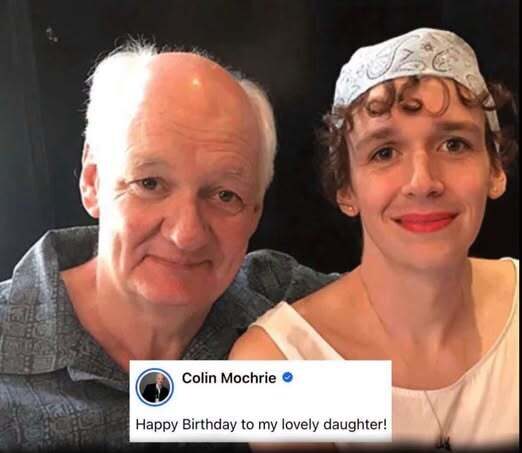
Colin Mochrie became the focus of widespread online attention after publicly celebrating his transgender daughter, Kinley, with a message of love and support.
The longtime “Whose Line Is It Anyway?” star did not respond with a joke or a performance. Instead, he offered a clear statement of parental pride at a moment when his family was being targeted by cruel online comments.
On Kinley’s birthday, Mochrie described his daughter as “everything we’ve ever hoped for in a child.” The message was simple, direct, and deeply personal.
For many people who saw the post, the sentence represented the kind of unconditional love every child deserves. For others, it became an excuse to attack Mochrie, his daughter, and his family.
Online Hate Follows a Family Celebration
After Mochrie shared his support for Kinley, hateful comments began appearing online. Some users mocked his daughter. Others posted cruel remarks about transgender identity and attempted to turn a family celebration into a public argument.
The reaction reflected the harsh reality many transgender people and their families face when they choose to live openly. A moment meant to honor Kinley quickly drew the attention of trolls and anonymous commenters.
Mochrie did not retreat from the public conversation. He also did not turn the moment into a long debate.
Instead, he answered with a sharp message that many fans described as both elegant and devastating. He wrote that his “thoughts and prayers” were with the bodies of those commenters for losing their minds and souls so tragically.
The response quickly spread because it rejected cruelty without becoming cruel in return. It also showed that Mochrie was not interested in apologizing for loving his daughter.
A Father Refuses to Back Down
Mochrie’s words stood out because they were firm without being complicated. He did not ask for permission to support Kinley. He did not soften his message for people uncomfortable with her identity.
He simply made it clear that his daughter was loved, valued, and fully accepted by her family.
That kind of support carried weight for many readers. Parents of transgender children recognized the importance of seeing a public figure openly stand beside his child.
For families navigating similar experiences, Mochrie’s message became more than a celebrity post. It became an example of what it looks like when a parent chooses loyalty over public approval.
The online backlash may have been loud, but Mochrie’s response made clear that hate would not define the story.
Fans Respond With Gratitude
Support soon poured in from fans, parents, social workers, and people who had followed Mochrie’s career for years.
Many praised the family’s openness and described Mochrie’s response as a powerful example of real parenting. Some called his family beautiful, while others said his support set the standard for how parents should treat their children.
The supportive comments stood in direct contrast to the cruelty that had appeared earlier. Instead of allowing hateful voices to dominate the conversation, thousands of people used the moment to thank Mochrie for standing proudly with Kinley.
For many, the message was especially meaningful because it came from someone known for humor. Mochrie has spent much of his career making audiences laugh, but in this moment, he showed a different side of himself.
He was not performing. He was protecting his daughter’s dignity.
Kinley’s Identity and Her Family’s Support
Mochrie has spoken about Kinley with warmth and simplicity. He described her as “the same kid, just a different coat on.”
That phrase resonated with many people because it removed the fear and confusion that often surround conversations about transgender identity. To Mochrie, Kinley’s transition did not erase who she was. It allowed her to be understood more fully.
His message suggested that love did not need to be rebuilt after Kinley came out. It was already there.
Kinley knew her family would stand by her. That sense of trust is one of the most important parts of the story.
For a child coming out as transgender, family acceptance can shape everything that follows. In Kinley’s case, Mochrie and his family answered with pride rather than shame.
Why the Moment Resonated
The reaction to Mochrie’s post showed how powerful a parent’s public support can be. His words were not long or complicated, but they reached people who understood the emotional weight behind them.
Many parents of transgender children know how quickly ordinary family moments can become politicized or attacked. A birthday message, a family photo, or a simple expression of love can draw criticism from people who do not know the family at all.
Mochrie’s response pushed back against that dynamic. He reminded people that Kinley was not a topic for strangers to dissect. She was his daughter.
That distinction mattered. His support was not framed as an abstract statement. It was personal, protective, and rooted in family.
The strongest part of his message was its certainty. There was no hesitation in the way he celebrated Kinley.
A Contrast Between Cruelty and Love
The online criticism directed at Kinley revealed how easily some people use public platforms to dehumanize others. The remarks were personal, mocking, and aimed at someone being celebrated by her family.
Mochrie’s response exposed the emptiness of that cruelty. By saying his “thoughts and prayers” were with those who had lost their minds and souls, he turned a familiar phrase into a pointed rebuke.
It was a message that suggested the real tragedy was not Kinley’s identity, but the loss of empathy among those attacking her.
That is why the response spread so widely. It was not simply a comeback. It was a statement about what kind of humanity people choose to keep or abandon.
For supporters, Mochrie’s words captured the difference between unconditional love and conditional acceptance.
A Public Figure Using His Voice
As a recognizable television personality, Mochrie’s response reached far beyond his own family circle. His public support helped normalize the idea that parents can and should stand proudly with transgender children.
He did not present himself as an expert or attempt to speak for every family. He spoke as a father.
That made the moment more powerful. The message did not rely on complicated language or formal statements. It came from a parent who wanted the world to know his daughter was loved.
In a culture where transgender people are often forced to defend their existence, Mochrie’s support offered a different kind of message.
It said that Kinley did not need to earn love by meeting anyone else’s expectations.
The Meaning of Unconditional Parenting
Unconditional love is often described in simple terms, but moments like this show what it requires in practice. It means standing firm when others criticize. It means refusing to let strangers define a child’s worth.
For Mochrie, supporting Kinley meant more than private acceptance. It meant speaking publicly and refusing to allow hateful comments to go unanswered.
His birthday message celebrated Kinley for who she is. His later response defended her against those who tried to turn that celebration into something ugly.
Together, those moments showed the difference between passive support and active love.
Many people praised Mochrie because he did not merely tolerate his daughter’s identity. He honored it.
A Story That Reached Beyond One Family
The attention surrounding Mochrie and Kinley became part of a much larger conversation about family, acceptance, and dignity.
For transgender people who have experienced rejection, seeing a parent speak with such pride can be deeply moving. For parents who are learning how to support their own children, it can also offer a clear example.
The story resonated because it was not built around spectacle. It was built around a father’s refusal to let hate overpower love.
Kinley’s identity was met by her family with warmth and loyalty. That response stood in contrast to the cruelty of strangers who tried to shame them.
In the end, the loudest message was not the hate. It was the love that remained steady after the hate appeared.
Love Without Conditions
Colin Mochrie’s support for Kinley showed that a parent’s words can matter far beyond one post or one birthday message.
By calling his daughter “everything we’ve ever hoped for in a child,” he gave a clear answer to anyone who questioned his support.
By describing her as “the same kid, just a different coat on,” he expressed a simple truth about continuity, identity, and family love.
And by answering trolls with a message about lost minds and souls, he made it clear that cruelty would not be treated as wisdom.
The story continues to resonate because it offers a quiet but powerful lesson. A child who comes out should not have to lose a family in order to become fully seen.
Kinley did not lose her father’s love. She received it openly, proudly, and without conditions.
In a world where hate can become loud very quickly, Colin Mochrie’s response showed something stronger.
He chose his daughter.