
The Role of Sleep Position in Managing Nighttime Acid Reflux
Why Symptoms Often Feel Worse at Night
Many people are familiar with the uncomfortable sensation that can appear shortly after lying down for the night. A burning feeling in the chest, irritation in the throat, or a persistent sense of discomfort can make it difficult to relax and fall asleep.
While food choices often receive most of the attention when discussing acid reflux, body position can also play a significant role. The way the body is positioned during sleep may influence how stomach contents move and whether irritation develops during the night.
When a person is standing or sitting upright, gravity naturally helps keep stomach contents lower in the digestive system. This positioning can reduce the likelihood of stomach acid moving upward.
The situation changes once the body becomes horizontal. With the support of gravity reduced, stomach acid may be more likely to travel toward sensitive areas that are not designed to handle prolonged exposure.
Understanding the Importance of Gravity
Gravity affects many everyday bodily functions, including digestion. During waking hours, remaining upright helps support the natural movement of food and stomach contents.
At bedtime, however, the body shifts into a different position. This change can alter how fluids settle inside the digestive system and may influence the frequency or intensity of nighttime discomfort.
The relationship between sleep posture and acid reflux is often described as a matter of simple physical positioning. Small changes in angle or body orientation can affect how easily stomach acid moves within the digestive tract.
For individuals who experience recurring nighttime symptoms, understanding this connection can be an important step toward creating a more comfortable sleep environment.
The Difference Between Right-Side and Left-Side Sleeping
Among various sleeping positions, side sleeping often receives particular attention. The side chosen during sleep may influence how the stomach is positioned throughout the night.
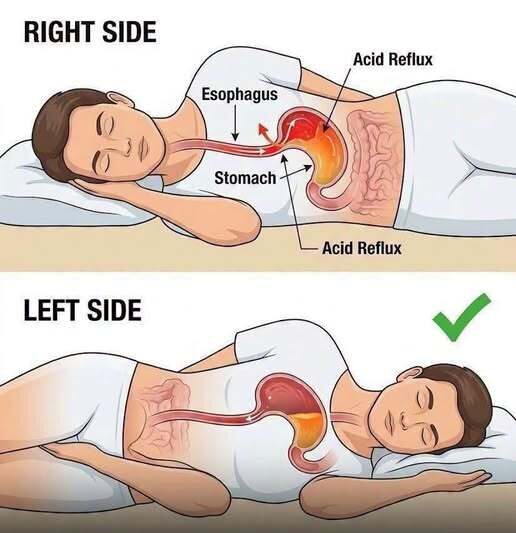
Sleeping on the right side can create an arrangement in which the stomach tilts in a way that may allow acid to move more easily toward the esophagus. As a result, some individuals notice greater discomfort when resting in this position.
The effect can be compared to a container that has been tilted. Changes in orientation can alter how contents settle and where pressure develops.
When stomach acid reaches the esophagus, irritation may occur because that tissue is more sensitive than the lining of the stomach itself.
This irritation can contribute to the familiar sensations often associated with reflux, including burning or discomfort that becomes especially noticeable during periods of rest.
In contrast, sleeping on the left side may place the stomach in a position that helps keep acid lower. In this arrangement, gravity can continue working in a more favorable direction.
Rather than encouraging upward movement, the body position may help keep stomach contents farther from the esophagus. This can reduce the opportunity for irritation during sleep.
For many people, this simple adjustment becomes one of the easiest lifestyle changes to implement because it requires no medication and no special equipment.
How Sleep Position Can Influence Comfort
Nighttime discomfort often affects more than physical sensations alone. Interrupted sleep can influence energy levels, concentration, and overall well-being during the following day.
When symptoms repeatedly disrupt rest, people may wake frequently or struggle to achieve deep, restorative sleep.
Finding a position that minimizes irritation can therefore have benefits beyond immediate symptom relief. Improved comfort during the night may contribute to a more consistent sleep routine.
Left-side sleeping is often discussed because it aligns with the way gravity can help limit the upward movement of stomach acid.
Although individual experiences may vary, many people consider this position a practical part of a broader approach to managing nighttime symptoms.
The Value of Timing Evening Meals
Sleep position is only one factor that may influence nighttime reflux. The timing of meals can also affect comfort after dark.
Eating immediately before bed leaves less time for digestion to occur before the body becomes horizontal. As a result, stomach contents may remain more active during the early hours of sleep.
Allowing several hours between dinner and bedtime provides the digestive system with additional time to process food.
A common recommendation is to finish the evening meal at least three hours before going to sleep. This practice can help reduce the likelihood of discomfort developing shortly after lying down.
Creating a consistent eating schedule may also support healthier sleep habits and make nighttime symptoms easier to manage.
Elevating the Upper Body
Another strategy often used alongside left-side sleeping involves raising the upper portion of the body during rest.
Elevation changes the angle of the torso and allows gravity to continue assisting even while a person remains in bed.
Rather than lying completely flat, the body remains slightly inclined. This adjustment may help limit the movement of stomach acid toward the esophagus.
For individuals who frequently experience symptoms during the night, combining elevation with an appropriate sleep position may offer additional comfort.
The effectiveness of this approach can vary, but many people find that it supports better rest and fewer interruptions during sleep.
Recognizing Personal Trigger Foods
Not all reflux experiences are identical. Foods that cause symptoms in one person may have little effect on someone else.
Because of these differences, identifying personal trigger foods can be an important part of managing nighttime discomfort.
Keeping track of meals and symptoms may reveal patterns over time. Certain foods may consistently appear before episodes of irritation or disrupted sleep.
Once those patterns become clear, adjustments can be made based on individual experience rather than general assumptions.
Pairing dietary awareness with sleep-position changes often creates a more comprehensive approach than relying on a single strategy alone.
When Symptoms Continue Despite Lifestyle Changes
Even with careful attention to sleeping position, meal timing, and food choices, some individuals continue to experience persistent symptoms.
Recurring burning sensations, coughing, or feelings of chest discomfort during the night should not be ignored.
Ongoing symptoms can interfere with sleep quality and affect daily life. Frequent sleep disruption may gradually influence mood, productivity, and overall comfort.
Because these symptoms can have multiple causes, professional evaluation may be appropriate when discomfort remains consistent or becomes more severe.
Seeking guidance allows individuals to better understand what may be contributing to their symptoms and what options are available for addressing them.
Building a Better Nighttime Routine
Small adjustments often become more effective when combined into a consistent routine. Rather than focusing on a single habit, many people benefit from addressing several factors at the same time.
Choosing the left side as a preferred sleeping position may help support the natural influence of gravity.
Finishing dinner several hours before bedtime provides additional time for digestion before sleep begins.
Elevating the upper body can further encourage a favorable sleeping angle during the night.
Identifying personal trigger foods allows individuals to tailor their choices according to their own experiences and needs.
Together, these measures create a practical framework that may help reduce nighttime discomfort and support more restful sleep.
Why Sleep Position Deserves Attention
Many discussions about acid reflux focus primarily on food, beverages, and digestive habits. While those factors remain important, body position can be equally influential.
The simple act of turning from one side to the other may alter how stomach acid behaves during the night.
Because sleeping posture is something people can often change immediately, it represents a straightforward lifestyle adjustment that may provide meaningful benefits.
For those who regularly experience nighttime reflux, understanding the relationship between gravity, stomach positioning, and sleep habits can offer valuable insight.
What happens after the lights go out is not determined by food choices alone. The position chosen for sleep can shape the body’s experience throughout the night.
By using gravity as an ally rather than working against it, many individuals may find greater comfort, fewer interruptions, and a more restful night of sleep.