
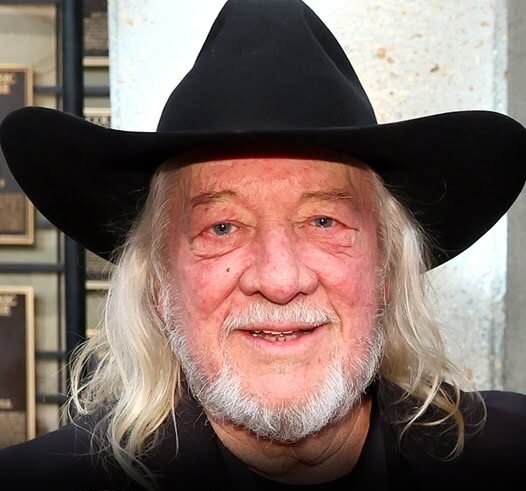
Country Music Legend John Anderson Dies at 71 — His Final Days and Heartbreaking Family Tribute Leave Fans Mourning
Just Three Days Before His Death, the Country Music Hall of Famer Was Laughing and Singing With Friends at a Special Nashville Ceremony. Now, Fellow Stars Are Remembering One of Country Music’s Most Unforgettable Voices.
The country music world is mourning the loss of one of its most distinctive and beloved voices.
John Anderson, the legendary singer behind unforgettable hits including “Swingin’,” “Seminole Wind,” and “Straight Tequila Night,” has died at the age of 71.
His death was confirmed by his family on Wednesday, October 21, 2026, in an emotional statement shared through his official social media accounts.
Anderson reportedly passed away peacefully in his sleep at his home in Smithville, Tennessee.
No official cause of death has been publicly disclosed.
The news has been particularly difficult for fans and fellow musicians because Anderson had appeared at the Country Music Hall of Fame induction ceremony in Nashville just three days earlier.
He was seen spending time with friends and fellow performers, including Tim McGraw and Blake Shelton.
Those final meetings have now taken on an especially emotional meaning.
For nearly five decades, Anderson brought a remarkable combination of traditional country storytelling, unforgettable melodies, and an instantly recognizable voice to audiences around the world.
But as his family made clear, the man behind the music was even more important to those who knew him personally.
John Anderson’s Family Confirms His Death in an Emotional Statement
Anderson’s family announced his passing with a message that focused not on his awards or record sales, but on the husband, father, grandfather, and friend they had lost.
They described him as the center of their family, someone who brought laughter, affection, and meaning to everyday moments.
The family said they were completely heartbroken and asked the public to keep them in their thoughts and prayers.
While acknowledging that Anderson’s music would continue to be enjoyed for generations, they emphasized that his greatest personal legacy was the love he gave to the people closest to him.
The statement offered a touching reminder that even the most celebrated entertainers have lives beyond the spotlight.
To millions of listeners, Anderson was a country music legend.
To his family, he was someone whose presence could never be replaced.
His Death Came Just Days After a Special Night in Nashville
One of the most poignant details surrounding Anderson’s passing is how recently he had been seen celebrating country music alongside his peers.
On Sunday, October 18, 2026, Anderson attended the Country Music Hall of Fame induction ceremony in Nashville.
The evening honored the Hall of Fame’s newest members, including Tim McGraw, songwriter Paul Overstreet, and the Stanley Brothers.
Anderson, who had received his own induction in 2024, was among the established country music figures attending the celebration.
For those who saw him that evening, it was an opportunity to share stories, laughter, and memories.
At the time, nobody could have known how meaningful those conversations would become.
Three days later, the news of Anderson’s death left his friends and colleagues struggling to process the loss.
Tim McGraw Remembers Their Final Conversation
Tim McGraw was among the country stars who publicly expressed his heartbreak following Anderson’s death.
McGraw had spoken with Anderson at the Hall of Fame ceremony on Sunday night.
In his tribute, McGraw remembered that Anderson appeared to be enjoying himself.
He recalled the two men laughing, talking, and singing some of Anderson’s songs together.
What had seemed like an ordinary, happy exchange between musicians became a cherished final memory.
McGraw described Anderson as one of the defining voices in country music and expressed how deeply shaken he was by the news.
His tribute reflected the enormous respect Anderson commanded among fellow performers.
For McGraw, the loss was not simply about saying goodbye to an influential artist.
It was about losing someone he had shared a joyful moment with only days earlier.
Blake Shelton Shares an Especially Moving Final Memory
Blake Shelton also shared an emotional tribute following Anderson’s death.
Shelton had long admired Anderson’s music and later developed a personal friendship with the singer.
He revealed that he had seen Anderson on the Sunday before his death.
During that meeting, Shelton told Anderson that he loved him.
After learning of Anderson’s passing, Shelton explained that he was grateful to have expressed those feelings while he still had the opportunity.
The memory became a source of comfort during a painful time.
Shelton described Anderson as more than a musical hero.
He was also a friend.
The two had previously collaborated on the song “Tuesday I’ll Be Gone,” which appeared on Anderson’s 2020 album “Years.”
Their relationship illustrated how Anderson’s influence extended far beyond the generation that first heard him on country radio.
Reba McEntire and Other Country Stars Remember a Legend
Tributes also came from Reba McEntire and other figures across the country music community.
Many remembered Anderson for his extraordinary vocal style, his kindness, and the lasting impact of his songs.
His influence reached musicians who grew up listening to traditional country music as well as younger performers who discovered his catalog decades later.
The Country Music Association also honored Anderson following the announcement of his death.
CMA chief executive Sarah Trahern recalled how Anderson’s music had become part of the soundtrack of her younger years.
She also remembered having a long conversation with him at the Hall of Fame ceremony shortly before his passing.
Her tribute reflected a sentiment shared by many people in Nashville.
Anderson’s music was deeply connected to personal memories, friendships, and important moments in their lives.
From a Small Florida Community to Country Music Stardom
John Anderson was born on December 13, 1954, in Orlando, Florida, and grew up in nearby Apopka.
His childhood unfolded in a part of Central Florida known for its orange groves and rural landscapes.
Long before he became a nationally recognized singer, Anderson developed a fascination with music.
He began performing in bands while still young, initially exploring rock music.
But the recordings of country legends Merle Haggard and George Jones helped shape the direction of his musical ambitions.
By the time he was a teenager, Anderson had decided that music would be his future.
He did not simply dream about becoming a singer.
He was determined to pursue that goal.
After graduating from high school, he moved to Nashville, the city that would become central to his professional life.
He Worked Ordinary Jobs Before His Big Break
Anderson’s early years in Nashville were far removed from the awards ceremonies and sold-out concerts that would later define his career.
Like many aspiring musicians, he worked to support himself while searching for opportunities to perform.
Among his early jobs was construction work connected to the new Grand Ole Opry House.
The detail has become a memorable part of his biography.
Before he was celebrated on country music’s most important stages, he had helped build part of the world surrounding them.
He also performed in Nashville clubs, sometimes sharing the stage with his older sister Donna.
His unusual voice gradually attracted attention.
Anderson possessed a vocal quality that was difficult to confuse with anyone else’s.
His expressive phrasing and ability to bend notes gave his performances a traditional country sound with a character all their own.
In 1976, he signed a recording contract with Warner Bros. Records.
It was the beginning of a remarkable professional journey.
Merle Haggard Recognized Something Special in Him
One of the most meaningful relationships in Anderson’s early career involved Merle Haggard.
Haggard was already a country music icon when Anderson was still working to establish himself.
In 1980, Haggard invited the younger singer to open a series of concerts.
According to Anderson’s Country Music Hall of Fame biography, Haggard admired his recording of “Your Lying Blue Eyes.”
During the tour, Haggard spoke with Anderson about his commitment to country music.
The encounter represented something larger than praise for a single recording.
It was recognition from one of the artists Anderson had admired while growing up.
Anderson later earned opening opportunities with other major performers, including George Jones and Willie Nelson.
Those experiences introduced his music to audiences who appreciated traditional country sounds.
And before long, Anderson would become a major name himself.
The Song “Swingin'” Changed Everything
By the early 1980s, Anderson was gaining increasing recognition on country radio.
But one recording would help transform him into a household name.
Released in 1983, “Swingin'” became one of his most recognizable songs.
Its memorable melody, playful storytelling, and Anderson’s distinctive delivery made it a major success.
The single reached No. 1 on the Billboard country chart and became one of the defining hits of his career.
That same year, Anderson received the Country Music Association’s Horizon Award.
“Swingin'” also earned the CMA Award for Single of the Year.
The recognition confirmed that Anderson had become one of country music’s important performers.
His success was especially significant during a period when traditional country influences were returning to prominence.
Anderson was among the artists helping lead that movement.
He Helped Shape the Sound of Traditional Country Music
During the 1980s, country music experienced renewed interest in its traditional roots.
Artists drew inspiration from earlier generations while bringing those sounds to contemporary audiences.
Anderson became closely associated with that musical direction.
His recordings emphasized storytelling, expressive singing, and the emotional character of classic country music.
He helped establish a path that other prominent artists would follow.
Performers including George Strait, Ricky Skaggs, and Randy Travis became important figures in the broader movement toward traditional country sounds.
But Anderson had already demonstrated that audiences were eager to hear music grounded in those traditions.
His songs could be humorous, reflective, romantic, or deeply personal.
And his voice made each one unmistakably his own.
His Career Included a Remarkable Comeback
Anderson’s success did not continue without challenges.
During the late 1980s, his relationship with Warner Bros. Records ended amid disagreements over the label’s support.
He subsequently recorded for other labels, but commercial momentum became harder to maintain.
Radio airplay declined, and his career entered a less successful period.
For some artists, such a downturn might have marked the beginning of a permanent retreat from the spotlight.
But Anderson’s story was different.
In the early 1990s, he returned with a series of successful recordings that introduced his music to another generation of listeners.
“Straight Tequila Night” became a No. 1 country hit.
“Seminole Wind” became another signature recording.
And songs such as “Money in the Bank,” “When It Comes to You,” and “I Wish I Could Have Been There” strengthened his comeback.
It was a remarkable second chapter for an artist who had already experienced major success a decade earlier.
“Seminole Wind” Became One of His Most Memorable Songs
Among Anderson’s recordings, “Seminole Wind” holds a particularly important place.
The song combined atmospheric storytelling with themes connected to Florida’s landscape, history, and environmental change.
It reflected Anderson’s personal connection to the region where he had grown up.
Unlike songs written primarily around romance or humor, “Seminole Wind” explored a broader subject while retaining the emotional qualities of traditional country music.
It became one of the recordings most closely associated with his artistic identity.
For many listeners, the song demonstrated that Anderson could tell stories reaching beyond familiar country themes.
Its enduring popularity helped secure his reputation as both a performer and songwriter.
His Awards Reflected Nearly Five Decades of Music
Across his career, Anderson released more than 20 albums and recorded numerous country hits.
He achieved five No. 1 singles on the Billboard country chart and 20 Top 10 country hits.
His accomplishments included three CMA Awards.
In addition to his 1983 honors, he shared in the CMA Album of the Year award in 1994 for the Eagles tribute project “Common Thread: The Songs of the Eagles.”
Anderson contributed a recording of “Heartache Tonight” to that album.
He also received the Academy of Country Music’s Career Achievement Award in 1993.
In 2014, he was inducted into the Nashville Songwriters Hall of Fame.
These honors reflected not just commercial popularity, but also the respect he earned for his contributions to country music.
His Country Music Hall of Fame Induction Was a Career-Defining Moment
In 2024, Anderson received one of the highest honors available to a country musician.
He was inducted into the Country Music Hall of Fame alongside guitarist James Burton and the late Toby Keith.
For Anderson, the recognition carried special emotional significance.
He had spent much of his life admiring the performers whose names were already associated with the institution.
Now he would be remembered among them.
During his reflections on the honor, Anderson spoke about the Hall of Fame’s role in preserving country music’s greatest achievements.
He also remembered the artists who had influenced and supported him, including Haggard and Jones.
The induction represented a powerful full-circle moment.
The young singer who had moved to Nashville with a dream had become one of the artists whose contributions would be preserved for future generations.
Just two years later, the Hall of Fame would be among the institutions honoring his memory.
John Anderson Continued Making Music Later in Life
Although his biggest radio hits arrived during the 1980s and 1990s, Anderson remained active in music long afterward.
He continued recording and collaborating with younger performers who admired his work.
In 2020, he released the album “Years,” produced with Dan Auerbach of the Black Keys and Dave Ferguson.
The project introduced another chapter in his recording career.
It also featured his collaboration with Blake Shelton on “Tuesday I’ll Be Gone.”
Anderson’s influence was celebrated further through the tribute album “Something Borrowed, Something New,” which featured artists including Luke Combs, Ashley McBryde, and Eric Church.
These collaborations demonstrated that his music remained meaningful well beyond the era in which he first became famous.
For younger musicians, Anderson represented a connection to the foundations of country music.
For longtime listeners, he remained the voice behind songs that had accompanied decades of their lives.
He Had Faced Serious Health Challenges Years Earlier
Anderson had previously spoken about major health difficulties that affected him in 2017 and 2018.
Those experiences included serious illness and problems involving his hearing.
Despite those challenges, he eventually returned to recording and performing.
His ability to continue making music became another meaningful chapter in his career.
However, it is important not to connect those earlier health problems to his death without evidence.
As of October 23, 2026, Anderson’s family has not publicly disclosed a cause of death.
Reports that he died peacefully in his sleep do not establish the medical circumstances of his passing.
Any specific explanation would therefore be speculation.
Behind the Famous Voice Was a Devoted Family Man
While Anderson’s career brought him widespread recognition, his family remained an important part of his life.
He was married to his wife, Jamie, for more than four decades.
The couple had two daughters, Alexa and Brionna, and Anderson was also a grandfather.
His family’s announcement emphasized the personal qualities they cherished most.
They remembered his affection, humor, and ability to make ordinary family experiences meaningful.
That description revealed a side of Anderson that audiences could not fully know through his recordings alone.
For his family, his most important accomplishments were not measured by chart positions or awards.
They were found in the relationships and memories he left behind.
The Country Music Hall of Fame Honors His Remarkable Voice
Following Anderson’s death, the Country Music Hall of Fame and Museum paid tribute to his artistry.
Chief executive Kyle Young praised Anderson’s ability to bring originality to music rooted in long-standing country traditions.
Young also reflected on Anderson’s memorable interpretation of “I’m Just an Old Chunk of Coal (But I’m Gonna Be a Diamond Someday).”
The tribute recognized Anderson as an artist whose voice and musical instincts set him apart.
That distinction had followed him throughout his career.
From his earliest recordings to his later collaborations, Anderson never sounded quite like anyone else.
And for many fellow musicians, that individuality was precisely what made him extraordinary.
Why His Death Has Affected So Many Country Music Fans
For listeners who grew up during the 1980s, Anderson’s songs were part of the soundtrack of their lives.
“Swingin'” might bring back memories of summer evenings, family gatherings, or listening to country radio.
“Straight Tequila Night” may remind others of a favorite period in country music.
And “Seminole Wind” continues to resonate with listeners drawn to its atmosphere and storytelling.
Music has a remarkable ability to preserve memories.
A familiar melody can transport someone back to a moment they have not thought about in years.
That is one reason the death of a beloved musician can feel so personal, even to people who never met the artist.
Anderson’s voice was present during important moments in countless listeners’ lives.
His passing marks the end of a remarkable career, but it does not erase those connections.
His Final Public Celebration Now Carries a Different Meaning
The timing of Anderson’s death has made the October 18 Hall of Fame ceremony especially poignant.
He was there to celebrate the accomplishments of fellow musicians.
He shared conversations and laughter.
He spent time with people who admired him.
And according to Tim McGraw’s tribute, he appeared to be enjoying the occasion.
Blake Shelton’s memory of telling Anderson he loved him has also resonated with fans.
It is a reminder of how meaningful an ordinary expression of affection can become.
Neither musician could have known that those interactions would be among their final memories with Anderson.
But both have now shared those moments as part of the tributes honoring his life.
A Legacy That Will Continue Through His Music
John Anderson’s influence on country music reaches across generations.
He helped bring traditional sounds back into the mainstream during the early 1980s.
He achieved a remarkable commercial comeback in the 1990s.
He continued recording and collaborating with younger musicians decades after his first major hits.
And in 2024, he received permanent recognition in the Country Music Hall of Fame.
His career demonstrated that an unmistakable voice, a commitment to musical tradition, and a gift for storytelling could create an enduring place in American music.
But perhaps the most meaningful tribute came from the people who knew him best.
His family did not define him only by the songs he recorded.
They remembered the love he gave them.
And that is the legacy they say they will carry forward.
Remembering John Anderson, 1954–2026
John Anderson died on October 21, 2026, at the age of 71, just weeks before what would have been his 72nd birthday.
He leaves behind his wife Jamie, daughters Alexa and Brionna, their families, and a musical catalog that has touched generations of listeners.
His death came only two years after his induction into the Country Music Hall of Fame and just three days after he joined friends and colleagues for another celebration of country music.
For those who loved his songs, the recordings remain.
For the musicians he inspired, his influence continues.
And for his family, the memories of the man behind the music will always hold the greatest meaning.
Rest in peace, John Anderson. Your unmistakable voice and the songs you shared with the world will not be forgotten.
Which John Anderson song means the most to you — “Swingin’,” “Seminole Wind,” “Straight Tequila Night,” or another favorite? Share your memories and help celebrate his extraordinary legacy.