
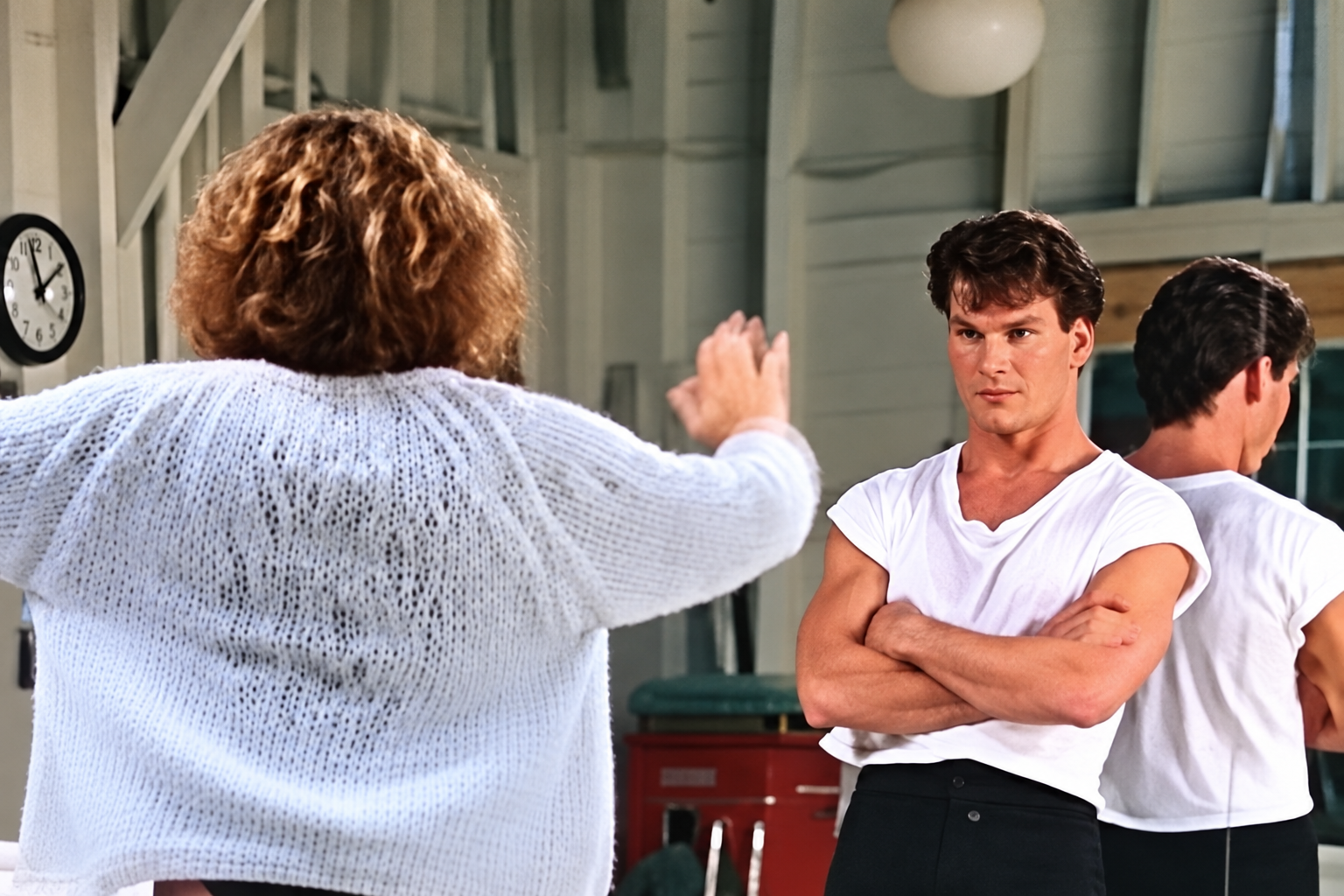
Dirty Dancing Deleted Scenes Reveal Moments Fans Never Saw, Including a Touching Exchange Between Baby and Johnny
Nearly 40 Years After Patrick Swayze and Jennifer Grey Captured Hearts in Dirty Dancing, Cut Footage Offers Another Look at the Romance, Family Tensions, and Memorable Dance Sequences
For millions of movie lovers, Dirty Dancing is more than a romantic film. It is a treasured piece of cinematic history that continues to inspire affection, nostalgia, and excitement nearly four decades after its release.
There is something unforgettable about watching Johnny Castle and Frances “Baby” Houseman find their way toward each other through music and dance.
Perhaps it is the unforgettable soundtrack. Perhaps it is the remarkable chemistry between Patrick Swayze and Jennifer Grey. Or perhaps it is the film’s ability to make audiences feel as though they are spending one extraordinary summer at Kellerman’s resort.
Whatever the reason, Dirty Dancing has remained beloved since its theatrical debut on August 21, 1987.
Many fans have watched the movie so many times that they can recognize scenes from a few seconds of music or a familiar expression.
Yet even viewers who believe they know every moment of the story may be surprised to discover that several scenes never made it into the original theatrical version.
Deleted and extended footage, made available through anniversary home-video releases, offers additional glimpses into the characters and their relationships.
Some of those moments explore Baby’s relationship with her family. Others focus on Johnny, the world of the resort, and the connection developing between the two central characters.
One extended moment even offers a glimpse of what Baby and Johnny might have imagined for their future after the movie’s famous ending.
For fans who have returned to Dirty Dancing year after year, these scenes provide another reason to revisit the film that made an entire generation fall in love with its music.
The Movie That Became an Unexpected Cultural Phenomenon
When Dirty Dancing arrived in theaters in 1987, few could have predicted the extraordinary cultural life it would enjoy.
Directed by Emile Ardolino and written by Eleanor Bergstein, the film combined romance, family conflict, coming-of-age storytelling, and memorable musical performances.
Its story takes place during the summer of 1963 at a holiday resort in New York’s Catskill Mountains.
Seventeen-year-old Frances Houseman, known as Baby, arrives with her parents and older sister for what initially appears to be a conventional family vacation.
But her expectations change after she encounters the resort’s entertainment staff and meets dance instructor Johnny Castle.
Johnny belongs to a social world very different from the privileged environment Baby has known.
As their relationship develops, she begins questioning assumptions about class, responsibility, love, and independence.
The combination of emotional storytelling and energetic dancing helped turn a relatively modestly budgeted film into a worldwide success.
Patrick Swayze Made Johnny Castle Unforgettable
Patrick Swayze brought a rare combination of athleticism, grace, charisma, and vulnerability to Johnny Castle.
His professional dance background gave the character’s performances an authenticity that became essential to the film.
Johnny could move with extraordinary confidence on the dance floor while struggling with uncertainty in other parts of his life.
He was admired for his dancing but frequently judged because of his social position and profession.
This contrast gave the character emotional depth beyond the image of a handsome romantic lead.
Swayze made Johnny appear both strong and sensitive, a combination that resonated with viewers.
His performance remains one of the defining roles of his career.
Even decades later, images of Johnny leading Baby across the dance floor instantly bring the movie to mind.
Jennifer Grey Gave Baby Her Heart and Determination
Jennifer Grey’s portrayal of Frances “Baby” Houseman was equally important to the film’s success.
At the beginning of the story, Baby is intelligent, idealistic, and accustomed to the expectations of her family.
She believes strongly in helping others and doing what she considers right.
But her experiences at Kellerman’s challenge her understanding of the world.
As she grows closer to Johnny and becomes involved in the lives of the resort staff, Baby develops greater confidence in her own choices.
Grey portrays that transformation through moments of awkwardness, courage, humor, and emotional vulnerability.
Rather than becoming a different person, Baby gradually discovers a stronger version of herself.
That journey is one reason the film continues to appeal to audiences across generations.
The Chemistry Between Patrick Swayze and Jennifer Grey
One of the most frequently discussed aspects of Dirty Dancing is the chemistry between its two stars.
Swayze and Grey created an on-screen relationship that felt passionate and emotionally convincing.
Their characters begin with very different perspectives.
Johnny is an experienced dance instructor whose work places him in constant contact with wealthy vacationers.
Baby is a young woman discovering a world outside the comfortable boundaries of her upbringing.
Initially, their encounters include misunderstandings and awkward moments.
But as Johnny teaches Baby to dance, their connection gradually becomes more intimate.
The choreography allows the audience to watch that relationship develop without relying entirely on dialogue.
A hesitant movement, a shared smile, or a moment of trust can communicate as much as a spoken confession.
Real-Life Tension Did Not Prevent Memorable Performances
Behind the scenes, Swayze and Grey did not always agree.
Both performers later acknowledged that their working relationship could involve frustration.
They had previously appeared together in the 1984 film Red Dawn, and their personalities did not always fit together effortlessly.
Nevertheless, they developed an effective professional partnership while filming Dirty Dancing.
The result was a convincing romance that became the emotional center of the movie.
Their differences may also have contributed to the believable tension between Johnny and Baby during certain scenes.
But the film’s success depended on their ability to translate those performances into tenderness and trust.
Whatever challenges occurred during production, their work together produced some of the most recognizable moments in romantic cinema.
The Deleted Scenes That Surprised Longtime Fans
Although Dirty Dancing has been watched countless times, not every sequence filmed during production appeared in the final movie.
Over the years, anniversary DVD and Blu-ray editions have included deleted, alternate, and extended scenes.
These materials allow fans to explore elements of the story that were shortened or omitted during editing.
Among the documented deleted-scene titles are Family Vote, Getting Ready, Babe in the Woods, Marjorie’s Waltz, Don’t Step on the One!, Motherly Advice, and Johnny Tells Penny Goodbye.
Other extended sequences explore conversations involving Baby, her sister Lisa, and her parents.
The footage is not a newly discovered complete version of the movie. Much of it has been available through home-video special features for years.
However, individual clips continue attracting attention online as new viewers encounter them for the first time.
For longtime fans, the scenes reveal how much care went into building the characters’ relationships.
A Deleted Dance Lesson Gives Fans More Time With Johnny and Baby
One of the most appealing deleted sequences is known as Don’t Step on the One!
The scene shows Johnny instructing Baby during a dance practice.
It offers another opportunity to watch the two characters interact as teacher and student.
These dance lessons are essential to the romance because they provide a natural setting for the pair to grow closer.
Baby begins as an inexperienced dancer who struggles with the movements Johnny performs so confidently.
Through practice, she becomes more comfortable following his direction.
The process also forces Johnny to trust someone outside his usual professional circle.
Although the theatrical version already contains memorable rehearsals, this additional sequence provides another glimpse into the development of their connection.
Why the Dance Rehearsals Were So Important
In Dirty Dancing, rehearsal scenes are not merely opportunities to display choreography.
They carry much of the emotional story.
At first, Baby and Johnny are separated by differences in experience, confidence, and social position.
Johnny understands the movements, while Baby struggles to keep up.
But their relationship changes as she becomes more confident.
Their growing physical coordination reflects their increasing emotional connection.
Each successful movement requires cooperation.
As Baby learns to trust Johnny, he also begins recognizing her determination and willingness to learn.
That combination makes the dance sequences meaningful beyond their technical execution.
Another Deleted Scene Explores Baby’s Family
Family relationships are central to Dirty Dancing, especially the connection between Baby and her parents.
The deleted material includes a scene titled Family Vote.
Additional extended sequences also involve conversations within the Houseman family.
These moments provide extra context for the environment in which Baby has grown up.
Her father, Dr. Jake Houseman, is protective and accustomed to guiding his daughters.
Baby admires him deeply, particularly because of his concern for other people’s welfare.
But as the summer progresses, she begins discovering that her father’s understanding of events is not always complete.
The tension between parental expectations and personal independence becomes an important part of her transformation.
Baby’s Relationship With Her Father Gives the Movie Emotional Depth
One of the film’s most powerful conflicts involves Baby and her father.
At the beginning, she views him as a moral authority whose judgment she trusts.
As she becomes involved with Johnny and the resort staff, she discovers situations that challenge that trust.
Her father also struggles to understand why she has become involved in matters he considers inappropriate.
Their disagreement is not simply about romance.
It is about Baby’s growing independence and her ability to make ethical decisions for herself.
That conflict makes her journey more meaningful.
By the final scenes, Baby is no longer the sheltered young woman who arrived at Kellerman’s.
She has developed the courage to defend her choices, even when doing so challenges someone she loves.
The Deleted Footage Gives More Attention to Supporting Characters
The film’s deleted-scene collection also contains moments focusing on characters beyond Johnny and Baby.
Marjorie’s Waltz and Motherly Advice suggest additional attention to Baby’s mother, Marjorie Houseman.
Another deleted segment, Johnny Tells Penny Goodbye, centers on Johnny and his longtime dance partner Penny Johnson.
These characters contribute significantly to the main story.
Penny’s circumstances lead Baby to become more involved with the resort’s staff and eventually take on a new role in the dance performances.
Marjorie and the rest of the Houseman family help establish the expectations surrounding Baby’s summer vacation.
Additional moments involving these characters enrich the fictional world of Kellerman’s.
They also remind viewers that the central romance develops within a larger community of people with their own relationships and concerns.
Johnny and Penny’s Friendship Matters to the Story
Before Baby becomes Johnny’s dance partner, Penny occupies an important place in his professional life.
Played by Cynthia Rhodes, Penny is a talented dancer whose performances with Johnny are among the film’s most energetic sequences.
Their friendship also demonstrates Johnny’s loyalty to people who depend on him.
When Penny encounters a serious personal difficulty, Johnny becomes involved in trying to help her.
Baby’s willingness to support Penny helps bring her into Johnny’s world.
The deleted scene Johnny Tells Penny Goodbye offers another opportunity to consider their relationship beyond the dance routines.
Although the final version of the film focuses primarily on Baby and Johnny, Penny remains central to understanding how their romance begins.
An Extended Conversation Hints at Baby and Johnny’s Future
One of the most intriguing additions for longtime fans is an extended moment often associated with the line We’ll Fight Harder Frances.
It addresses uncertainty about what might happen to Baby and Johnny after their summer together.
The original theatrical ending delivers a triumphant performance and an emotional resolution to the conflicts that have shaped their relationship.
But the film does not provide a detailed account of their lives beyond Kellerman’s.
That unanswered question has remained part of the movie’s appeal.
The extended material suggests that the characters recognize the challenges they may face outside the resort.
It offers a more direct acknowledgment that love does not automatically remove differences in class, expectations, or personal circumstances.
Would Johnny and Baby Have Stayed Together?
For nearly four decades, viewers have debated what the future might hold for Johnny and Baby.
Their relationship begins in a unique environment where ordinary social expectations are temporarily altered by the atmosphere of a summer resort.
But the world outside Kellerman’s presents different realities.
Baby comes from a financially comfortable family and has educational ambitions.
Johnny works as a professional dancer and faces judgments related to his class and occupation.
Their love story is compelling partly because of those differences.
The extended footage acknowledges that maintaining their connection could require effort beyond the movie’s final dance.
It does not establish a complete future history for the characters, but it adds another dimension to the hopeful ending.
Why Some Scenes Were Removed From the Final Film
Editing is an essential part of filmmaking.
Directors and editors must decide which scenes best support a movie’s pacing, emotional development, and overall length.
Sometimes an interesting scene is removed because similar information is already communicated elsewhere.
Other scenes may slow the narrative or shift attention away from its central conflict.
Dirty Dancing runs approximately 100 minutes in its original theatrical version.
Its structure moves efficiently between Baby’s family relationships, Johnny’s world, the growing romance, and the eventual final performance.
The removal of additional scenes does not necessarily mean the material was poorly performed.
It may simply mean the filmmakers believed the completed movie worked better without it.
Some of the Most Famous Moments Were Surprisingly Spontaneous
Behind-the-scenes stories have contributed to Dirty Dancing’s enduring reputation.
One especially famous detail concerns the relaxed rehearsal footage in which Johnny and Baby interact playfully during dance practice.
Accounts of the production describe moments of natural interaction between Swayze and Grey that became part of the film.
Those unscripted or loosely directed exchanges helped make the characters feel authentic.
Instead of presenting every movement as perfectly rehearsed, the film occasionally allows viewers to see awkwardness and laughter.
That combination of skill and spontaneity is part of what makes the relationship believable.
The additional rehearsal footage reinforces how central dance was to developing the connection between the two characters.
The Famous Lift Became One of Cinema’s Most Recognizable Images
Few movie moments are as instantly identifiable as Johnny lifting Baby during the film’s climactic dance.
The movement appears during the final performance of “(I’ve Had) The Time of My Life.”
It represents the culmination of Baby’s training, her growing confidence, and the trust she has developed with Johnny.
Throughout the film, she struggles with demanding choreography.
The successful lift demonstrates how far she has progressed.
It also provides a visual expression of the couple’s emotional connection.
Jennifer Grey later revealed that she and Swayze had not practiced the famous final lift in the way many fans might expect.
That behind-the-scenes detail has only added to the scene’s legendary status.
The Soundtrack Became a Phenomenon of Its Own
Dirty Dancing would not be the same without its music.
The soundtrack combines songs associated with the early 1960s and recordings created for the 1987 film.
Its selections include rock, soul, and pop music that help establish the emotional atmosphere of the story.
Many songs are so closely associated with particular scenes that hearing only a few notes can immediately recall a familiar moment.
The film introduced classic recordings to new audiences while creating opportunities for contemporary performers.
The soundtrack became a major commercial success and remains an important part of the movie’s legacy.
The Song That Won an Academy Award
“(I’ve Had) The Time of My Life,” performed by Bill Medley and Jennifer Warnes, became one of the most recognizable movie songs of the 1980s.
It accompanies the final dance sequence and gives the story its celebratory conclusion.
The recording won the Academy Award for Best Original Song.
Its success extended beyond the film itself, reaching audiences through radio, television, and later digital music platforms.
The song remains a popular choice for dance performances, celebrations, and nostalgic events.
For many viewers, it is impossible to separate the music from the image of Johnny and Baby performing together.
Patrick Swayze Also Contributed to the Soundtrack
One of the soundtrack’s memorable songs, “She’s Like the Wind,” was performed by Patrick Swayze.
The recording became a successful single and demonstrated another side of his artistic abilities.
Although he was widely recognized for acting and dancing, Swayze also had musical talent.
The song’s reflective tone complemented the romance and emotional uncertainty portrayed in the movie.
Its continued popularity has helped preserve Swayze’s connection to Dirty Dancing beyond his on-screen performance.
For fans remembering the late actor, the song carries a particularly nostalgic meaning.
Patrick Swayze’s Death Made the Film Even More Emotional for Fans
Patrick Swayze died on September 14, 2009, at the age of 57, following pancreatic cancer.
His death prompted widespread tributes to his career and the characters he brought to life.
Dirty Dancing remained one of his best-known films, alongside Ghost and Point Break.
For many viewers, returning to Johnny Castle became a way of celebrating Swayze’s talent.
His dancing ability, emotional performances, and charismatic screen presence continued influencing audiences after his death.
Rediscovered footage can carry additional emotional significance because it allows viewers to see performances that were not included in the original theatrical release.
Even brief moments provide another opportunity to appreciate his work.
Jennifer Grey Has Reflected on the Film’s Lasting Impact
Jennifer Grey’s association with Baby Houseman has remained a major part of her public career.
Over the years, she has discussed the experience of making Dirty Dancing and the impact of its success.
She has also reflected on her working relationship with Swayze and the challenges that accompanied their performances.
The movie continues attracting new viewers who discover it through streaming, anniversary screenings, and recommendations from older generations.
For Grey, the film remains a significant artistic achievement.
Her portrayal of Baby helped create one of the most recognizable coming-of-age characters in romantic cinema.
The Story Was Always About More Than Romance
Although audiences often remember Dirty Dancing for its love story, the movie addresses several important social themes.
Baby encounters inequality between wealthy resort guests and the employees who serve them.
She becomes increasingly aware that people are judged differently depending on their background and financial circumstances.
Her experience with Penny also exposes her to difficult situations involving reproductive healthcare and personal responsibility.
These elements give the film a seriousness that contrasts with its joyful musical sequences.
The romance between Baby and Johnny becomes part of a larger story about learning to question unfair assumptions.
That emotional complexity helps explain why the movie continues resonating with adult audiences.
Baby’s Transformation Makes the Ending So Powerful
At the beginning of Dirty Dancing, Baby is uncertain about her place in the world.
She believes she understands what is right but has limited experience confronting social expectations directly.
Her experiences at Kellerman’s gradually change that.
She takes responsibility for helping others, develops a new skill, and learns to challenge judgments she believes are unfair.
By the final performance, she has become more confident in her choices.
Her willingness to dance publicly with Johnny represents more than romantic courage.
It symbolizes her growing independence.
The film’s final moments are satisfying because the audience has watched that transformation unfold through the summer.
Kellerman’s Resort Became an Unforgettable Setting
The fictional Kellerman’s resort is essential to the atmosphere of Dirty Dancing.
Its dining rooms, cabins, performance spaces, and outdoor locations establish the world in which Baby’s summer unfolds.
The resort also allows the film to contrast the experiences of wealthy guests with those of the working staff.
For Baby, exploring beyond her family’s familiar routines becomes the beginning of a new understanding of the people around her.
For Johnny, the resort is both his workplace and a place where he must navigate the expectations of powerful guests.
The setting brings their separate worlds together, creating the circumstances that make their relationship possible.
Dirty Dancing Inspired Generations of Fans to Learn to Dance
The influence of Dirty Dancing extends beyond movie theaters.
Its dance sequences have inspired performances at weddings, community events, television competitions, and dance studios.
Many people associate the movie with their first interest in partner dancing.
The final lift has become a particularly popular reference, although attempting advanced dance lifts without appropriate training can be dangerous.
Fans also recreate familiar routines through organized classes and themed events.
That continued engagement demonstrates how the film became part of popular culture rather than remaining solely a movie from the 1980s.
Anniversary Releases Keep Introducing New Viewers to the Movie
Over the decades, Dirty Dancing has been released in multiple home-video formats.
Special editions have included interviews, commentaries, screen tests, deleted scenes, and behind-the-scenes material.
These additions allow viewers to explore the filmmaking process and understand how the theatrical version was assembled.
The 35th anniversary edition, released in 2022, continued that tradition.
Such editions make it easier for fans to compare the finished film with material that was cut or extended during production.
They also preserve interviews and production memories connected with Swayze and other members of the creative team.
A Broadway Production Is Planned for the Film’s 40th Anniversary
The popularity of Dirty Dancing continues to generate new theatrical projects.
In October 2026, a Broadway production of Dirty Dancing was announced ahead of the movie’s 40th anniversary.
The stage musical is scheduled to begin performances at New York’s Lena Horne Theatre on February 12, 2027.
Its planned limited engagement extends through September 5, 2027.
The production brings the story of Baby and Johnny to a new setting while preserving the film’s familiar romantic and musical elements.
The announcement offers another example of how the 1987 movie continues attracting audiences decades after its original release.
Why the Deleted Scenes Still Matter
For longtime fans, the most interesting thing about deleted footage is not simply that additional material exists.
It is the opportunity to see familiar characters from another perspective.
A shortened family conversation can reveal the motivations behind a disagreement.
An extra dance lesson can show another stage in the development of Johnny and Baby’s relationship.
A farewell between supporting characters can provide additional emotional context.
And a discussion about the future can encourage viewers to reconsider the movie’s ending.
These moments do not replace the theatrical version.
Instead, they offer an expanded look at the creative choices involved in shaping it.
Some Scenes Were Cut, but the Emotion Remains
Watching deleted scenes can sometimes reveal why filmmakers made particular editing choices.
A scene may be enjoyable on its own without being essential to the completed narrative.
Others may repeat information that viewers already understand through a performance or visual moment.
Dirty Dancing tells much of its story through movement, music, and expressions.
That means an additional conversation is not always necessary for the audience to understand a character’s feelings.
The final version balances dialogue with energetic musical sequences, creating a rhythm that has remained appealing for decades.
The deleted material enriches the experience without diminishing the film audiences know and love.
Why Fans Keep Returning to Dirty Dancing
There are movies people enjoy once and rarely think about again.
Then there are films that become part of their personal history.
Dirty Dancing belongs to the second category for many viewers.
Its music brings back memories of particular times and places.
Its characters feel familiar after repeated viewings.
And its emotional ending provides a sense of excitement even when the audience already knows exactly what will happen.
For some fans, watching the movie is connected with family traditions or memories of discovering it when they were younger.
For others, it is simply a film that makes them feel happy whenever they return to it.
Nearly Four Decades Later, the Magic Has Not Disappeared
Dirty Dancing was released in 1987, but its cultural influence has continued through changing generations and entertainment formats.
The film’s soundtrack remains recognizable.
Its final dance continues to be recreated and celebrated.
Its central romance remains an enduring reference point in popular culture.
And the performances by Patrick Swayze and Jennifer Grey continue attracting admiration.
The deleted and extended scenes provide additional opportunities to explore the emotional world of the movie.
They also highlight the many creative decisions involved in turning a screenplay into an enduring cinematic experience.
The Deleted Footage Gives Fans Another Reason to Fall in Love With the Film
Nearly 40 years after Dirty Dancing first reached movie theaters, its story continues touching audiences around the world.
The romance between Johnny Castle and Baby Houseman remains unforgettable, supported by a soundtrack that became legendary and dance sequences that helped define an era.
Deleted scenes available through anniversary editions provide a closer look at the characters’ relationships, including additional family interactions, dance rehearsals, and conversations involving Johnny and Penny.
One extended exchange also suggests that Baby and Johnny understood the challenges they might face beyond their extraordinary summer at Kellerman’s.
These moments are not newly filmed sequels or recently discovered proof of a different ending.
They are parts of the original production that were not included in the familiar theatrical cut.
For devoted fans, that makes them valuable pieces of the movie’s history.
They offer more time with characters who have remained beloved for decades and provide new ways to appreciate the performances of Swayze, Grey, and the supporting cast.
Dirty Dancing has endured because its story combines youthful excitement with deeper questions about love, confidence, responsibility, and independence.
Its most memorable scenes capture moments when the characters discover the courage to make their own choices.
And whether someone is watching for the first time or the fiftieth, the film continues offering the same emotional satisfaction.
Sometimes a movie becomes unforgettable not because everything in it is perfect, but because its music, characters, and emotions remain with us long after the final scene.
For generations of fans, Dirty Dancing is exactly that kind of movie.