
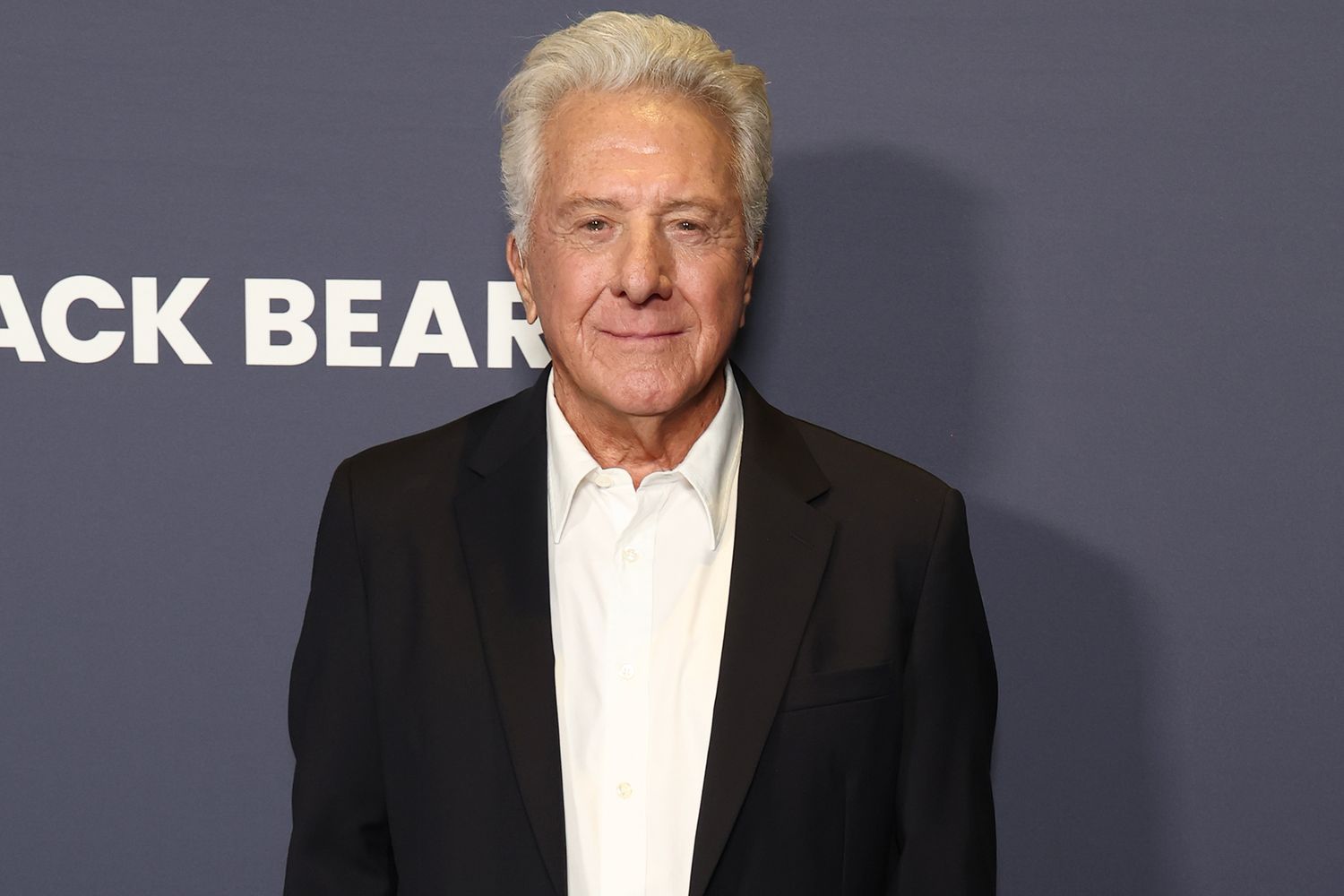
Dustin Hoffman Says He Once Planned to Teach Acting If Hollywood Career Failed
Hoffman Says Teaching Was Once His Backup Plan
Dustin Hoffman may be one of Hollywood’s most celebrated actors, but before his film career took off, he spent years wondering whether acting would ever provide him with a stable future.
The 88-year-old actor recently reflected on that period while discussing his new film Tuner alongside costar Leo Woodall.
Hoffman revealed that teaching acting once seemed like the most realistic profession available to him after years of studying and struggling to find consistent work.
Even now, decades after becoming one of the most recognizable performers in American cinema, Hoffman can still joke about the possibility.
“I still think about it if acting doesn’t work out,” Hoffman laughs in a joint interview with his Tuner costar Leo Woodall.
A New Film Brings Hoffman Together With Leo Woodall
In Tuner, Hoffman and Woodall play characters connected through the specialized world of piano tuning.
Woodall portrays Niki, while Hoffman plays Harry, his mentor.
The story becomes more complicated after Harry is hospitalized and Niki begins taking increasingly extreme measures to make money for him.
The relationship between the two characters places mentorship at the center of the story, something that connects naturally with Hoffman’s own memories of teaching and learning as a young actor.
Long before he became widely known for his performances on screen, Hoffman spent years studying acting and waiting for opportunities that were slow to arrive.
His Breakthrough Did Not Come Quickly
Hoffman made his big-screen debut in 1967 with The Tiger Makes Out, the same year he appeared in The Graduate.
The latter film became a defining moment in his early career and helped establish him as a major screen presence.
But that breakthrough followed years of much smaller opportunities.
Before film success arrived, Hoffman had taken bit parts on television while continuing to study his craft.
Like many young performers, he faced long stretches without the kind of work that could provide financial security.
That uncertainty forced him to consider how he might support himself while remaining connected to acting.
Teaching Acting Became a Practical Option
Hoffman explained that after spending so many years studying without major professional success, he eventually reached a point where teaching seemed possible.
“I thought I would teach acting, which I actually did after studying for eight, nine years without getting anything, which a lot of actors do,” he tells PEOPLE.
His experience gave him enough knowledge to begin sharing what he had learned with others who were facing many of the same challenges.
“By that time you know enough about acting that you can teach it. It was a very good profession when you could get $5 from each person.”
The amount sounds modest by modern standards, but for a struggling actor, collecting a small fee from several students could make a meaningful difference.
More importantly, teaching allowed Hoffman to remain immersed in acting even when paid performance work was scarce.
:max_bytes(150000):strip_icc():focal(999x0:1001x2):format(webp)/Tuner-052026-4-5ca4b766f9c346cd9e2579dce0309573.jpg)
Hoffman Says Years Without Work Are Common for Actors
One of the lessons Hoffman remembers most clearly from his early career is how long actors can wait before getting a meaningful opportunity.
He said that several years without steady professional work was not unusual.
“Most actors don’t work for the first five or six years,” he adds.
In the world Hoffman came from, landing a job after several years could actually be considered unusually fast.
“If you get a job after five years, you say, ‘Oh, wow, you’re working right away.’ ”
The comment captures the unusual timeline many performers experience.
A career can require years of training, auditions, rejection, temporary jobs, and uncertainty before one opportunity changes everything.
His Early Experiences Later Appeared in Tootsie
Hoffman’s history as an acting teacher eventually found its way into one of his most famous films.
In the 1982 comedy Tootsie, Hoffman played a struggling actor who also teaches acting classes while trying to survive professionally.
The similarity was not accidental.
Leo Woodall pointed out the connection during the conversation, and Hoffman recalled how his own experience influenced the film.
He even suggested to director Sydney Pollack that the movie should begin with his character teaching a class.
The scene ultimately became more personal than audiences may have realized.
A Real Acting Class Helped Create the Scene
Rather than filling the classroom with performers pretending to be acting students, Hoffman contacted someone he knew personally.
He reached out to his close friend Jack Waltzer, who was both an actor and an acting teacher.
“I literally called my best friend at that time, Jack Waltzer, who’s an actor and teaches acting. I said, ‘Can you send over your entire class?’ And he did,” Hoffman recalls.
The students were brought directly into the production.
Instead of following a rigidly constructed sequence, Hoffman and the class created the moment more naturally.
“He sent his entire class over and they came over and we just improvised that scene.”
The result gave the opening an authenticity rooted in Hoffman’s own background.
Tootsie Reflected Parts of Hoffman’s Real Experience
The character Hoffman played in Tootsie was fictional, but the professional frustration surrounding him was familiar.
The film follows an actor who struggles to find employment and looks for ways to continue working despite repeated obstacles.
For Hoffman, the idea of an actor teaching classes while waiting for the next role was not simply a convenient plot device.
It reflected a reality he had experienced himself.
Before fame, he knew what it was like to spend years studying, waiting, and searching for opportunities.
He also understood how teaching could provide both income and a continuing connection to the profession.
Years of Study Came Before Hollywood Recognition
Hoffman’s recollections offer a very different picture from the career audiences eventually came to know.
Once an actor becomes internationally successful, earlier periods of uncertainty can be easy to overlook.
Yet Hoffman describes spending eight or nine years studying without achieving the kind of professional breakthrough he hoped for.
That period became part of the foundation for everything that followed.
He learned not only through formal study, but also through the long process of trying to find work.
The frustration of those years would later inform his performances and his understanding of struggling actors.
The Graduate Changed the Direction of His Career
Hoffman’s appearance in The Graduate in 1967 marked a dramatic turning point.
After years of limited work, he suddenly became associated with a film that would define an important part of his early career.
The transition illustrates how unpredictable acting careers can be.
For years, teaching had appeared to be a practical way to remain connected to the profession.
Then one major opportunity changed the direction of his life.
Yet Hoffman’s comments suggest that he has never completely forgotten the years when success seemed far from guaranteed.
Mentorship Remains a Theme in His Latest Work
That history makes his role in Tuner particularly fitting.
Hoffman’s character Harry serves as a mentor to Woodall’s Niki.
The younger character’s determination to help Harry after his hospitalization drives the story into increasingly difficult territory.
Although the film centers on piano tuners rather than actors, the relationship between an older mentor and a younger person learning from him echoes Hoffman’s real-life experiences with teaching and mentorship.
His career began with years spent learning from others before he eventually became experienced enough to teach students himself.
Hoffman Still Remembers the Struggling Actor He Once Was
After decades of major film roles, awards, and recognition, Hoffman can look back on his early uncertainty with humor.
His joke about returning to teaching if acting does not work out carries extra weight precisely because of how extraordinary his career eventually became.
But beneath the humor is a serious memory of how uncertain the profession once felt.
There was a time when Hollywood success was not inevitable.
There was a time when Hoffman was simply another actor studying, waiting, teaching, and hoping that the next opportunity would finally arrive.
That experience has remained part of the way he talks about the profession even more than half a century after his breakthrough.
His Story Offers a Different View of Overnight Success
Hoffman’s career is often remembered through the films that made him famous, but his recollections reveal how much happened before audiences knew his name.
Years of study came first.
So did small television roles, financial uncertainty, teaching classes, and waiting for a chance.
By the time that chance arrived, Hoffman had already spent much of his young adulthood preparing for it.
His comments also challenge the idea that successful actors necessarily begin their careers quickly.
As he remembers it, waiting five or six years for professional work was entirely normal.
For many actors around him, getting hired after five years could even seem unusually fast.
A Teaching Career That Never Completely Left Him
Hoffman ultimately did not need to rely on teaching as his primary profession.
His acting career took him in a very different direction.
Still, teaching remained connected to his story.
It helped him survive during the difficult early years, influenced one of the most memorable scenes in Tootsie, and continues to give him something to joke about decades later.
His latest conversation with Leo Woodall shows that the memories remain vivid.
Before Dustin Hoffman became a celebrated Hollywood star, he was an actor who had spent years studying without knowing whether the profession would ever work out.
And if it had not, he already knew exactly what he planned to do.