

Steve Ellis Dies: Love Affair Singer Behind ‘Everlasting Love’ Remembered After a Life of Fame, Tragedy and Remarkable Comebacks
The British Singer Who Helped Make Everlasting Love a Number One Hit Faced Controversy, a Devastating Workplace Accident and Years of Recovery Before Finding His Way Back to Music
The music world is mourning the loss of Steve Ellis, the distinctive voice behind one of the most enduring British pop hits of the 1960s. The former Love Affair frontman has died following complications from a chronic illness, according to a statement shared on his official Facebook page.
Ellis was reportedly surrounded by loved ones at the time of his passing, bringing a deeply personal end to a life that had included extraordinary musical success, difficult setbacks and remarkable determination.
For generations of listeners, his voice remains inseparable from Everlasting Love, the 1968 single that carried Love Affair to the top of the UK charts and became a defining recording of its era.
Yet the story behind that famous song was far more complicated than many fans realized. At the height of the group’s popularity, controversy emerged over who had actually performed on the recording, while Ellis himself was growing increasingly uncomfortable with the direction of his career.
His later life brought challenges that had little to do with the music industry. A serious workplace accident left him with devastating injuries and required years of medical treatment.
Through it all, Ellis eventually found his way back to the music that had first made him famous, building a legacy that extended beyond a single hit record.
A Voice That Helped Define British Pop in the 1960s
Steve Ellis became widely known as the lead singer of Love Affair, a British pop group that achieved major commercial success during the late 1960s.
It was an era of enormous change in popular music, with British performers gaining international attention and young audiences embracing new sounds and styles.
Love Affair emerged during this vibrant period, combining energetic pop arrangements with a soulful vocal approach that helped distinguish the group from many of its contemporaries.
Ellis’s singing became one of the band’s most recognizable qualities. His powerful delivery brought emotional intensity to songs that might otherwise have been remembered simply as catchy pop recordings.
As the group’s popularity grew, Ellis became its most visible member, attracting attention from fans and the music press.
His youthful appearance contributed to his image as a teenage idol, but his voice was central to the band’s success.
That combination of musical talent and public appeal helped Love Affair secure a place in British pop history.
Everlasting Love Became a Number One Hit in 1968
Love Affair’s greatest commercial breakthrough came with their recording of Everlasting Love, released in 1968.
The song had previously been recorded by American singer Robert Knight, but Love Affair’s version introduced it to a wider British audience with a different arrangement and an energetic vocal performance.
Ellis delivered the lead vocal with a sense of urgency and emotion that became one of the recording’s defining features.
The single reached number one on the UK Singles Chart, transforming Love Affair into one of the most talked-about British pop acts of the moment.
Its success brought television appearances, publicity and a rapidly expanding fan base.
For listeners, Everlasting Love captured the excitement and emotional intensity of late-1960s pop music.
The recording continued to attract attention long after its original release, helping preserve Ellis’s place in music history.
But behind the chart success was a controversy that complicated the band’s public image.
The Recording Controversy That Shocked Fans
Although Everlasting Love was released under Love Affair’s name, the recording did not feature the full band performing the instrumental parts.
Ellis provided the lead vocal, while session musicians were brought in to perform the backing arrangement.
When this became publicly known, it created controversy around the group and raised questions about the way the recording had been presented to audiences.
At the time, the use of session musicians was not unusual within the recording industry. Producers frequently relied on experienced studio performers to achieve a particular sound or complete recordings efficiently.
However, fans often assumed that the musicians they saw performing on television were the same people playing on the records they purchased.
The revelation therefore attracted considerable attention and became an important part of Love Affair’s history.
Ellis’s vocal contribution remained central to the hit, but the controversy demonstrated the complicated relationship between a band’s public identity and the realities of studio production.
Success Came With Pressure and an Image He Did Not Want
As Love Affair’s popularity increased, Ellis found himself increasingly associated with the image of a teenage heartthrob.
For many young performers, such attention could be commercially valuable, bringing magazine coverage, television opportunities and devoted fans.
Yet the expectations attached to that image could also limit artistic freedom.
Ellis became dissatisfied with aspects of the group’s direction and the way his public persona was developing.
Rather than continuing indefinitely along a path that no longer suited his ambitions, he made the difficult decision to leave.
In 1969, only a short time after the enormous success of Everlasting Love, Ellis departed Love Affair.
The decision marked a significant turning point in his career.
Leaving a successful group meant stepping away from an established source of recognition, but it also gave him the opportunity to pursue music on different terms.
His Departure Marked the Beginning of a Different Musical Journey
After leaving Love Affair, Ellis continued exploring his interests as a singer and performer.
His career did not follow the straightforward path of an artist who remained permanently associated with one successful band.
Instead, he pursued different musical opportunities while navigating changes in the industry and in his own circumstances.
The early 1970s brought new styles and audiences, making it increasingly difficult for some performers associated with the previous decade to maintain their commercial momentum.
Ellis nevertheless remained connected to music, even as his professional life took unexpected turns.
His willingness to move beyond the image that had first made him famous reflected an independent approach to his career.
Although Everlasting Love remained his most recognizable recording, it did not represent the full extent of his artistic interests.
A Devastating Forklift Accident Changed His Life
One of the most difficult chapters of Ellis’s life began after he took work outside the entertainment industry.
In 1981, he became a docker, taking on physically demanding work far removed from the recording studios and concert stages where he had once performed.
During this period, Ellis suffered a serious accident involving a forklift truck.
The incident left him with both feet broken, causing injuries that would have long-lasting consequences.
What followed was not a brief recovery but an extended period of medical treatment and physical hardship.
For someone whose career had involved performing before audiences, the injuries represented a particularly difficult challenge.
Mobility, independence and everyday routines were affected, while the process of recovery demanded considerable patience.
The accident became one of the most significant personal setbacks of his life.
Years of Hospital Treatment and Bone Grafts Followed
The injuries Ellis sustained in the forklift accident required extensive medical attention.
Accounts of his life describe years of hospital treatment, including bone graft procedures intended to address the damage to his feet.
Such treatment can involve prolonged recovery periods, repeated medical assessments and significant physical limitations.
For Ellis, the experience interrupted the ordinary course of his life and presented challenges far removed from the pressures of fame.
The contrast between his early career and this later period was striking.
He had once stood at the center of Britain’s pop music scene, performing a number one hit for enthusiastic audiences.
Now he faced a difficult struggle involving serious injuries and an uncertain recovery.
Although the supplied accounts do not establish every medical detail, the length and complexity of his treatment demonstrate how profoundly the accident affected him.
Music Eventually Became Part of His Comeback
Despite the difficulties he experienced, Ellis eventually returned to recording and performing music.
His comeback reflected a continuing connection to the profession that had shaped his early adulthood.
Rather than allowing his musical identity to remain confined to the 1960s, he pursued opportunities to create new work.
His later projects brought him into contact with respected British musicians, including Paul Weller and Roger Daltrey.
These collaborations demonstrated the regard in which his vocal talent continued to be held.
For listeners who remembered Love Affair, his return provided an opportunity to hear the voice behind Everlasting Love in a different stage of life.
For Ellis, it represented another chapter in a career that had already undergone dramatic changes.
The return to music did not erase the difficulties of his accident, but it showed that his creative interests had endured.
Paul Weller and Roger Daltrey Were Part of His Later Musical Story
Ellis’s later recordings included contributions involving Paul Weller, the influential British musician known for his work with The Jam and The Style Council, and Roger Daltrey, the celebrated lead singer of The Who.
The involvement of such established artists highlighted Ellis’s continuing connection to British rock and pop music.
It also demonstrated that his career was not simply a nostalgic reminder of one successful decade.
His voice and musical experience remained relevant to performers whose own careers had developed through different periods of British music history.
These later collaborations helped introduce his work to audiences who might have known him primarily through Everlasting Love.
They also provided longtime admirers with evidence of his continuing commitment to recording.
Although his greatest commercial success belonged to the 1960s, Ellis’s artistic life extended well beyond that era.
Why Everlasting Love Remains Such an Enduring Song
More than half a century after Love Affair’s recording reached number one, Everlasting Love remains recognizable to listeners across generations.
The song’s appeal comes partly from its energetic arrangement and memorable melody, but also from the emotional conviction of Ellis’s performance.
His voice gave the recording a sense of urgency that helped distinguish it from other versions.
Over the years, Everlasting Love has been recorded and performed by numerous artists, allowing the composition to reach audiences through different musical styles.
Yet Love Affair’s version retains a special place in British pop history because of its enormous success in 1968.
For some listeners, it recalls the excitement of youth and the popular culture of the late 1960s.
For others, it is simply a song whose melody and emotional message continue to resonate.
That enduring popularity has helped keep Ellis’s voice familiar long after the original recording sessions ended.
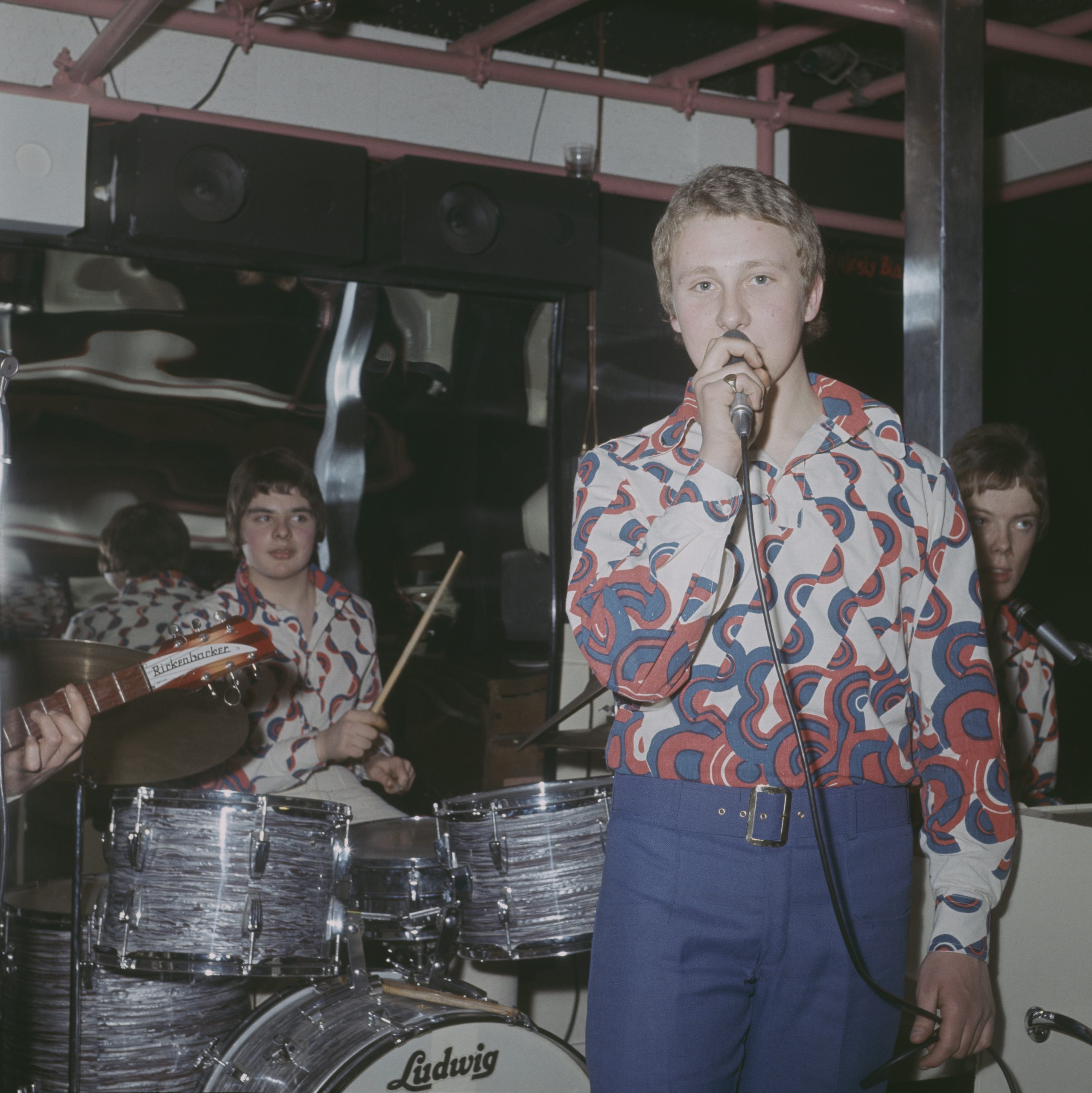
The Announcement of His Death Brought Sadness to Fans
News of Ellis’s death was shared through a statement on his official Facebook page.
The announcement attributed his passing to complications associated with a chronic illness and indicated that he had been surrounded by loved ones.
The information provided did not specify the exact medical condition involved, and no further diagnosis should be assumed from the statement.
For admirers, the announcement brought renewed attention to the extraordinary contrasts within Ellis’s life.
He had experienced the excitement of a number one single, the complications of sudden fame, the challenge of changing musical ambitions and the physical consequences of a devastating accident.
Despite those setbacks, he continued to be remembered for the distinctive voice that had helped define one of Britain’s most recognizable pop recordings.
His death represents a personal loss to those closest to him and the passing of another performer connected to an influential period of British popular music.
Steve Ellis Was Never Defined by One Moment of Fame
It would be easy to remember Steve Ellis only as the young singer whose voice carried Everlasting Love to the top of the charts.
That achievement alone would have secured him a place in British pop history.
But his life included much more than the brief period when Love Affair dominated the airwaves.
He made the difficult decision to leave a successful group, experienced major changes in his working life and endured injuries that required years of medical treatment.
Later, he returned to music and worked with respected artists who recognized the value of his talent.
Those experiences reveal a career shaped not only by commercial success but also by difficult choices, unexpected setbacks and a continuing commitment to creative work.
His story serves as a reminder that the lives of performers often extend far beyond the moments for which the public knows them best.
A Lasting Legacy Built Around an Unmistakable Voice
Steve Ellis’s contribution to British music remains closely connected to the extraordinary success of Love Affair’s Everlasting Love.
The recording captured a moment in pop history when powerful vocals, orchestral arrangements and youthful energy could combine to create a song that remained popular for decades.
Ellis’s performance helped give that recording its distinctive character.
Although controversy surrounded the use of session musicians, his vocal contribution was never in doubt.
His later career showed that the man behind the hit had more to offer than a single memorable performance.
Through years of personal challenges and changing professional circumstances, his connection to music endured.
For fans, that persistence became an important part of his story.
Remembering Steve Ellis Beyond the Fame and Heartbreak
The death of Steve Ellis marks the loss of a singer whose voice became part of the soundtrack of the late 1960s.
His life carried him from the excitement of sudden stardom to the difficult realities of physical injury and prolonged recovery.
He experienced the pressures of fame at a young age, made choices that changed the direction of his career and eventually returned to the creative work that had first brought him recognition.
For those who knew him personally, his passing is the loss of someone whose life cannot be measured by record sales or chart positions.
For music lovers, however, his performances remain a lasting connection to an unforgettable period in British pop culture.
Everlasting Love continues to be played, remembered and discovered by listeners who may have been born decades after its original release.
Each time the familiar recording begins, Ellis’s voice offers a reminder of the remarkable musical legacy he helped create.
Steve Ellis may be gone, but the song that made him famous continues to connect generations, preserving the sound of a performer whose life was marked by both extraordinary success and remarkable perseverance.