
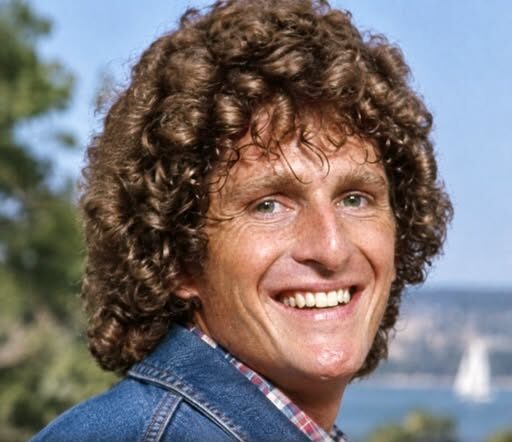
Marjoe Gortner Dies at 82 After a Remarkable Life From Child Preacher to Hollywood Actor
His Extraordinary Story Began Before He Was Old Enough to Understand It
Marjoe Gortner lived a life that moved through several dramatically different worlds, beginning with an unusual childhood in religious revival meetings before eventually taking him into documentary filmmaking, Hollywood acting and charitable work.
Gortner died on October 2 in Santa Fe, New Mexico, at the age of 82. His death followed complications related to congestive heart failure, bringing renewed attention to a life shaped by a childhood experience he would later publicly examine in striking detail.
Long before audiences knew him as an actor, Gortner had already spent years performing before large groups of people. His public life began when he was only four years old, after his parents took him onto the revival circuit.
At an age when most children were still discovering the ordinary routines of childhood, Gortner was being presented to audiences as a preacher. The role would become one of the defining experiences of his early life and would later form the foundation of the story that made him internationally known.
A Childhood Built Around the Revival Circuit
Gortner would later describe a very different reality behind the image audiences had been shown. He said the idea that he had received a divine calling was something he had been taught and coached to tell people.
That revelation transformed the meaning of his childhood career. What appeared publicly to be the remarkable emergence of a gifted young preacher was, in his later description, a carefully constructed role shaped by the adults around him.
As he grew older, he became increasingly aware of the difference between the public story and his private understanding of what was happening.
The contrast would eventually become impossible for him to ignore. Instead of simply leaving that chapter of his life behind, he made the unusual decision to allow cameras into the world he had known since childhood.
That choice would eventually turn his final period as a preacher into one of the most important chapters of his career.
He Chose to Reveal What Happened Behind the Sermons
In 1971, Gortner invited filmmakers to accompany him during what would become his final preaching tour.
The decision was remarkable because he was not merely documenting another series of religious appearances. He was allowing filmmakers to see the methods and techniques operating behind the public performances.
The resulting footage examined the fundraising methods connected to the sermons and gave audiences access to a side of the revival circuit that they ordinarily would not have seen.
For Gortner, the project represented a dramatic reversal. The child who had once performed a role prepared for him was now participating in a film that openly examined the machinery surrounding that role.
The documentary that emerged from the experience was titled Marjoe.
Rather than disappearing after Gortner stepped away from preaching, the film became a major success in the documentary world. It ultimately won the Academy Award for Best Documentary Feature.
The Documentary Changed the Direction of His Life
The success of Marjoe placed Gortner before a very different audience. He was no longer known primarily for the preaching career that had begun during childhood.
Instead, he became associated with a documentary that explored and exposed the techniques surrounding the very world in which he had been raised.
The transition marked a major turning point. Gortner had already spent much of his life performing in front of people, but he was now able to move toward a career that was increasingly under his own control.
His familiarity with cameras, audiences and performance eventually helped open another chapter of his life: acting.
Hollywood provided him with opportunities far removed from the revival meetings that had defined his earliest years.
From Revival Stages to Hollywood
Gortner went on to establish himself as an actor, appearing in both film and television productions.
Among the projects associated with his acting career were Earthquake, Starcrash and Falcon Crest.
Each role added another dimension to a public identity that had already changed significantly over the years. The young preacher who had once appeared before revival audiences was now performing as a professional actor before movie and television viewers.
His career demonstrated just how far his life had moved from the circumstances of his childhood.
While his early public appearances had been arranged by his parents, his later work reflected a period in which Gortner was building a career outside the religious environment that had first made him known.
The transformation did not erase his past. In many ways, his childhood experiences remained central to the way the public understood him, particularly because of the documentary that had brought those experiences into the open.
His Work Extended Beyond Acting
Gortner’s life was not limited to preaching, documentary filmmaking and acting.
He also became involved in producing celebrity events intended to support charitable causes. That work represented another part of a career that had repeatedly shifted direction while keeping him connected to public figures and large gatherings.
Actor Ian Ziering remembered Gortner as “a force of nature” and highlighted his ability to bring people together in support of others.
The description reflected a side of Gortner’s later life that stood apart from the controversy and revelations surrounding his childhood.
Instead of being remembered only through the lens of the revival circuit, he also became someone associated with organizing people around charitable efforts.
A Personal Life Away From His Early Public Image
Gortner’s personal life also continued to evolve long after his childhood years in the public eye.
In 2019, he married Susan Magestro.
By then, decades had passed since the documentary that transformed public understanding of his early life.
The passing years gave Gortner’s story an unusual structure. His first period of fame arrived before he was old enough to fully understand its consequences. Later, he was able to revisit that childhood from the perspective of someone determined to show audiences what had existed behind the performance.
After that came acting, television appearances and charitable work, all of which added layers to a life that could not easily be defined by a single career.
The Story That Continued to Follow Him
For many people, however, Gortner remained inseparable from the story of the child preacher who eventually challenged the narrative that had surrounded him.
His account of being coached to present a supposed divine calling gave his childhood fame an entirely different meaning.
The decision to invite filmmakers onto his final preaching tour was especially significant because it meant turning the tools of public performance toward exposing the techniques behind that performance.
Instead of allowing his past to remain hidden, Gortner placed it directly before an audience.
The Academy Award won by Marjoe ensured that the story reached far beyond the revival audiences who had once watched him preach.
It also created an enduring record of the moment when Gortner decided to confront the world in which he had grown up.

A Life Defined by Reinvention
Gortner’s journey can be viewed as a succession of reinventions.
He began as a child placed behind a pulpit by his parents. He later became an adult willing to expose what he said had really been happening behind the carefully constructed image surrounding his early preaching career.
From there, he moved into acting and appeared in recognizable film and television productions.
Later chapters of his life included charitable event production and personal relationships far removed from the environment that had first placed him in the public spotlight.
The contrast between those stages made his story unusual even within the entertainment industry.
Few performers begin their public lives at four years old, fewer still later participate in a documentary examining the circumstances of that childhood, and fewer again manage to build an entirely different career afterward.
Remembering Marjoe Gortner
Gortner’s death at 82 closes a life that stretched from childhood revival stages to documentary history, Hollywood productions and charitable events.
His story remains closely connected to the decision he made in 1971 to allow filmmakers to document his final preaching tour and reveal the fundraising methods connected to the sermons.
That decision changed the way audiences understood the young preacher they had once seen before them and helped produce an Academy Award-winning documentary.
His later performances in Earthquake, Starcrash and Falcon Crest showed that his public career did not end when he walked away from preaching.
Instead, Gortner continued moving forward, creating a new identity in entertainment and later using his connections to support charitable efforts.
His journey ultimately became the story of someone whose public role was chosen for him at an extraordinarily young age but who later took control of how that story would be told.
From the pulpit to the documentary screen and eventually to Hollywood, Marjoe Gortner spent decades moving beyond the life that had initially been written for him.