
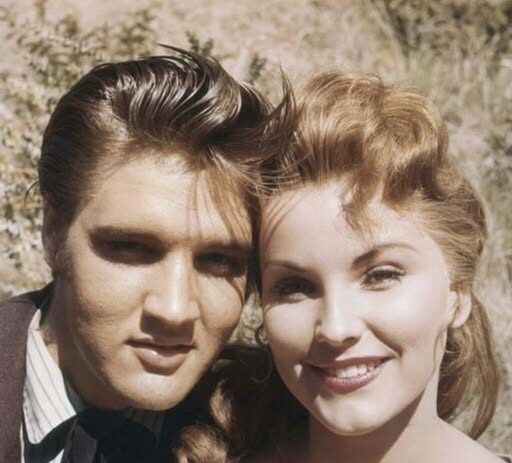
Love Me Tender Remains a Memorable First Step in Elvis Presley’s Film Career
A Film That Still Draws Attention Decades Later
Love Me Tender continues to hold a special place for movie lovers and Elvis Presley fans alike. The film offers a chance to see one of music’s most recognizable figures at the very beginning of his screen career.
For many viewers, it is more than a period drama. It is also a look at the moment when Elvis began expanding beyond the stage and into Hollywood.
The movie presents him in a role that mixes music, family conflict, romance, and action. That combination helped make the project stand out at the time of its release and still gives it a distinct appeal today.
Elvis Steps Into Hollywood
Released in 1956, Love Me Tender was Elvis Presley’s first feature film. It arrived at a time when his popularity was rising quickly, and the production became an important milestone in his career.
The story is set after the Civil War and centers on the Reno family. Elvis played Clint Reno, the youngest of four brothers, placing him inside a dramatic story shaped by loyalty, tension, and changing relationships.
His appearance in the movie gave audiences the chance to see a different side of him. He was already known for his voice, his presence, and his influence on popular music, but the film introduced him as a performer working inside a scripted dramatic role.
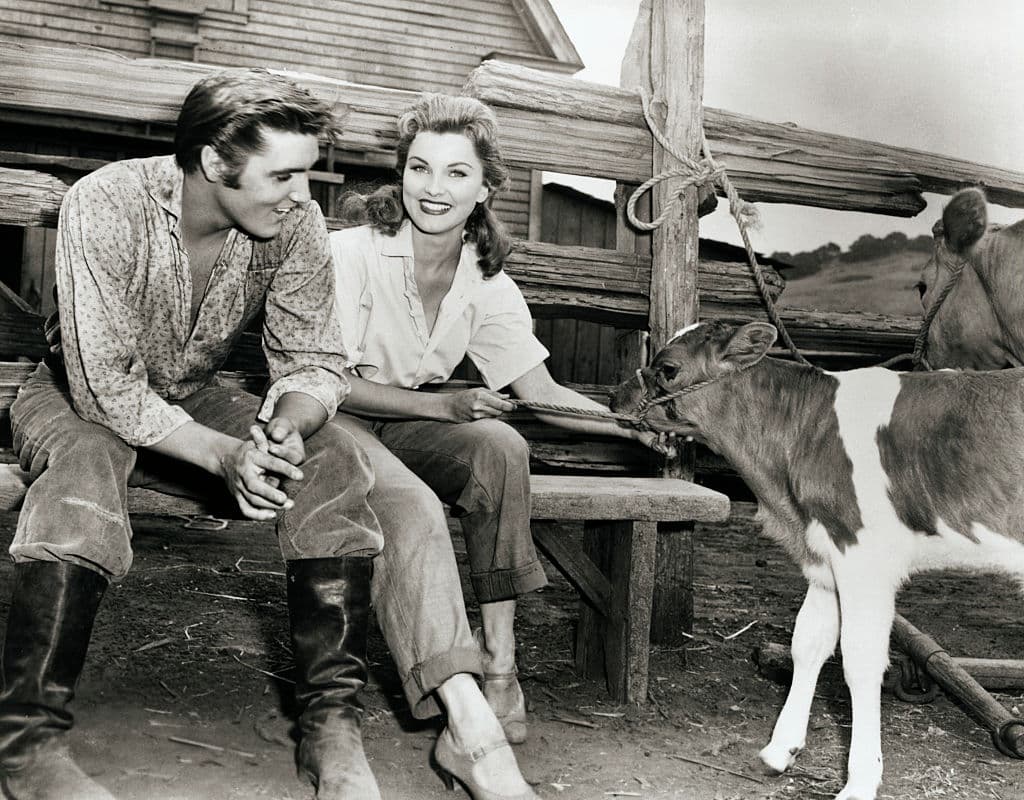
A Title Change That Reflected His Growing Fame
The film did not begin under the title audiences now know. It was originally called The Reno Brothers before the name was changed.
The new title was chosen to align the movie with the success of the song “Love Me Tender.” That decision connected the film directly to the wave of attention surrounding Elvis at the time.
The title change also showed how closely his music and film work were being linked. Even at the start of his acting career, his songs were a major part of how his screen projects were presented to the public.
A Story Rooted in Historical Inspiration
Love Me Tender draws loose inspiration from the Reno Gang, a group associated with train robbery in the 1860s. That background gave the movie a connection to real history while still allowing room for a dramatic and romantic storyline.
Clint Reno stands out in another way as well. The role is notable because it is described as the only character in any of Elvis’s films based on a real historical figure.
That detail adds another layer of interest to the production. It places Elvis not just in a fictional Western setting, but in a story with a link to the broader history of the period that inspired it.
A Premiere Marked by Unusual Excitement
The reaction surrounding the film’s premiere showed just how powerful Elvis’s popularity had already become. When Love Me Tender opened at the Paramount Theater in New York City, the event turned into something far bigger than a standard movie launch.
More than 1,500 fans camped outside beneath a huge 40-foot cutout of Elvis. That level of devotion transformed the premiere into a spectacle in its own right.
Inside the theater, audience reactions were so loud during his scenes that some of his lines could barely be heard. The excitement reflected the kind of public response usually reserved for major cultural moments, not simply a film opening.
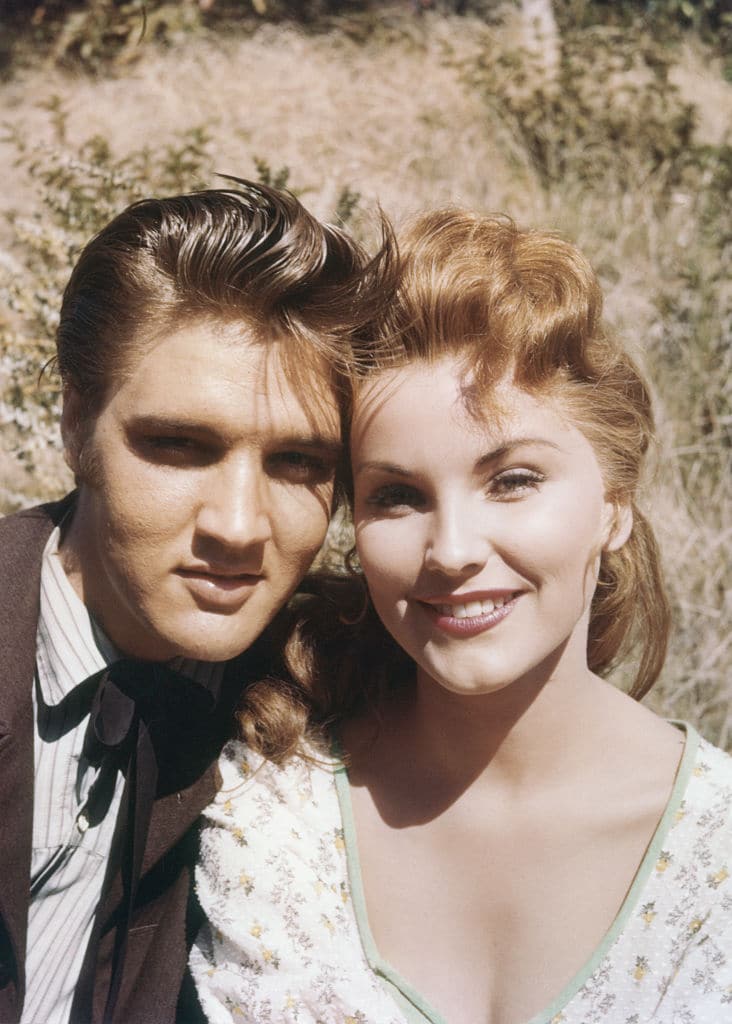
The Performer Behind the Screen Debut
Before entering the movie business, Elvis had worked as a cinema usher. During that period, he admired stars such as James Dean, Marlon Brando, and Tony Curtis.
He wanted to build a reputation as a serious actor. That ambition mattered to him, and it shaped the way he approached his first film role.
At the same time, the direction of his movie career was influenced by his manager, Colonel Tom Parker. The plan was for each film to work not only as a motion picture, but also as a way to feature Elvis’s music.
That approach meant the songs and the story were expected to support one another. Even so, Elvis treated the acting side of the project with commitment and focus.
A Serious Approach on Set
Although he was listed behind Richard Egan and Debra Paget in the billing, Elvis approached the production with discipline. He did more than learn his own dialogue.
He reportedly memorized everyone’s lines, showing how closely he studied the material. That level of preparation suggested he was determined to prove himself in a new field.
Producer David Weisbart described him as “humble, polite, and very serious about acting.” That impression supports the view that Elvis did not see the film merely as another extension of his music career.
Instead, he appeared ready to put real effort into the demands of acting. His work on the set reflected that intention.
How the Role Changed After Casting
The part of Clint Reno was not always meant to be the same size it became in the finished film. The role had reportedly been turned down by Jeffrey Hunter and Robert Wagner before Elvis joined the project.
Once he was cast, producers expanded the part. Additional scenes were added, and the film made more room for songs and moments designed to highlight his charisma.
That decision reshaped the production in a meaningful way. Instead of simply placing him into the existing structure, the movie was adjusted to make better use of his growing appeal.
Music Becomes Central to the Film
Even though Elvis did not originally intend to sing in the movie, that changed quickly. Very soon after his first on-screen appearance, the audience sees him perform.
By the time of the benefit concert sequence, the film carries a strong 1956 energy despite its Civil War-era setting. The result is not fully historical in tone, but it captures the force of Elvis’s presence at that moment in popular culture.
The title song itself also has an interesting background. “Love Me Tender” was adapted from the Civil War-era tune “Aura Lee,” with new lyrics credited to Vera Matson, though they were actually written by her husband, Ken Darby.
Before the film reached theaters, Elvis introduced the song on The Ed Sullivan Show. Public demand became so intense that RCA received more than a million preorders.
The single earned gold-record status before it was even available in stores. It then stayed at the top of the charts for five straight weeks, reinforcing the song’s connection to both the film and Elvis’s expanding fame.
The song also endured well beyond the movie’s original release. Elvis continued to perform it live for the next 20 years, showing how deeply it became tied to his career.
His Connection With Debra Paget
Debra Paget was only 22 when she appeared in Love Me Tender, but she had already established herself in Hollywood. Her presence gave the film a strong female lead and added to the movie’s star power.
When she first encountered Elvis, she was not sure what kind of person he would be. She later said, “I’d heard and read a lot about this new young singing sensation,” and, “and most of it was not complimentary.”
What she found instead surprised her. Elvis made a positive impression through his polite and respectful manner, including the way he treated her mother.
The connection between them developed quickly. Elvis is said to have been deeply taken with her and even proposed marriage, but Debra declined because of her parents’ objections.
At that point, she was already becoming interested in Howard Hughes. Even so, her influence remained part of Elvis’s story, and it has been said that Priscilla Presley later adopted Debra’s hairstyle from Love Me Tender in hopes of attracting Elvis’s attention.
A Changed Ending and an Unusual Final Image
One of the most discussed aspects of the film is its ending. In the story, Clint Reno dies after being shot, a dramatic turn that left a strong impression on audiences.
The reaction was especially emotional for Elvis’s mother, who was distressed by seeing her son’s character meet that fate on screen. Her response led producers to add one more moment at the end.
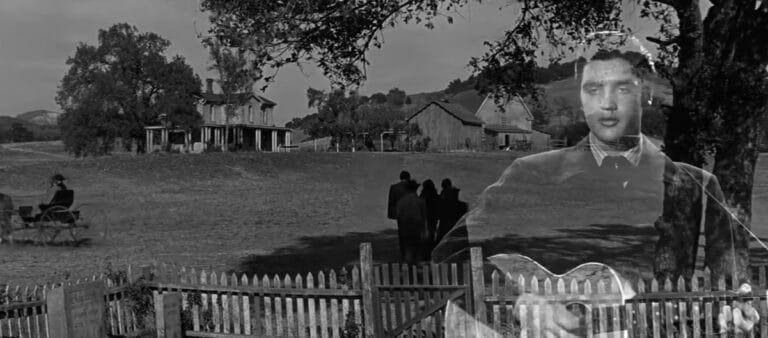
A final image of Elvis’s silhouette singing “Love Me Tender” was placed over the closing credits. The added scene softened the impact of the ending, but it also introduced a visible continuity problem.
By the time that sequence was filmed, Elvis had dyed his hair black. Earlier in the movie, his hair appeared in its natural light brown shade, making the final scene noticeably different from the rest of the film.
Small Mistakes That Became Part of the Film’s Charm
Love Me Tender also contains a number of production errors that viewers have continued to notice over the years. Rather than damaging the experience, these details have become part of its long-running charm.
In one moment, a character uses a zipper even though that detail does not fit the film’s historical setting. In another scene, a 1950s car can be seen in the background despite the Civil War-era environment.
There is also a performance sequence in which Elvis stops playing the guitar while the strumming sound continues. Elsewhere, a gun appears, disappears, and then reappears because of shifting camera angles.
These inconsistencies do not define the movie, but they do add personality to it. They remind viewers that the production belongs to a very specific era of filmmaking.
Why the Film Still Matters
Love Me Tender is not generally regarded as the most acclaimed film in Elvis Presley’s screen career. Even so, its importance remains clear.
It was the first point at which audiences saw him attempt to build a place for himself in Hollywood. The film captured him at the start of that journey, still new to acting and eager to make an impression.
It also preserved a moment when his fame was expanding so quickly that even a movie premiere became a major public event. The production reflects ambition, commercial momentum, and the effort to shape Elvis into a multi-platform star.
For viewers today, the film still offers several things at once: a period drama, an early showcase of Elvis’s acting ambitions, a reminder of the excitement that surrounded him in 1956, and a portrait of a performer standing at the threshold of a new chapter.
That combination is what gives Love Me Tender its lasting value. It is not only a debut. It is a record of a cultural figure discovering how far his influence could reach.