
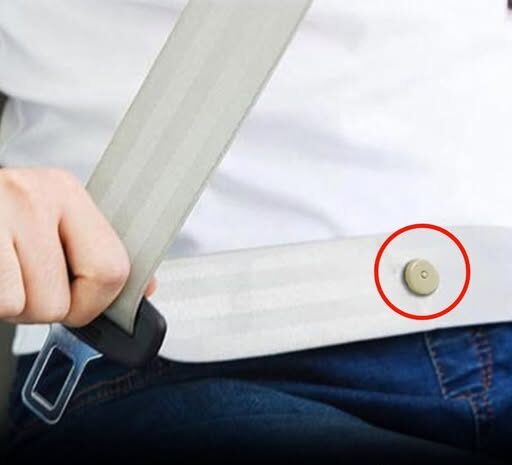
The Small Seat Belt Stop Button That Makes Everyday Driving More Convenient
A Tiny Part Most Drivers Rarely Notice
Inside nearly every vehicle, there are small design details that quietly make everyday driving easier. One of the simplest examples can be found directly on the seat belt.
Most drivers use it constantly without thinking about what it does. The small plastic piece attached to the belt may appear unimportant, but it serves a practical purpose every time the seat belt is fastened or released.
This component is commonly called a seat belt stop button.
Its job is straightforward: it prevents the metal latch from sliding all the way down the belt after the seat belt has been unbuckled.
Why the Seat Belt Stop Button Is There
When a driver or passenger releases a seat belt, the belt begins retracting toward its normal resting position.
Without something stopping the metal latch, the latch could slide farther down the belt and end up in an inconvenient location near the bottom of the seat.
The stop button creates a small barrier that keeps the latch positioned higher on the belt.
Because of this simple feature, the latch usually remains within easy reach the next time someone gets into the vehicle.
Instead of searching beside the seat or reaching toward the floor, the driver or passenger can simply grab the latch and buckle up.
It is a small convenience, but one that becomes noticeable very quickly when the button is missing.
Making Buckling Up Easier
The seat belt stop button helps make one of the most repeated actions inside a vehicle quicker and easier.
Every time someone enters the car, the seat belt latch needs to be accessible. Keeping it in a predictable position reduces unnecessary reaching and searching.
That convenience may seem minor during a single trip, but drivers and passengers can buckle and unbuckle their seat belts countless times over the life of a vehicle.
A small component that keeps the latch exactly where it is expected can therefore make a noticeable difference over time.
The driver does not need to think about the button while using it. The design simply works in the background.
A Small Feature Connected to an Important Habit
The primary function of the stop button is convenience, but that convenience supports an important everyday safety habit.
Seat belts are meant to be fastened whenever people are traveling in a vehicle. Making the buckle easy to reach removes one small inconvenience from that process.
When the metal latch remains in a familiar and accessible position, fastening the seat belt becomes a quick and automatic action.
There is no need to reach deeply beside the seat or search for a latch that has slipped down the belt.
The stop button therefore helps make the entire process feel effortless.
It does not attract attention, and most people may never learn its name, but it quietly contributes to the ease of using the seat belt consistently.
What Happens When the Button Breaks
Many drivers only become aware of the stop button after it breaks or disappears.
Once the small plastic piece is gone, the metal latch may begin sliding much farther down the belt than it previously did.
The difference can become obvious the next time someone reaches for the seat belt.
Instead of finding the latch at its usual height, the driver or passenger may need to reach toward the bottom of the seat to retrieve it.
Depending on the position of the belt and the design of the vehicle interior, the latch may end up between the seat and the door.
What was once an automatic movement can suddenly become slightly awkward and frustrating.
Why the Missing Button Can Become Annoying
A missing stop button generally does not make the seat belt impossible to use. However, it can make the routine act of buckling up less convenient.
The latch can move to different positions each time the belt retracts, forcing the driver or passenger to look for it.
This can be especially noticeable when entering the vehicle quickly and expecting the buckle to be exactly where it normally sits.
The inconvenience becomes more apparent because the stop button usually works so quietly that people become accustomed to the latch remaining in the same general location.
Once that consistency disappears, the purpose of the small plastic piece becomes much easier to understand.
The Button Can Help Keep the Belt Organized
Keeping the latch from dropping too far can also help the seat belt remain more orderly when it is not being used.
When the latch stays near its intended resting position, the belt is less likely to move around unnecessarily along the lower part of the vehicle interior.
If the latch slides down freely, the belt may become twisted more easily.
A twisted belt can make buckling slightly more inconvenient because the user may need to straighten it before fastening it.
The stop button cannot prevent every possible twist, but keeping the latch in a predictable position can reduce unnecessary movement.
Rattling Can Become More Noticeable
Another possible issue after the button is lost is rattling.
The metal latch is a relatively solid object, and when it hangs lower than intended, it may come into contact with nearby parts of the vehicle interior.
During normal driving, movement and vibration can cause the latch to shift.
If it repeatedly touches a hard surface, the driver or passengers may notice an irritating sound.
This is another situation in which such a small plastic component can have an unexpectedly useful role.
By keeping the latch higher on the belt, the stop button can help prevent it from resting against areas where movement could create unwanted noise.
Protecting Nearby Interior Surfaces
The stop button may also help prevent the metal latch from repeatedly rubbing against parts of the vehicle interior.
Without the button, the latch may drop lower and come into contact with surfaces that it normally would not reach.
Repeated contact over time could potentially leave scratches or marks.
Keeping the latch positioned correctly reduces the opportunity for that kind of unnecessary contact.
Again, the effect is subtle. Drivers are unlikely to think about the stop button specifically as a way of keeping the interior organized.
However, its ability to control where the metal latch rests can help reduce several small annoyances at once.
A Design That Works Without Calling Attention to Itself
Good everyday design often becomes almost invisible because people become accustomed to it working properly.
The seat belt stop button is a clear example.
There are no complicated moving parts and no special actions required from the driver.
The small plastic piece simply remains attached to the belt and blocks the latch from traveling beyond a particular point.
Every time the belt is released, the same process happens again.
The latch returns to a convenient resting position, ready for the next trip.
Why Its Purpose Is Easy to Miss
Most people learn to use a seat belt at an early age and rarely examine its individual components.
The metal latch, buckle, and belt itself receive most of the attention because they are directly involved in fastening the restraint.
The small stop button can easily blend into the belt material.
Some drivers may see it thousands of times without ever asking why it is there.
Its simplicity makes it easy to assume that it is merely part of the belt’s construction rather than a component with a specific function.
Only when it disappears does its role become immediately clear.
Replacing a Missing Stop Button
The good news for drivers who discover that the button has broken or fallen away is that replacing it is generally simple.
Replacement seat belt stop buttons are inexpensive and widely available.
They are designed to restore the small barrier that prevents the metal latch from slipping too far down the belt.
Installation can usually be completed within a few minutes.
Once the replacement is installed, the latch can once again remain at a more convenient height when the seat belt is not being worn.
This can eliminate the need to repeatedly retrieve the latch from beside or below the seat.
Why a Quick Repair Can Be Worthwhile
Because the missing button does not necessarily stop the seat belt from buckling, some drivers may simply tolerate the inconvenience.
However, repeatedly searching for the latch can become annoying over time.
Replacing the button restores the familiar position that drivers and passengers expect.
It can also help reduce twisting, unwanted movement, rattling, and contact between the metal latch and nearby interior surfaces.
Considering how simple the part is, correcting the issue can be an easy way to restore a small but useful piece of everyday convenience.
Small Details Can Make a Big Difference
Vehicles contain many features that people rarely notice until they stop working.
The seat belt stop button belongs in that category.
It does not control the vehicle, provide entertainment, or attract attention with complicated technology.
Instead, it performs one simple task repeatedly and reliably.
It keeps the metal latch from sliding down the belt, ensuring that the buckle remains easier to reach whenever someone gets into the vehicle.
That small action makes fastening the seat belt more convenient while helping keep the belt and latch in a predictable position.
An Overlooked Part of Everyday Driving
The next time a seat belt is released, the small plastic button on the belt may be easier to appreciate.
Without it, the metal latch could travel farther down and settle near the bottom of the seat.
With it, the latch remains close enough to grab quickly when it is time to buckle up again.
The difference involves only a few inches of movement, but those few inches can save repeated reaching and searching during everyday use.
It is an example of how thoughtful design does not always need to be complicated.
Sometimes a tiny piece of plastic can quietly make a familiar routine smoother.
A Simple Part With a Practical Purpose
The seat belt stop button may be one of the least noticeable components inside a vehicle, but its purpose is clear once it is understood.
It holds the metal latch at a convenient point on the belt, making it easier for drivers and passengers to reach whenever they need to buckle up.
If the button disappears, the latch can slide lower, become harder to reach, twist the belt, rattle against nearby surfaces, or potentially leave marks on parts of the interior.
Fortunately, replacement buttons are inexpensive, easy to find, and generally quick to install.
For such a small component, the stop button provides a surprising amount of everyday convenience.
It is a reminder that some of the most useful design features are also the easiest to overlook, quietly supporting a smoother and more consistent driving routine every time someone reaches for a seat belt.