
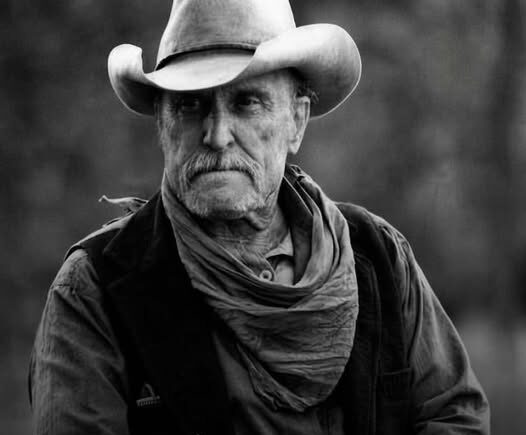
Robert Duvall, Oscar-Winning Star of The Godfather and Apocalypse Now, Dies Peacefully at 95
Robert Duvall, Oscar-Winning Star of The Godfather and Apocalypse Now, Dies Peacefully at 95
Hollywood has lost one of its most respected performers. Robert Duvall, the Academy Award-winning actor whose remarkable career included unforgettable performances in The Godfather, Apocalypse Now, and Tender Mercies, died on February 15, 2026, at the age of 95.
The legendary actor passed away peacefully at his home in Middleburg, Virginia, with his wife, Luciana Duvall, by his side.
His death marked the end of a career spanning more than six decades, during which he became known for portraying complex characters with extraordinary realism, emotional depth, and quiet authority.
Rather than relying on theatrical gestures or exaggerated performances, Duvall developed a reputation for making even the smallest moments feel authentic.
His work helped shape some of the most celebrated films in American cinema, earning him seven Academy Award nominations and one Oscar victory.
Robert Duvall’s Wife Confirms His Peaceful Passing
Duvall’s wife, Luciana, shared the news of his death in a heartfelt statement published on February 16, 2026.
She described her husband as a devoted partner, passionate storyteller, and extraordinary actor whose love for his craft was matched by his enthusiasm for life.
Her tribute emphasized the dedication he brought to every character and the personal warmth that those closest to him knew beyond the screen.
For audiences, Duvall was an internationally admired performer whose filmography included some of Hollywood’s most influential productions.
For Luciana, he was much more than a celebrated actor.
He was her husband and companion, someone whose personality, interests, and affection defined their life together.
The family’s announcement also confirmed that his passing occurred at home, surrounded by comfort and love.
In keeping with Duvall’s wishes, no formal funeral service was planned.
From a Military Family to the World of Acting
Robert Selden Duvall was born on January 5, 1931, in San Diego, California.
He grew up in a military family, with his father pursuing a career in the United States Navy and eventually reaching the rank of rear admiral.
His upbringing included time in military communities, including Annapolis, Maryland.
Unlike performers who discover their ambitions at a very young age, Duvall’s path toward acting developed gradually.
He was not initially known as an outstanding student and spent time considering what direction his future should take.
His family recognized that he possessed an ability to imitate people and perform amusing characterizations.
Those early talents eventually helped point him toward the performing arts.
What initially appeared to be an uncertain professional direction became the foundation of one of the most distinguished acting careers of his generation.
The Early Years That Shaped His Acting Style
Duvall developed his craft through formal study and practical performance experience before becoming a recognizable film actor.
He pursued acting in New York, where he gained exposure to the discipline and preparation required for serious dramatic work.
His early years involved the challenges familiar to performers attempting to establish themselves in a competitive industry.
Rather than becoming an immediate leading man, he gradually built experience through theatrical and television opportunities.
These formative years helped him develop the observational skills that would later become essential to his performances.
He became especially effective at portraying characters whose emotions were communicated through behavior, subtle expressions, and carefully controlled dialogue.
That attention to detail distinguished him from performers who depended primarily on dramatic speeches.
Over time, directors and audiences began recognizing his ability to make fictional characters appear entirely believable.
A Memorable Film Debut in To Kill a Mockingbird
One of Duvall’s earliest important film appearances came in the 1962 adaptation of To Kill a Mockingbird.
He portrayed Boo Radley, a mysterious and deeply misunderstood figure whose presence is essential to the story.
The role was particularly demanding because the character communicated largely through physical presence rather than extensive dialogue.
Duvall demonstrated that a performance did not need many spoken words to create a lasting emotional impression.
His portrayal conveyed vulnerability, uncertainty, and quiet humanity.
Although the role was not a conventional starring part, it revealed the expressive control that would characterize much of his later work.
For many viewers, Boo Radley remains one of the film’s most unforgettable characters.
For Duvall, the performance provided an early demonstration of his ability to transform a relatively limited screen appearance into something powerful.
The Godfather Establishes His Place in Film History
Duvall’s career reached another important milestone in 1972 when he appeared in Francis Ford Coppola’s The Godfather.
He portrayed Tom Hagen, the adopted son and trusted legal adviser of the Corleone family.
While many characters in the film expressed themselves through intimidation, anger, or dramatic confrontation, Hagen often relied on restraint and careful judgment.
Duvall brought intelligence and emotional control to the role, making the character a stabilizing presence within the complicated family organization.
His understated performance stood alongside those of Marlon Brando, Al Pacino, and other prominent members of the cast.
The film became a defining achievement in American cinema, and Duvall’s contribution remained an essential part of its success.
He later returned as Hagen in The Godfather Part II, further developing the character’s position within the family’s changing circumstances.
Why Tom Hagen Became One of His Defining Characters
Tom Hagen demonstrated Duvall’s ability to make restrained performances emotionally compelling.
The character frequently occupied tense situations in which loyalty, strategy, and personal responsibility collided.
Rather than dominating every scene through volume or confrontation, Duvall communicated Hagen’s thinking through precise expressions and measured responses.
This approach allowed audiences to recognize the character’s intelligence without requiring constant explanation.
His performance also helped balance the personalities surrounding him.
In a film filled with powerful and sometimes volatile figures, Hagen provided a contrasting presence.
The role became one of the clearest examples of Duvall’s distinctive acting style.
It also helped establish his reputation as an actor capable of strengthening an entire production without demanding constant attention.
Apocalypse Now Reveals Another Side of His Talent
In 1979, Duvall appeared in another landmark film directed by Francis Ford Coppola: Apocalypse Now.
His portrayal of Lieutenant Colonel Bill Kilgore was dramatically different from the reserved Tom Hagen.
Kilgore was a confident and forceful military officer whose behavior combined charisma, recklessness, and a disturbing comfort with the realities of war.
Duvall approached the character with tremendous energy, creating a performance that became one of the film’s most recognizable elements.
The role demonstrated the breadth of his acting ability.
He could portray a calm adviser in one celebrated production and an imposing military personality in another without losing the sense of authenticity that defined his work.
His performance in Apocalypse Now earned him further recognition and reinforced his standing among Hollywood’s leading character actors.
Tender Mercies Brings His Academy Award Victory
Duvall achieved one of the most significant honors of his career through the 1983 film Tender Mercies.
He portrayed Mac Sledge, a troubled country singer attempting to rebuild his life.
The role required him to communicate regret, vulnerability, and the gradual possibility of personal change.
Rather than presenting the character’s struggles through excessive sentimentality, Duvall delivered a restrained and deeply human performance.
His work earned him the Academy Award for Best Actor.
The victory marked the highest recognition of a career already filled with acclaimed performances.
Tender Mercies also demonstrated that Duvall could carry a film through emotional subtlety rather than spectacle.
His portrayal remains an important example of the qualities that made him such an admired performer.
Seven Academy Award Nominations Across a Remarkable Career
Throughout his decades in entertainment, Duvall received seven Academy Award nominations.
His Oscar victory for Tender Mercies represented one of several major honors recognizing his contribution to film.
He also received four Golden Globe Awards during his career.
These achievements reflected the consistency of his work across different decades, genres, and character types.
Duvall was equally comfortable portraying men of authority, emotionally troubled individuals, and people confronting difficult moral decisions.
His performances rarely depended on a familiar screen personality being repeated from one production to another.
Instead, he approached each character as a separate individual with a distinct history and perspective.
That versatility helped sustain his career long after many actors of his generation had reduced their professional activity.
Lonesome Dove Adds Another Beloved Role
Duvall also became closely associated with the television miniseries Lonesome Dove.
He portrayed Augustus McCrae, a former Texas Ranger whose personality combined humor, experience, and emotional complexity.
The character became one of the most admired performances of Duvall’s career.
His work demonstrated that television could offer the same opportunities for rich storytelling and character development as major theatrical films.
For audiences who discovered him through Lonesome Dove, the role became a defining part of his legacy.
It also reinforced his ability to portray characters whose personalities contained both strength and vulnerability.
Even when playing confident or larger-than-life figures, Duvall found ways to reveal the humanity beneath their outward behavior.
His Creative Ambitions Extended Beyond Acting
Although Duvall became internationally recognized for his performances, his professional interests were not limited to appearing in front of the camera.
He also worked as a director, writer, and producer.
These creative pursuits allowed him to explore stories that held particular personal and artistic significance.
One notable example was The Apostle, a film in which he portrayed a passionate preacher navigating complicated personal and spiritual circumstances.
The project reflected his interest in characters who were difficult to categorize as entirely admirable or entirely flawed.
He also directed Assassination Tango, another example of his willingness to pursue projects shaped by his own creative interests.
These efforts demonstrated that his commitment to storytelling extended beyond interpreting scripts written by others.
A Career Built on Authenticity Rather Than Celebrity Image
One of the qualities that distinguished Duvall was his commitment to making characters feel genuine.
He was known for careful preparation and attention to the details of human behavior.
His performances frequently involved people facing moral uncertainty, personal conflict, or responsibilities they struggled to understand.
Rather than presenting those experiences in an exaggerated manner, he often relied on precise gestures and natural dialogue.
This approach gave audiences the impression that they were observing real individuals rather than actors performing scripted emotions.
His physical appearance also differed from the conventional image of a glamorous Hollywood leading man.
Yet he transformed that distinction into an advantage, becoming an actor whose credibility and emotional depth were central to his appeal.
For directors, his presence could add weight to a scene even when he was not its central focus.
Recognition Beyond the Academy Awards
Duvall’s contribution to American culture was recognized outside the film industry’s traditional awards ceremonies.
In 2005, he received the National Medal of Arts.
The honor acknowledged the importance of his artistic accomplishments and the influence of his work.
By that point, he had already spent decades portraying memorable characters across film and television.
His career had included celebrated productions such as To Kill a Mockingbird, The Godfather, Apocalypse Now, Tender Mercies, and Lonesome Dove.
These projects represented different periods of American entertainment, yet Duvall’s performances helped connect them through a consistent commitment to believable storytelling.
The recognition reflected not simply his longevity but the cultural significance of the work he had completed.
His Later Performances Introduced Him to New Audiences
Duvall remained professionally active well beyond the period when he first became famous.
His later film appearances included The Judge, demonstrating his continued ability to portray emotionally complicated characters.
He also appeared in Hustle in 2022, extending a film career that had begun six decades earlier.
These later projects allowed younger audiences to encounter an actor whose reputation had been established through some of cinema’s most influential productions.
His continued involvement in entertainment reflected a lasting enthusiasm for the craft.
Rather than relying exclusively on the legacy of his earlier roles, he remained willing to participate in new productions.
That professional longevity became another remarkable aspect of his story.
Hollywood Remembers a Respected Performer
Following the announcement of his death, fellow actors and members of the entertainment community reflected on Duvall’s extraordinary career.
Among those who remembered him were Adam Sandler, Jamie Lee Curtis, and Alec Baldwin.
The tributes emphasized his exceptional abilities, memorable performances, and the influence he had on other performers.
For colleagues who worked with him, Duvall represented a standard of commitment and authenticity.
For audiences, he was the familiar presence behind an extraordinary collection of characters.
His filmography spanned different generations of filmmaking, connecting classic Hollywood storytelling with more contemporary productions.
The reactions to his passing reflected the respect he had earned through decades of work.
The Personal Life Behind the Legendary Career
Although Duvall’s professional achievements brought him worldwide recognition, his personal life remained important to those closest to him.
He married four times during his life, with Luciana Pedraza becoming his wife in 2005.
The couple shared their later years together, and Luciana was beside him when he died in February 2026.
Her public tribute offered a perspective beyond the awards and iconic performances that defined his career for audiences.
She remembered his affection for storytelling, good food, meaningful conversation, and the people in his life.
Those details presented a portrait of a man whose enthusiasm extended beyond professional achievement.
Although millions knew him through his characters, his family remembered the individual behind those performances.
Why Robert Duvall’s Performances Remain Important
Duvall belonged to a generation of actors who helped redefine the possibilities of American screen performance.
His work demonstrated that cinematic power could emerge through restraint, careful observation, and emotional honesty.
In The Godfather, he made Tom Hagen compelling through calm authority.
In Apocalypse Now, he created an unforgettable military figure whose confidence concealed disturbing contradictions.
In Tender Mercies, he portrayed a man seeking redemption with tenderness and restraint.
These performances were dramatically different, yet each reflected Duvall’s commitment to understanding the individual behind the character.
That consistency became a defining feature of his artistic legacy.
His influence can be appreciated not only through awards but through the lasting impression his performances continue to make on audiences.
Robert Duvall Leaves Behind an Extraordinary Film Legacy
Robert Duvall’s death at 95 marks the passing of an actor whose work became deeply connected to the history of American cinema.
From his nearly silent portrayal of Boo Radley to his commanding performances in The Godfather and Apocalypse Now, he repeatedly demonstrated the ability to make complex characters unforgettable.
His Academy Award-winning work in Tender Mercies revealed the emotional subtlety at the center of his talent.
Later projects showed that his enthusiasm for acting remained strong throughout a remarkably long career.
Beyond his screen appearances, his creative work as a director and producer reflected a personal dedication to telling meaningful stories.
For more than six decades, he brought intelligence, realism, and emotional depth to characters whose lives were often far removed from his own.
His passing on February 15, 2026, closed an extraordinary chapter in film history, but the performances he left behind remain available for generations of viewers to discover.
For admirers of The Godfather, Apocalypse Now, Tender Mercies, and the many other productions that defined his career, Robert Duvall will be remembered as an actor who could transform even the quietest moment into something unforgettable.
His greatest achievement was not simply portraying memorable characters. It was making audiences believe, for a little while, that those characters were real.