
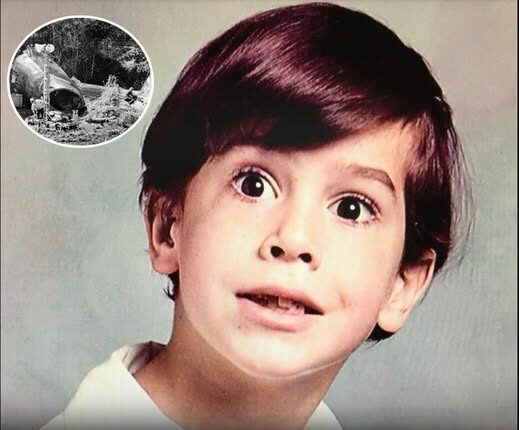
Stephen Colbert’s Childhood Tragedy and the Grief That Shaped His Life
Long before he became known for comedy and late-night television, Stephen Colbert endured a family loss that permanently changed the way he understood love, faith and the fragility of ordinary life.
Stephen Colbert built his public identity around sharp humor, carefully timed reactions and the ability to make audiences laugh during difficult moments. Behind that confidence, however, is a childhood marked by a tragedy so profound that it divided his life into a before and an after.
Grief did not enter his world gradually. It arrived without warning through a plane crash that took his father and two of his brothers, leaving his family to confront three deaths at once.
The home that had once been filled with familiar voices suddenly became a place defined by absence. Everyday routines continued, but the people expected to return through the door never came home.
Colbert was still a boy when he learned that life could change completely in a single moment. The loss did not simply make him sad. It altered his understanding of safety, family and the idea that tomorrow could be trusted.
A Childhood Divided by One Flight
Before the crash, Colbert belonged to a large family whose daily life carried the movement and noise that come with many children sharing one home. There were school plans, responsibilities, conversations and expectations about the future.
Then came the flight that ended with his father and two brothers gone.
The tragedy created practical reminders of everything that had been interrupted. Among them were boarding school forms that were never signed, ordinary documents that suddenly represented a future that could no longer unfold as planned.
Such details can become especially painful after an unexpected death. A piece of paper, an unfinished task or an abandoned plan may carry the full weight of the person who was supposed to complete it.
For Colbert, the crash was not an isolated childhood memory that faded with time. It became part of the foundation on which his personality, beliefs and creative life were built.
He grew up knowing that even the most ordinary day could be broken apart without warning. A conversation could end before anyone realized it was the last one. A routine departure could become permanent.
The Silence Left Behind
After the deaths, the family home remained physically familiar, but emotionally it had changed. Rooms held reminders of the people who were missing, while silence occupied spaces that had once been filled by movement and conversation.
Grief within a family can take many forms. Some people speak constantly about the dead, while others struggle to say their names. Some seek closeness, while others retreat into private routines.
Colbert’s response developed over time rather than following a simple path toward recovery. There was no single moment when the pain disappeared or the family returned to what it had been.
Instead, he learned to grow around the loss.
The child affected by the crash eventually became a performer, but the performer never completely separated himself from the grieving child. The sadness remained present beneath the intelligence, wit and control visible to audiences.
A Mother Who Refused Bitterness
One of the most important influences on Colbert’s response to tragedy was his mother. She had lost her husband and two sons, yet she did not allow the family’s future to be governed entirely by anger.
Her example taught him that accepting grief did not mean approving of what had happened. It meant acknowledging reality without allowing bitterness to become the only remaining connection to the people who had died.
She chose love over resentment, even while carrying a loss that could never be repaired.
That choice became a lesson her son would carry into adulthood. Colbert did not learn to deny pain or disguise it as optimism. He learned that sorrow and gratitude could exist together.
A person could mourn what had been taken while continuing to love what remained.
This perspective would later become central to the way he discussed suffering. Rather than describing grief as something to defeat, he came to understand it as something that could be accepted, interpreted and carried.
Books Gave the Pain a Vocabulary
As Colbert grew older, books became one of the places where he could explore thoughts and emotions that were difficult to express directly.
Reading offered distance from his own experience while also helping him understand it. Through stories, ideas and characters, he could encounter suffering in forms that were separate from his family but emotionally recognizable.
Books did not remove the pain of losing his father and brothers. They gave him a vocabulary for experiences that had previously felt too large and complicated to name.
Language can make grief more manageable without making it smaller. Once sorrow can be described, it becomes possible to examine it, share it and recognize that others have survived similar forms of loss.
For Colbert, reading became more than distraction. It offered structure in a life that had been permanently altered by an event beyond his control.
Stories also demonstrated that tragedy did not have to be the final meaning of a life. A terrible event could remain true without becoming the only truth.
Faith and the Search for Meaning
Faith also became an important part of Colbert’s effort to live with grief. It did not provide a simple explanation for why his family had suffered, nor did it erase the emotional consequences of the crash.
Instead, faith gave him a framework through which pain could be approached without demanding that every question receive a satisfying answer.
The deaths forced him to confront some of life’s most difficult realities at an age when many children still assume that parents and siblings will always be there.
He had to consider how love could remain meaningful when the people being loved could be taken away so suddenly.
His faith allowed him to see grief not only as evidence of what had been lost, but also as proof of how deeply those people had been loved.
That understanding did not turn tragedy into something desirable. It allowed him to remain connected to his family without being consumed entirely by the circumstances of their deaths.
Performance Became Another Language
Comedy and performance eventually gave Colbert another way to process the contradictions he carried. Onstage, he could control timing, language and emotional tension in ways that had been impossible during the chaos of childhood.
Performance allowed him to transform painful awareness into connection. The fear that life could collapse at any moment became part of his ability to recognize absurdity, hypocrisy and the strange behavior people use to avoid uncomfortable truths.
His humor was not simply an escape from sadness. It existed alongside sadness.
Comedy can create temporary relief without pretending that suffering is unreal. A joke may not solve grief, but it can interrupt isolation by allowing people to experience emotion together.
That shared response became a powerful part of Colbert’s work. Whether performing a character, delivering a monologue or speaking directly about national events, he often used humor to give audiences a way into subjects that might otherwise feel unbearable.
The laughter did not erase the darkness. It created enough room for people to face it.
The Private History Behind the Public Humor
Viewers who know Colbert primarily through television may see a confident host capable of moving quickly between political satire, celebrity interviews and personal reflection.
Yet his public sensitivity to tragedy is rooted in direct experience.
He knows what it means for an ordinary family day to become the beginning of lifelong grief. He understands that people may continue working, laughing and caring for others while carrying an invisible history of loss.
This awareness gives emotional weight to moments when he steps beyond comedy. His most serious reflections do not feel separate from his humorous work because both come from the same understanding of human vulnerability.
The jokes may be immediate, but the perspective behind them was developed over decades.
He learned early that people often need laughter most when life feels unstable. He also learned that humor becomes hollow when it refuses to acknowledge genuine pain.
Learning to Live With the Cracks Showing
Colbert’s life is not a story in which childhood trauma was conquered and left behind. The more honest description is that he learned to live fully while the damage remained part of him.
The cracks did not disappear. They became visible parts of the person he developed into.
This distinction matters because grief does not usually follow a clean progression. A person may feel strong for years before a memory returns with unexpected intensity.
Success does not cancel sorrow, and public achievement does not make private loss less significant.
Colbert’s career demonstrates that a wounded life can still be creative, joyful and generous. The pain can remain while the person continues to build relationships, pursue meaningful work and experience moments of happiness.
Living fully after tragedy does not betray the people who died. It can become a way of honoring the love that existed before the loss.
Turning Personal Sorrow Into Shared Understanding
One of the most meaningful aspects of Colbert’s public life is his ability to speak about grief without reducing it to an inspirational slogan.
He does not present suffering as a guaranteed path to greatness. Many people experience devastating loss without receiving fame, career success or a clear sense of purpose in return.
His story instead reveals how pain can be given expression.
Through books, faith and performance, he found forms that allowed his private sorrow to become understandable to other people. Once expressed, that sorrow could help an audience member recognize something from his or her own life.
This is where personal grief becomes communal. The details remain unique, but the emotions are widely shared.
Almost everyone eventually encounters absence. Many people know what it feels like to enter a room and notice the person who is no longer there.
By allowing grief to appear within his public work, Colbert helps make those experiences less isolating.
A Legacy Larger Than Late-Night Television
Television careers eventually change. Programs end, audiences move on and public attention shifts toward new personalities.
Colbert’s lasting influence, however, cannot be measured only through ratings, viral monologues or years spent behind a late-night desk.
His quieter legacy is the example of a person who did not allow tragedy to make emotional withdrawal his only form of protection.
He continued to love despite learning how vulnerable love could make him. He continued to create despite knowing that stability could disappear. He continued to make people laugh without pretending that life was always funny.
The deaths of his father and brothers remained part of his story, but they did not become the final boundary of what his life could contain.
He became a husband, father, performer and public figure. He experienced success while still carrying memories of a childhood home altered by three permanent absences.
A Life That Remained Defiantly Full
Stephen Colbert’s journey from grieving child to celebrated entertainer cannot be reduced to triumph over adversity. He did not erase the crash, repair the empty rooms or recover the years he might have spent with his father and brothers.
What he did was continue.
He found language where there had once been silence. He found faith where certainty was impossible. He found performance where overwhelming emotion could be shaped into something that reached other people.
The result is not a life untouched by tragedy, but a life that refused to remain empty because of it.
Behind the humor is a man who understands how quickly ordinary existence can change. Behind the confidence is someone who learned that love and grief are often inseparable.
His story offers no promise that suffering will become easy. It offers something more believable: proof that even a life permanently marked by loss can remain meaningful, creative and fiercely alive.