
Part 2 of 2
For anyone who knew Angry Anderson only as the fierce frontman of Rose Tattoo, what happened in 1987 came as a surprise.
The man associated with hard rock, tattoos and an uncompromising stage presence released a ballad.
It was called Suddenly.
And it became one of the most recognizable songs of his career.
The song gained enormous exposure after being used during the wedding of Scott Robinson and Charlene Mitchell on the Australian soap opera Neighbours.
The television wedding became a major cultural moment, watched by millions in Australia and overseas.
For Anderson, it revealed a completely different side of his voice.
Instead of the raw aggression associated with Rose Tattoo, Suddenly was emotional and melodic.
It introduced him to an audience that may never have listened to the band’s harder material.
The contrast only made Anderson more distinctive.
He could stand onstage delivering one of Australia’s toughest rock songs and then become associated with one of television’s most famous romantic scenes.
Music was not the only place audiences saw him.
Anderson also moved into acting.
His most famous film role came in 1985 when he appeared as Ironbar Bassey in Mad Max Beyond Thunderdome.
The movie starred Mel Gibson and Tina Turner and became another major entry in the internationally successful Mad Max franchise.
Ironbar Bassey was a memorable supporting character, and Anderson’s physical presence made him a natural fit for the post-apocalyptic world of the film.
His appearance alongside Tina Turner also linked two very different music careers on screen.
But behind Anderson’s intimidating public image was another side that became increasingly important as he grew older.
He became involved in charity work and advocacy, particularly around young people.
Over the years, Anderson supported causes involving disadvantaged and vulnerable children and used his public profile to raise awareness and funds.
He often spoke about fatherhood as one of the most important parts of his life.
That made the statement announcing his death especially personal.
His band described him not only as a musician, but as a devoted father and a much-loved friend and bandmate.
His death also arrived at an emotional moment in Rose Tattoo’s history.
The band had been celebrating its 50th anniversary with the One Last Ride tour.
It was intended as a farewell to decades on the road.
Instead, the European leg was cut short after Anderson suffered a cardiac arrest.
The remaining shows were canceled while he received medical treatment.
He later returned to Australia, where he died surrounded by loved ones.
For longtime fans, the timing made his passing especially difficult.
Rose Tattoo had survived enormous change over the decades.
Members came and went.
The music industry changed.
Styles changed.
Audiences changed.
But Anderson remained the face and voice most closely associated with the band.
His gravelly delivery became inseparable from songs such as Bad Boy for Love, Rock ’n’ Roll Outlaw, Nice Boys and We Can’t Be Beaten.
The band’s influence reached beyond Australia.
Rose Tattoo developed an international following and became admired by generations of hard-rock musicians who responded to the group’s stripped-down, aggressive sound.
In 2006, that legacy was formally recognized when Rose Tattoo was inducted into the ARIA Hall of Fame.
For Anderson, the honor represented decades of survival in an industry that rarely guarantees longevity.
He had never looked or sounded like a conventional pop star.
That was part of his appeal.
He seemed built for a different kind of stage.
Smaller clubs.
Loud amplifiers.
Sweaty crowds.
And songs that sounded as though they had been dragged directly out of working-class life.
Yet his career repeatedly escaped easy definition.
He was the hard-rock singer who recorded a famous love ballad.
The musician who became a Mad Max villain.
The intimidating performer who devoted significant time to helping young people.
And the Australian rock veteran who remained onstage into his late seventies.
That combination made him more than simply the frontman of Rose Tattoo.
He became part of Australian popular culture.
Fans knew the voice.
They knew the nickname.
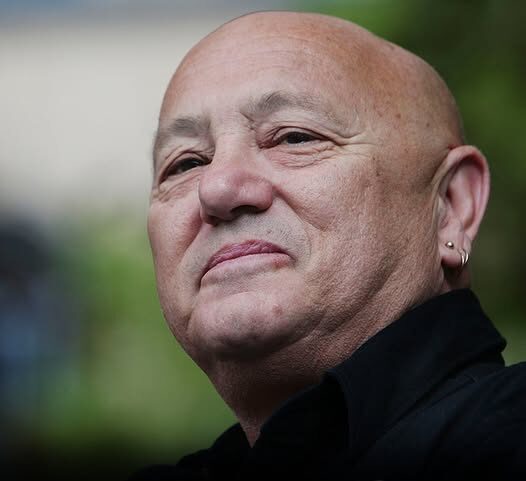
They knew the shaved head and tattooed image.
And they knew that when Angry Anderson walked onto a stage, he rarely looked interested in doing anything halfway.
His death closes another chapter in the history of Australian rock.
But the music remains.
So does Suddenly.
So does Ironbar Bassey.
And so does the influence of Rose Tattoo on generations of musicians who came afterward.
Gary “Angry” Anderson spent decades proving that a rock star did not have to fit neatly into one image — and that is why his voice, his songs and his unmistakable presence will be remembered long after the final encore.