
Before Ghost Made “Unchained Melody” a Hit Again, It Began in a Prison Film
How Todd Duncan, Bobby Hatfield, and Elvis Presley gave the same song three very different lives
For many listeners, “Unchained Melody” brings to mind a pottery wheel, Demi Moore, and Patrick Swayze. But the ballad that helped make that scene in Ghost so memorable was written for a very different film. In 1955, audiences first heard it in Unchained, a prison drama in which singer Todd Duncan gave voice to the longing at the center of the story.
The song was already a hit before the Righteous Brothers recorded it, and their version had already spent decades on the radio before Ghost sent it back to the charts. Along the way, Elvis Presley made it part of his live shows. Each performance put a different kind of longing into the same melody.
The ballad began with Todd Duncan in 1955
Composer Alex North wrote the music and Hy Zaret supplied the lyrics for Unchained. Duncan sang it in the film, where its sense of distance and waiting suited a story about men separated from the people they loved. The song earned an Academy Award nomination, and Harry Belafonte performed it at the 1956 ceremony.
By then, listeners already had several versions to choose from. Recordings by Les Baxter, Al Hibbler, and Roy Hamilton all reached the U.S. Billboard Top 10 in 1955. The tune worked in an orchestral arrangement as readily as it did in a vocal performance, an early sign that it could travel far beyond the film.
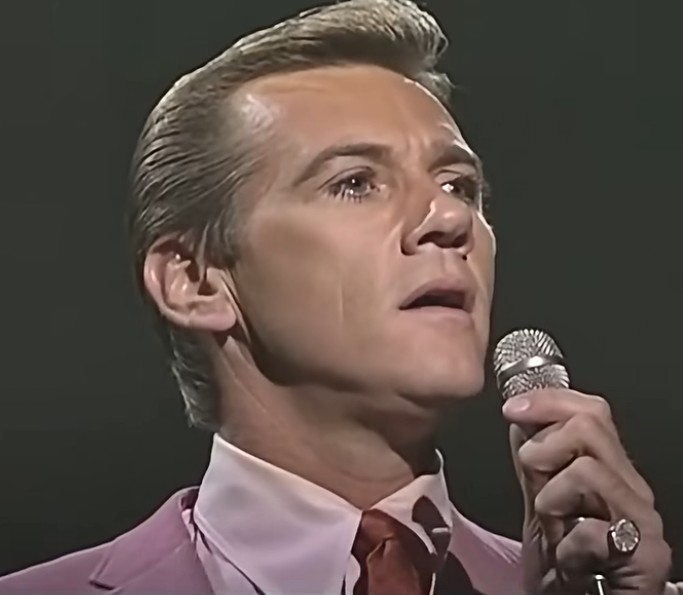
Bobby Hatfield sang the Righteous Brothers’ version on his own
A decade later, “Unchained Melody” returned to the U.S. Top 10 in the recording credited to the Righteous Brothers. Bill Medley and Bobby Hatfield made their name as a duo, but the voice on this track belongs to Hatfield alone. Their 1965 single reached No. 4 on the Billboard pop chart.
Listen to how much room Hatfield leaves at the start. His singing is gentle enough to draw you toward the words, and the arrangement gives him space to stretch the melody as he goes. By the time he reaches the high notes near the end, the performance has traveled from something close to a private admission to a full-throated plea.
Elvis Presley took the song to the piano
Elvis brought “Unchained Melody” into his concert repertoire late in his career. He recorded it live in Ann Arbor, Michigan, in April 1977, and performed it again that June in Rapid City, South Dakota, where cameras were recording for Elvis in Concert.
In the Rapid City performance, Elvis sits at the piano and gives the melody a looser pace. The audience can hear him work his way into each phrase, leaving pauses that feel different from the smooth rise of Hatfield’s studio recording. The familiar melody is there from the first few bars, but it feels like a song being worked out in the room.
Ghost brought Hatfield’s recording back to the charts
In 1990, Ghost used the Righteous Brothers’ 1965 recording in the scene where Molly and Sam sit together at a pottery wheel. Hatfield’s voice carries much of the moment as the characters work the clay and draw closer. The song also gains a different meaning as the film turns from a romance into a story about loss and the wish for more time together.
The film put the original Righteous Brothers recording back on the Billboard Hot 100, 25 years after its first run. Listeners who remembered it from the radio heard it in a new setting. For people who had never heard it before, Hatfield’s voice became part of the memory of seeing Ghost.
Played in order, the recordings tell their own story. Duncan’s performance belongs to the prison drama that gave the song its name. Hatfield starts softly and builds toward a soaring finish, while Elvis lets the pauses do some of the work. Each leaves the listener with the same unanswered question at the heart of the song: how long will it be before the person you miss comes back?