
The Story and Significance of a Vintage Brass Plumb Bob
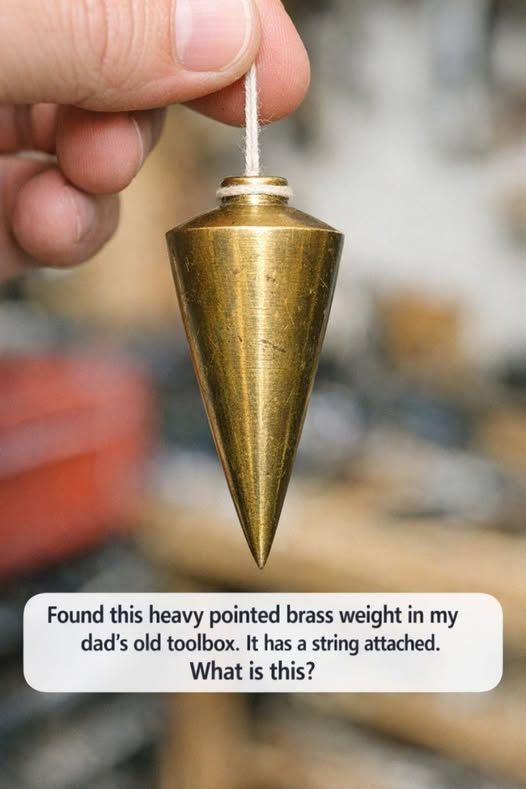
Discovering an unusual object inside an old toolbox can feel like uncovering a small piece of history. When that object is a heavy brass weight with a pointed tip and a string attached, it is most likely a traditional tool known as a plumb bob.
This simple instrument has played an important role in construction and craftsmanship for hundreds of years. Long before digital measuring tools existed, builders relied on the reliable balance of gravity to make sure walls, beams, and structures stood perfectly upright.
Finding such a tool today is more than just discovering a forgotten item. It can also be a meaningful reminder of the dedication, patience, and precision that earlier generations brought to their work.
A Tool That Helped Build the Past
A plumb bob may look simple at first glance, but its design is based on a principle that has guided builders for centuries. When suspended by a string, the pointed weight naturally hangs straight downward, creating a perfectly vertical reference line.
This natural alignment made the plumb bob one of the most reliable tools available to carpenters, masons, and other craftsmen. By comparing a wall or beam against the vertical line created by the tool, workers could quickly determine whether a structure was straight.
In many ways, this small object helped shape homes, barns, bridges, and countless other structures that still stand today.
The presence of a brass plumb bob inside a family toolbox suggests that it was once used regularly during construction or repair work. Each scratch, mark, or worn edge can represent years of practical use.
Over time, these marks become part of the tool’s story, reflecting the projects it assisted and the care taken by the person who relied on it.
The Craftsmanship Behind Brass Tools
Brass became a popular material for plumb bobs because of its durability and weight. The metal provides enough mass to keep the tool stable when suspended, which improves the accuracy of the vertical line.
Another advantage of brass is its resistance to corrosion. Even after decades in storage, many brass tools remain in remarkably good condition.
Many older plumb bobs were also crafted with careful attention to detail. Some feature precisely machined tips, smooth polished surfaces, or decorative caps where the string attaches.
These small design choices reflect the pride many toolmakers took in producing equipment that was both functional and long-lasting.
For workers who depended on their tools every day, quality mattered. A well-made plumb bob was not just a measuring instrument but also a trusted companion on the job.
Caring for a Vintage Plumb Bob
When someone discovers a vintage brass tool, the first impulse is often to polish it until it shines brightly. However, collectors and historians usually recommend a more careful approach.
The natural aging of brass creates a surface finish known as patina. This darker tone develops slowly over time and gives older objects a warm, mellow appearance.
Many people appreciate this patina because it reflects the age and authenticity of the tool. Removing it completely can sometimes reduce the historical character of the piece.
For basic care, gentle cleaning is usually enough. A soft microfiber cloth can remove dust and surface dirt without damaging the metal.
If the tool has noticeable tarnish and you prefer a cleaner look, a mild natural mixture can be used. A small paste made from baking soda and lemon juice can lift some discoloration when applied gently with a soft cloth.
After cleaning, the surface should be rinsed with clean water and dried immediately to prevent moisture from affecting the metal.
Harsh methods such as steel wool, aggressive chemical cleaners, or long soaking treatments should be avoided. These techniques can scratch the metal or strip away the natural surface finish.
Maintaining the tool in a balanced condition preserves both its appearance and its historical value.
Understanding Its Possible Value
Many vintage plumb bobs are modestly priced collectibles. Common examples typically sell for between ten and fifty dollars depending on their condition and completeness.
However, certain details can make a particular piece more interesting to collectors.
One of the most important factors is the presence of a maker’s mark. Some manufacturers stamped their names or logos into the metal, which can identify the company that produced the tool.
Well-known brands often attract more attention among collectors because they represent respected traditions of craftsmanship.
Another feature that can increase interest is the material or design of the tool. While many plumb bobs are made entirely of brass, some include wooden caps, specialized tips, or other distinctive elements.
Personal engravings can also add meaning. Initials, dates, or small notes stamped into the surface may connect the tool to a particular person or job.
Even something as simple as the original string or spool can increase the completeness of the piece. These small details help preserve the authentic character of the tool.
Giving the Tool a Place in the Present
Even if the plumb bob is no longer needed for construction work, it can still play a meaningful role in modern life.
Many people choose to display vintage tools as decorative reminders of craftsmanship and family history.
A shadow box is one creative option. By placing the plumb bob alongside old photographs, drawings, or other hand tools, it becomes part of a small personal exhibit that celebrates the past.
Because of its solid weight, the tool can also function as a distinctive paperweight on a desk or bookshelf. Its unusual shape often attracts attention and invites conversation.
Some homeowners incorporate brass tools into decorative lighting or interior accents. When used thoughtfully, the tool becomes both functional and symbolic.
Another possibility is to hang the plumb bob in a garden area or near a greenhouse. The vertical line created by the tool naturally represents stability and growth.
In each of these settings, the tool remains visible rather than forgotten in storage.
Passing Down a Meaningful Object
One of the most meaningful choices is to pass the plumb bob to another member of the family.
Objects that carry stories often become treasured heirlooms. A simple explanation about where the tool came from can transform it into a powerful reminder of family history.
Perhaps it once belonged to a parent or grandparent who worked in construction or carpentry. Perhaps it traveled from project to project over many years.
Each time the story is shared, the connection between generations becomes stronger.
For younger family members, holding such an object can create a sense of curiosity about the work that shaped earlier generations.
In a world dominated by digital tools and automated equipment, the simplicity of a plumb bob offers a glimpse into a different era of craftsmanship.
More Than a Piece of Metal
At first glance, a brass plumb bob may appear to be nothing more than a small weight attached to a string. Yet its meaning runs deeper than its simple form suggests.
The tool represents patience, accuracy, and the steady hands required to build structures that stand the test of time.
Every project completed with its help required attention to detail and a commitment to doing the job correctly.
When someone holds such a tool today, they are touching an object that once guided the creation of real spaces where people lived and worked.
The balance of the plumb bob symbolizes more than physical alignment. It also reflects the pride that builders take in creating something solid and lasting.
Whether polished carefully or left with its original patina, the tool carries the quiet memory of those efforts.
Keeping the Legacy Standing Straight
Displaying or preserving a vintage plumb bob is a simple way to honor that legacy.
The tool serves as a reminder that even the most basic instruments played important roles in shaping homes, communities, and livelihoods.
Its design has remained largely unchanged for centuries because the principle behind it is timeless.
Gravity never fails, and a suspended weight will always point directly downward.
This elegant simplicity allowed builders to rely on the plumb bob long before modern technology entered the workshop.
Today, the tool continues to carry that same quiet reliability.
When someone asks about the small brass weight hanging on a shelf or resting on a desk, the explanation can be simple and meaningful.
It is a plumb bob, a tool used to make sure everything stands perfectly straight.
And sometimes, it is also a reminder of the person who once used it with care and pride.