
Small Blue Disk Found in Chip Bag Turns Out to Be a Food-Safety Testing Device
An Unexpected Discovery Inside a Snack Bag
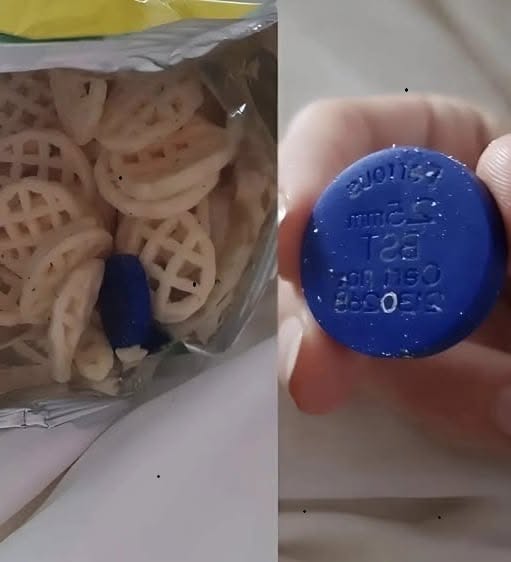
A parent became concerned after discovering a small blue disk inside a bag of sour cream-flavored potato chips.
The unfamiliar object did not resemble any part of the snack, packaging, or seasoning. Unsure whether it could be dangerous, the parent decided not to allow anyone to continue eating the chips.
The decision was a cautious one. Finding any foreign object inside packaged food can immediately raise questions about contamination, manufacturing errors, and possible health risks.
Rather than ignoring the discovery, the parent photographed the disk and shared the image online in hopes that someone would recognize it.
The response revealed that the object was not a random piece of machinery or a harmful contaminant. It was a specialized testing device used during food production.
The Purpose of the Blue Testing Disk
The blue object was a plastic-encased metal test piece designed to pass through food-manufacturing equipment.
Factories use devices like this to confirm that inline metal detectors are functioning correctly. These detectors are installed along production and packaging lines to identify unwanted metal before food products reach consumers.
The test disk contains metal that should be detected when it moves through the inspection system. If the equipment identifies it as expected, workers can confirm that the detector is operating properly.
If the machine fails to recognize the test piece, the production team knows that the system must be inspected, adjusted, or recalibrated before normal operations continue.
This routine process forms an important part of quality control. It allows manufacturers to test safety equipment under conditions similar to those present during ordinary production.
Why Food Factories Use Metal Detectors
Packaged-food production often involves numerous machines, including mixers, slicers, conveyors, seasoning equipment, and sealing systems.
Because these machines contain metal components, manufacturers must have procedures in place to prevent fragments or damaged parts from entering finished products.
Inline metal detectors provide an additional layer of protection. They inspect products as they move through the facility and help remove packages that may contain unwanted metallic material.
The equipment must remain sensitive enough to detect possible contaminants while still operating efficiently during large production runs.
Regular testing helps workers verify that the detectors have not lost accuracy. A machine that appeared to be running normally could still require adjustment, which is why physical test pieces are passed through the system at scheduled intervals.
The blue disk found in the chip bag was one of those test pieces.
A Device Used Across the Snack Industry
These inspection tools are not limited to one type of food or one manufacturing facility.
Similar test pieces are used on production lines that package potato chips, cookies, and other snack products. Their appearance, size, and shape may vary depending on the equipment and testing procedure.
Some are designed as small disks, while others may resemble cards, sticks, balls, or narrow strips. The bright outer casing helps factory workers recognize and recover them after each test.
The metal inside allows the detector to identify the device. The plastic exterior makes it easier to handle and prevents the testing piece from being confused with an ordinary machine component.
During a normal inspection, the device is introduced into the production line, detected by the safety system, and removed before the product is packaged.
In this case, the disk apparently continued through the line and accidentally entered the chip bag.
Why the Discovery Initially Caused Alarm
Without knowledge of food-manufacturing practices, the blue disk could easily appear suspicious.
A consumer opening a sealed snack bag expects to find only the food listed on the package. Any unfamiliar object can create immediate concern, especially when it includes metal.
The parent’s decision to set the bag aside prevented unnecessary uncertainty while the object was being identified.
The online photograph allowed people familiar with production testing equipment to explain its purpose. What first appeared to be a potentially dangerous foreign object was actually part of a process intended to prevent dangerous objects from reaching consumers.
The explanation transformed the situation from a frightening discovery into an educational look at how packaged food is inspected.
The Disk Itself Was Harmless
The testing device was not designed to release chemicals, seasoning, or other substances into food.
Its metal component was enclosed inside the blue plastic casing, and the disk did not contaminate the chips around it.
Although it should have been removed before packaging, its accidental presence did not mean that the entire production line was unsafe.
Instead, the object showed that the facility was actively checking its detection equipment.
The error occurred when the test piece was not recovered after the inspection. The safety device itself had been deliberately introduced into the line as part of a quality-control procedure.
Once its purpose was understood, the parent no longer had to fear that the disk was evidence of an unknown substance or a broken piece of dangerous machinery.
How Calibration Checks Support Consumer Protection
Food manufacturers depend on routine equipment checks to ensure that safety systems continue operating as intended.
Metal detectors cannot simply be installed and assumed to remain accurate forever. Production conditions, maintenance work, equipment movement, and ordinary wear can affect performance.
Testing pieces provide a direct way to measure whether the system can still identify metal inside or near a food product.
Workers can place a test device at different points in a production run to confirm that the detector responds consistently.
If the detector activates, the inspection process has worked. If it does not, the factory can pause production and correct the problem before additional products are packaged.
This type of verification helps manufacturers meet required health and safety standards. It also gives production teams documented evidence that their inspection systems were checked.
A Hidden Part of Packaged-Food Production
Most consumers rarely see the industrial processes involved in producing a bag of chips.
The finished package appears simple, but it passes through several stages before reaching a store. Ingredients must be prepared, cooked, seasoned, measured, inspected, and sealed.
Quality-control systems operate throughout those stages. Some checks focus on weight, package seals, freshness, or appearance, while others are designed to identify physical contaminants.
Metal-detection testing is one of the less visible procedures. It takes place behind factory walls and usually leaves no sign that it occurred.
The accidental appearance of the blue disk offered an unusual glimpse into that process.
Although the disk was not meant to remain with the finished chips, its purpose demonstrated how manufacturers test the machines responsible for protecting packaged products.
Why Bright Colors Are Used
The blue casing serves a practical purpose during factory inspections.
Brightly colored testing devices are easier for workers to see against food, machinery, and conveyor surfaces. Their noticeable appearance reduces the risk that they will be mistaken for part of the product.
The casing also helps distinguish the inspection tool from an actual metal contaminant.
During an ordinary test, staff members can introduce the disk, observe the detector’s response, and retrieve the device before continuing production.
The strong color becomes especially useful in busy facilities where many packages move rapidly along the same line.
In the unusual event that a disk reaches a consumer, its distinctive appearance may also make identification easier.
A Safety Measure That Briefly Became the Mystery
The discovery began with understandable concern. A parent found an object that clearly did not belong among the chips and chose to prevent the snack from being eaten.
After the photograph was shared, the explanation brought relief.
The disk was not evidence that an unidentified material had entered the bag. It was a metal-detector test piece used to confirm that factory inspection equipment could recognize metallic objects.
Its presence in the package was accidental, but its original purpose was directly connected to food safety.
The incident highlighted the difference between a dangerous contaminant and a device used to test for dangerous contaminants.
That distinction turned an alarming moment into a useful lesson about industrial quality-control practices.
Routine Testing Helps Keep Packaged Snacks Safe
Consumers generally see only the final result of food production: a sealed bag containing a familiar snack.
Behind that package are repeated checks intended to reduce risks and maintain consistent standards.
Testing devices like the blue disk allow factories to confirm that metal-detection equipment remains responsive during production.
These checks are performed across different snack-manufacturing lines, including those used for chips and cookies.
The process helps prevent dangerous metal fragments from remaining in finished packages and reaching store shelves.
Although the test piece should have been removed, finding it showed that the factory had a system for actively evaluating its safety equipment.
An Educational End to a Concerning Moment
Once the object had been identified, the parent’s fear was replaced by relief.
The blue disk was harmless, and it did not spoil or contaminate the chips surrounding it.
The experience also revealed a production practice that many people may never have considered.
Food safety is supported not only by clean facilities and careful handling but also by repeated testing of the machines responsible for detecting possible hazards.
The disk was created to challenge the inspection system and prove that it could recognize metal inside the production line.
Its accidental journey into a finished bag was unusual, but the reason it existed was reassuring.
What appeared at first to be a mysterious and potentially dangerous object was actually evidence of a factory procedure intended to protect consumers.
The discovery offered a rare look at the hidden safeguards behind everyday packaged snacks and showed how routine calibration checks help keep food-production systems working properly.
:::