
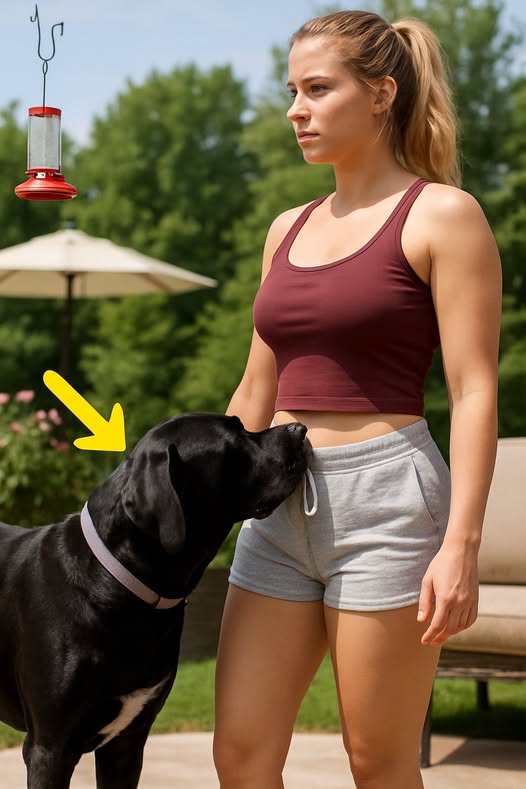
Why Dogs Sometimes Sniff People in Private Areas — The Explanation Is Usually Much Less Awkward Than It Feels
What Can Seem Embarrassing to a Person Is Often Just Normal Canine Scent Investigation, and It Usually Has Nothing to Do With Cleanliness or Something Being Wrong
It can happen in only a second.
You walk into a room, greet someone’s dog, and suddenly the animal pushes its nose toward an area of your body you definitely did not expect it to investigate.
For many people, the reaction is immediate.
Embarrassment.
Discomfort.
The feeling that everyone nearby must have noticed.
But while the moment may feel intensely personal to you, the dog usually experiences it in a completely different way.
Dogs Experience the World Through Scent
Humans rely heavily on vision and language to understand what is happening around them.
Dogs rely much more strongly on smell.
Scent gives them information about people, animals, food, places, and recent activity.
When a dog approaches someone new, sniffing is one of the most natural ways for it to investigate.
To the dog, the behavior is not necessarily rude, shocking, or embarrassing.
It is simply one way of gathering information.
The Groin Area Carries Strong Body Odors
The groin and surrounding areas naturally contain body odors created through several processes.
Sweat contributes.
Skin secretions contribute.
Bacterial activity also affects the way the area smells.
Those combined odors can be particularly interesting to a dog’s sensitive nose.
Even when a person is freshly showered and wearing clean clothing, natural scent remains present.
Clothing Does Not Completely Block Scent
People may assume that because they are fully dressed, a dog should not be able to detect much.
That is not necessarily the case.
Body odors can still remain noticeable through clothing.
To a human nose, there may be no obvious smell at all.
To a dog, however, the scent information may still be interesting enough to investigate.
The Area Is Also Conveniently Located
There is another simple explanation for why dogs may investigate this part of the body.
For many medium-sized and large dogs, it is located close to nose level.
The dog does not have to jump or stretch very far.
It can simply walk up and begin sniffing.
That practical detail can make the behavior more common than people might expect.
The Dog Is Usually Not Making a Judgment About You
One of the most reassuring things to remember is that the dog is not evaluating your hygiene.
It is not thinking that you smell bad.
It is not deliberately trying to embarrass you.
It is not treating the moment as socially inappropriate in the way a human would.
The animal is responding to scent.
What feels extremely private to you is simply another source of information to the dog.
This Does Not Automatically Mean Something Is Medically Wrong
People sometimes become worried when a dog pays unusual attention to one area of the body.
They may wonder whether the animal has detected an illness or another hidden health problem.
But the behavior by itself should not be treated as reliable evidence that something is medically wrong.
Dogs may sniff the groin area simply because natural body odors are concentrated there.
That explanation is usually far more ordinary than the frightening conclusions people sometimes imagine.
Normal Body Odor Can Be Interesting to Dogs
Human bodies constantly produce scent.
Most of it goes unnoticed by other people.
Dogs, however, are much more sensitive to subtle odor differences.
That means the same scent that seems nonexistent to you may be very noticeable to the animal.
The dog may simply be trying to learn more about the person standing in front of it.
Embarrassment Comes From Human Social Rules
The awkwardness comes largely from the fact that people attach strong social boundaries to private areas of the body.
Dogs do not share those same rules.
They do not understand that sniffing one part of a person feels more embarrassing than sniffing a sleeve, hand, or shoe.
That difference between human social expectations and canine instinct is what creates the uncomfortable moment.
The Behavior Can Still Be Unwelcome
Understanding why a dog does something does not mean you have to tolerate it.
If the behavior makes you uncomfortable, it is completely reasonable to create some distance.
You can step backward.
You can turn slightly sideways.
You can also ask the owner to redirect the dog.
There is no need to remain frozen in place simply because the animal is acting instinctively.
A Calm Response Is Usually Best
The easiest response is often the simplest.
Move away calmly.
Turn your body.
Give the dog another place to focus.
There is usually no need for shouting, sudden movements, or dramatic reactions.
A calm response helps end the interaction without frightening the dog or escalating the situation.
The Owner Can Redirect the Dog
The owner plays an important role in preventing uncomfortable greetings.
If a dog repeatedly approaches people too closely, the owner can call it back.
The dog can be asked to sit.
It can then be rewarded for staying at a respectful distance.
Over time, this can help replace intrusive sniffing with a more polite greeting routine.
Teaching a Sit Can Change the Entire Greeting
A dog that is taught to sit when greeting visitors has something clear to do.
Instead of immediately walking forward and investigating every scent, the animal learns to pause.
The owner can reward calm behavior.
The visitor can decide whether to interact further.
This creates a more comfortable situation for everyone involved.
Punishment Is Usually Not the Best Response
Because the dog is not deliberately trying to embarrass anyone, harsh punishment may be unnecessary.
Yelling can confuse or frighten the animal.
Physical punishment is also not needed to teach better manners.
Clear redirection and consistent training are more appropriate ways to handle the behavior.
The goal is not to punish natural curiosity.
The goal is to teach boundaries.
Curiosity and Good Manners Are Two Different Things
A behavior can be natural and still need to be managed.
Dogs may naturally want to sniff.
People naturally want personal space.
Both can be true at the same time.
Owners can respect the dog’s instincts while also teaching it not to crowd visitors.
You Do Not Need to Feel Ashamed
The moment can feel far more dramatic than it actually is.
You may worry that the dog’s behavior means other people noticed something unusual about you.
In most cases, that conclusion is unnecessary.
The dog is reacting to ordinary scent information.
There is usually no reason to interpret the sniff as a comment on your body, your hygiene, or your health.
The Dog Is Not Thinking the Way a Person Would
Humans may interpret the behavior through embarrassment and social awareness.
The dog does not.
It is not thinking about privacy.
It is not considering how the interaction looks to other people.
It is not intentionally crossing a social line.
It is simply following scent.
Why Some Dogs Do It More Than Others
Not every dog greets people this way.
Some are more curious.
Some are more energetic.
Some have received more training around personal space.
Others may be used to approaching people freely.
Differences in training and behavior can make the habit more noticeable in certain dogs.
A Dog’s Nose Often Goes Where the Information Is Strongest
For a scent-driven animal, areas with stronger natural body odor may simply attract more attention.
The dog does not necessarily know why a person considers one location more private than another.
It follows what smells interesting.
That is why the behavior can appear surprisingly direct.
The Situation Is Usually Over Quickly
Although it may feel unforgettable in the moment, the interaction often lasts only a few seconds.
The dog investigates.
You move away.
The owner redirects it.
Everyone continues with the day.
The embarrassment often lasts longer in the person’s mind than the actual incident lasted in real life.
Owners Can Prevent Repeated Problems
If a dog frequently greets visitors this way, consistent training can help.
The owner can practice calling the dog away from guests.
A sit command can be reinforced.
Rewards can be used when the dog stays at an appropriate distance.
With repetition, the animal can learn that calm greetings are more rewarding than intrusive investigation.
Visitors Are Allowed to Set Boundaries
People sometimes hesitate to move away because they do not want to appear unfriendly toward someone’s pet.
But personal comfort matters.
You are allowed to step back.
You are allowed to turn away.
You are allowed to ask the owner to call the dog back.
Understanding canine behavior does not mean surrendering your own boundaries.
A Respectful Owner Should Understand
Most dog owners know that not everyone enjoys close contact with animals.
A well-managed greeting allows the visitor to decide how much interaction they want.
The owner can keep the dog nearby without allowing it to crowd someone.
This makes social situations easier for both people and animals.
The Behavior Usually Has a Simple Explanation
What feels like a strange or alarming interaction is often just normal scent exploration.
The groin area contains natural body odors.
Those odors can remain detectable through clothing.
The area is easily accessible to many dogs.
Put those factors together, and the behavior becomes much less mysterious.
There Is No Need to Turn a Brief Sniff Into a Diagnosis
Because dogs have powerful noses, people sometimes give their behavior more meaning than it deserves.
A dog showing interest in one area does not automatically mean it has identified a disease.
The behavior should not be treated as a medical test.
If someone has actual health concerns, those concerns should be evaluated based on symptoms and professional medical advice, not on where a dog chooses to sniff.
The Most Important Lesson Is About Perspective
To you, the moment may feel deeply embarrassing.
To the dog, it may be completely ordinary.
That difference in perspective explains why the interaction can feel so strange.
The dog is gathering scent information.
You are interpreting the situation through human ideas about privacy.
Neither perspective changes the fact that the interaction can be redirected calmly.
Polite Greetings Are Ultimately the Owner’s Responsibility
Dogs may be naturally curious, but owners are responsible for teaching appropriate behavior around people.
A dog can learn to sit.
It can learn to wait.
It can learn not to crowd visitors.
Training allows the animal to remain curious without making guests uncomfortable.
The Reassuring Takeaway Is Simple
If a dog suddenly sniffs toward a private area, there is usually no reason to panic or feel ashamed.
The behavior is commonly driven by scent and curiosity.
Natural body odors are particularly noticeable to dogs, even when they are not noticeable to people.
The interaction does not automatically say anything negative about hygiene.
It is also not reliable evidence that something is medically wrong.
If the behavior makes you uncomfortable, step back, turn slightly, or ask the owner to redirect the dog.
There is no need to yell or punish the animal.
The dog is not trying to embarrass you.
It is simply using one of its most important senses in the way dogs naturally do.
And with a little training and respectful boundaries, even the most awkward canine greeting can become a much more comfortable encounter for everyone.