
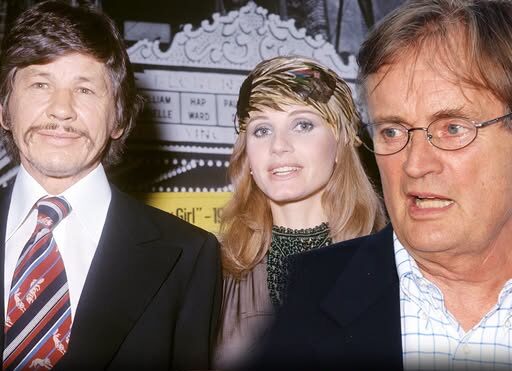
David McCallum Introduced His Wife to Charles Bronson — What Happened Next Ended Their Marriage, but His Final Words Surprised Everyone
Jill Ireland Was Married to David McCallum When She Met Charles Bronson on the Set of The Great Escape. Their Unexpected Romance Led to a Painful Divorce, a 22-Year Marriage, and a Remarkable Story of Love, Loss, and Forgiveness.
Sometimes the most painful chapters in Hollywood history begin with an ordinary introduction between friends.
For actor David McCallum, that introduction would eventually change his personal life in ways he could never have anticipated.
He was married to actress Jill Ireland when she met Charles Bronson, his fellow actor on the film The Great Escape.
What began as a connection between people working in the same professional circle developed into a romance that would end one marriage and begin another.
The consequences reached far beyond the three people at the center of the story.
There were children involved, years of shared history, and emotional wounds that could not simply disappear when the relationships changed.
Yet the most unexpected part of the story may not be the affair itself.
It may be the way McCallum eventually spoke about the man who married his former wife.
Instead of expressing lasting hatred, he offered a reflection that revealed a surprisingly complicated understanding of friendship, betrayal, and the passage of time.
A Hollywood Friendship That Took an Unexpected Turn
David McCallum and Charles Bronson were brought together through their work on The Great Escape.
At the time, McCallum was married to Jill Ireland, and the couple had an established family life.
Bronson entered that world as a fellow actor and someone McCallum considered a friend.
There was no reason for McCallum to imagine that the introduction would eventually become associated with one of the most widely discussed romantic entanglements of their lives.
But Ireland and Bronson developed a connection that moved beyond friendship.
McCallum later recalled learning that an affair had begun during a period when he trusted Bronson to look after Ireland.
That detail made the experience especially painful.
It wasn’t simply a matter of a marriage coming to an end.
The situation also involved a friendship that McCallum had believed he could rely upon.
For someone caught between those two relationships, the emotional consequences were difficult to separate.
Jill Ireland Was Already Building a Life With David McCallum
Before Charles Bronson became part of her personal story, Jill Ireland was married to David McCallum.
Their marriage represented more than a romantic partnership.
They were raising three children, which meant that any change in their relationship would affect an entire family.
The years they had spent together could not be reduced to the circumstances of their separation.
There were shared responsibilities, family bonds, and the ordinary experiences that come with raising children.
That background is important when considering what happened next.
Although Hollywood relationship stories are often remembered for dramatic headlines, the people involved must still deal with the practical and emotional realities of family life.
For McCallum, the end of the marriage meant confronting the loss of a partnership while also navigating the responsibilities of fatherhood.
For Ireland, it marked the beginning of a different chapter in her personal life.
And for Bronson, it would lead to a marriage that lasted more than two decades.
The Great Escape Became Connected to a Real-Life Romantic Drama
The Great Escape brought together actors whose professional relationships would become part of a much more personal history.
McCallum and Bronson shared a connection through their work on the production.
That professional environment also created the circumstances in which Ireland and Bronson met.
Their developing relationship eventually became inseparable from the story of McCallum’s marriage.
It is easy to understand why the situation attracted attention.
Three recognizable figures were connected through a film, a friendship, and an unexpected romantic development.
But the most significant consequences took place away from the cameras.
A marriage was breaking apart.
A family was facing separation.
And a friendship had become entangled with circumstances that could not easily be undone.
The professional success associated with the film stood in sharp contrast to the private difficulties that followed.
McCallum Later Recalled the Painful Discovery
One of the most revealing details in McCallum’s account concerned the trust he had placed in Bronson.
He remembered discovering that a romantic affair had developed while he believed his friend was looking after his wife.
That recollection gives the story a more personal dimension than the familiar description of one woman leaving one actor for another.
Trust is central to both marriage and friendship.
When those relationships become intertwined through an affair, the emotional consequences can be especially complicated.
McCallum was left dealing with the breakdown of his marriage and the knowledge that someone he regarded as a friend was involved.
The experience would remain an important part of his personal history.
However, his later comments suggest that he did not want that painful episode to define his feelings forever.
That distinction would become particularly significant when he reflected on Bronson years afterward.
The Famous Claim About Bronson’s Intentions Remains Disputed
Over time, one particular claim became closely associated with the relationship between McCallum, Ireland, and Bronson.
The story suggested that Bronson had openly announced his intention to marry Ireland.
It was a striking detail, one that made the situation sound almost like a scene written for a dramatic film.
But McCallum did not confirm that version of events.
When discussing the claim, he said he did not remember hearing Bronson make such a declaration.
That difference matters.
The affair, divorce, and subsequent marriage are part of the central history of the three actors.
But a memorable anecdote should not automatically be treated as established fact simply because it has been repeated frequently.
McCallum’s recollection leaves that particular claim unresolved.
The uncertainty does not diminish the emotional significance of what happened.
It simply separates the documented sequence of relationships from a dramatic detail that remained disputed.
David McCallum and Jill Ireland Divorced in 1967
The marriage between McCallum and Ireland officially ended in 1967.
The separation came after their relationship had been affected by Ireland’s involvement with Bronson.
For the couple, divorce meant the conclusion of a marriage in which they had been raising three children.
That family connection made the separation particularly consequential.
Even when romantic relationships end, the responsibilities and emotional ties associated with children remain.
McCallum had to continue forward with a life that no longer resembled the one he had previously known.
Ireland, meanwhile, was preparing for a future with Bronson.
There was no simple way for all three people to return to their previous relationships.
Their personal lives had changed permanently.
And although the divorce represented the end of one marriage, it did not mark the end of the larger story.
Jill Ireland Married Charles Bronson the Following Year
In 1968, one year after her divorce from McCallum, Ireland married Bronson.
The marriage transformed their relationship into a long-term partnership.
What had begun under difficult and controversial circumstances developed into a union that lasted 22 years.
The couple shared their lives both privately and professionally.
They appeared together onscreen and raised a blended family.
Those years became a substantial chapter in both of their lives.
While the circumstances surrounding the beginning of their relationship remained part of their public history, the marriage itself extended far beyond that initial controversy.
They experienced the ordinary demands of family life alongside the opportunities and pressures of their acting careers.
The longevity of their marriage became one of the defining features of their relationship.
But their years together would also include a devastating health challenge.
A Marriage That Lasted More Than Two Decades
Bronson and Ireland’s 22-year marriage was not limited to a shared home.
They also worked together in the entertainment industry.
Their professional collaborations added another dimension to a partnership that had already attracted considerable attention.
As a married couple, they became connected through their public appearances, their work, and their family responsibilities.
They were also raising a blended family, bringing together relationships and responsibilities that extended beyond the two of them.
That family life formed an important part of the years they shared.
From the outside, their marriage could be viewed through the lens of its controversial beginning.
But over time, it became a much longer story about two people who remained together through significant changes in their lives.
One of those changes would arrive in 1984, when Ireland received a serious medical diagnosis.
Jill Ireland’s Breast Cancer Diagnosis Changed Their Lives
In 1984, Ireland was diagnosed with breast cancer.
The diagnosis introduced an entirely different challenge into her life and marriage.
For a woman whose public identity had been closely associated with acting and her relationship with Bronson, the illness became another significant part of her story.
Rather than keeping the experience entirely private, Ireland chose to speak publicly about breast cancer.
Her willingness to discuss the disease was intended to support other people facing similar circumstances.
By sharing her experience, she brought attention to the emotional and personal realities of living with a serious illness.
Her public involvement also demonstrated that her life was not defined solely by the relationships that had attracted attention earlier in her career.
She had her own experiences, challenges, and reasons for speaking out.
During this period, the marriage between Ireland and Bronson entered a deeply difficult chapter.
The couple had already spent many years together.
Now they were facing an illness that would profoundly affect their future.
Jill Ireland Used Her Experience to Support Others
After her diagnosis, Ireland became willing to discuss breast cancer in public.
That decision gave her experience a significance beyond her personal circumstances.
Serious illness can be an isolating experience, particularly when people feel uncertain about how to discuss their fears and difficulties.
Ireland’s decision to speak openly offered recognition to others dealing with the disease.
Her public role became an important part of how she was remembered.
Although her marriage to Bronson remained a major element of her life story, her response to illness showed another side of her character.
She was confronting a serious personal challenge while also trying to help others feel less alone.
That aspect of her life deserves attention alongside the more dramatic details of her romantic history.
It reminds us that a person’s legacy can include many different chapters, each with its own importance.
Charles Bronson Was Beside Her When She Died
Jill Ireland died in May 1990.
Charles Bronson was beside her at the time of her death.
The moment brought their 22-year marriage to an end.
For Bronson, it meant losing the woman with whom he had shared more than two decades of marriage, family life, and professional work.
For their family, it was the loss of someone whose presence had shaped their lives for many years.
Her death also marked the conclusion of a difficult period that had begun with her breast cancer diagnosis in 1984.
Whatever controversy had surrounded the beginning of their relationship, the final chapter was one of profound personal loss.
Their marriage had lasted through many years of shared experiences.
And Bronson remained at her side at its heartbreaking conclusion.
David McCallum Had Found Lasting Love Again
While Ireland and Bronson built their marriage, McCallum continued with his own life.
His divorce had been painful, but it did not prevent him from establishing another lasting relationship.
He went on to build an enduring marriage with Katherine Carpenter.
That marriage became an important part of his personal story after his separation from Ireland.
The contrast between the two chapters is significant.
One marriage ended amid emotional turmoil and a complicated romantic situation.
Another provided a lasting partnership.
McCallum’s life therefore cannot be understood solely through the heartbreak associated with Ireland and Bronson.
He experienced both the loss of a marriage and the possibility of building a new one.
That later relationship helped shape the perspective from which he eventually looked back on the events involving Bronson.
His Most Surprising Reflection Was About Charles Bronson
Years after the events that ended his first marriage, McCallum offered a remarkable assessment of Bronson.
His words were unexpectedly generous.
“I never hated him, Charlie was always a good friend.”
The statement stands out because of the circumstances surrounding their personal history.
McCallum had experienced the breakdown of his marriage after Ireland became involved with Bronson.
He had described the pain of discovering the affair while trusting his fellow actor.
Yet he did not describe Bronson as someone he had hated.
Instead, he acknowledged the friendship that had existed between them.
That did not erase what had happened.
Nor did it mean the divorce had been easy.
But it revealed that McCallum’s feelings were more complicated than a simple story of betrayal and permanent resentment.
Why McCallum’s Response Was So Unexpected
Stories involving broken marriages and affairs are often framed around anger, rivalry, and revenge.
In this case, the circumstances could easily have supported that kind of narrative.
McCallum introduced his wife to a fellow actor.
That introduction eventually became connected to an affair.
His marriage ended.
And Ireland married Bronson the following year.
Those facts explain why many people might expect McCallum to have remained bitter.
But his own words challenged that assumption.
He acknowledged Bronson as a friend despite the painful history between them.
His reflection did not require the past to be forgotten or justified.
It simply demonstrated that painful experiences do not always determine how a person chooses to remember someone decades later.
For McCallum, the relationship with Bronson could apparently be remembered in a way that included both friendship and hurt.
Three Lives Connected by Love, Heartbreak, and Time
The story of McCallum, Ireland, and Bronson is often remembered as a Hollywood love triangle.
But that description captures only the beginning.
McCallum and Ireland had a marriage and three children before their separation.
Ireland and Bronson then shared 22 years together, raising a blended family and working onscreen.
Her breast cancer diagnosis brought a difficult new challenge into their lives.
And McCallum, after the end of his first marriage, found lasting companionship with Katherine Carpenter.
Each person’s life continued beyond the original romantic conflict.
The passage of time introduced new relationships, responsibilities, and losses.
Those later experiences are essential to understanding why the story remains compelling.
It is not simply about one marriage ending and another beginning.
It is about how three people lived with the consequences of decisions that changed their lives.
The Human Story Behind the Hollywood Headlines
Famous relationships are often reduced to a handful of memorable details.
An affair begins.
A marriage ends.
A new wedding follows.
But those events rarely tell the complete story.
Behind them are people trying to rebuild their lives, care for their families, and move forward after painful experiences.
McCallum’s account offers a reminder that public narratives can overlook those complexities.
The emotional impact of his divorce was real.
So was the long marriage that Ireland subsequently shared with Bronson.
And so was the enduring relationship McCallum established with Carpenter.
None of those chapters cancels out the others.
They belong to the same larger history, even when they involve difficult contradictions.
A Story That Cannot Be Reduced to Betrayal Alone
The circumstances surrounding Ireland’s relationship with Bronson were undoubtedly painful for McCallum.
But the later developments show why the story deserves a broader perspective.
Bronson and Ireland’s marriage lasted until her death.
Ireland’s response to breast cancer became a meaningful part of her public life.
McCallum found another enduring marriage.
And his eventual comments about Bronson did not center on hatred.
These details reveal a history shaped by both difficult decisions and the ability to continue living afterward.
The affair remains part of the story.
But it is not the only part worth remembering.
The decades that followed were filled with experiences that gave each person’s life a significance beyond the circumstances of their romantic relationships.
The Remarkable Lesson in David McCallum’s Final Perspective
When David McCallum introduced Jill Ireland to Charles Bronson, he could not have known how profoundly that connection would affect his marriage.
The relationship that developed between Ireland and Bronson led to a divorce in 1967 and a new marriage in 1968.
That marriage endured for 22 years, ending with Ireland’s death in May 1990.
McCallum, meanwhile, moved forward and built a lasting life with Katherine Carpenter.
Years later, his reflection on Bronson revealed something unexpected.
He did not deny the friendship that had once existed between them.
And he did not choose to define his memories through hatred.
That response is perhaps the most memorable part of the entire story.
It suggests that forgiveness, acceptance, and emotional complexity can exist even after profound personal disappointment.
The past cannot be changed, and the pain of a broken marriage cannot simply be dismissed.
But McCallum’s words demonstrate that a person’s response to heartbreak can evolve over time.
What began as a painful Hollywood romance ultimately became a much larger story about marriage, family, illness, loss, and the possibility of moving beyond resentment.
And in the end, McCallum’s refusal to describe Bronson with hatred may be the detail that makes this extraordinary chapter of Hollywood history most unforgettable.